
Soil Amendments Explained: What They Do and When Your Lawn Actually Needs Them

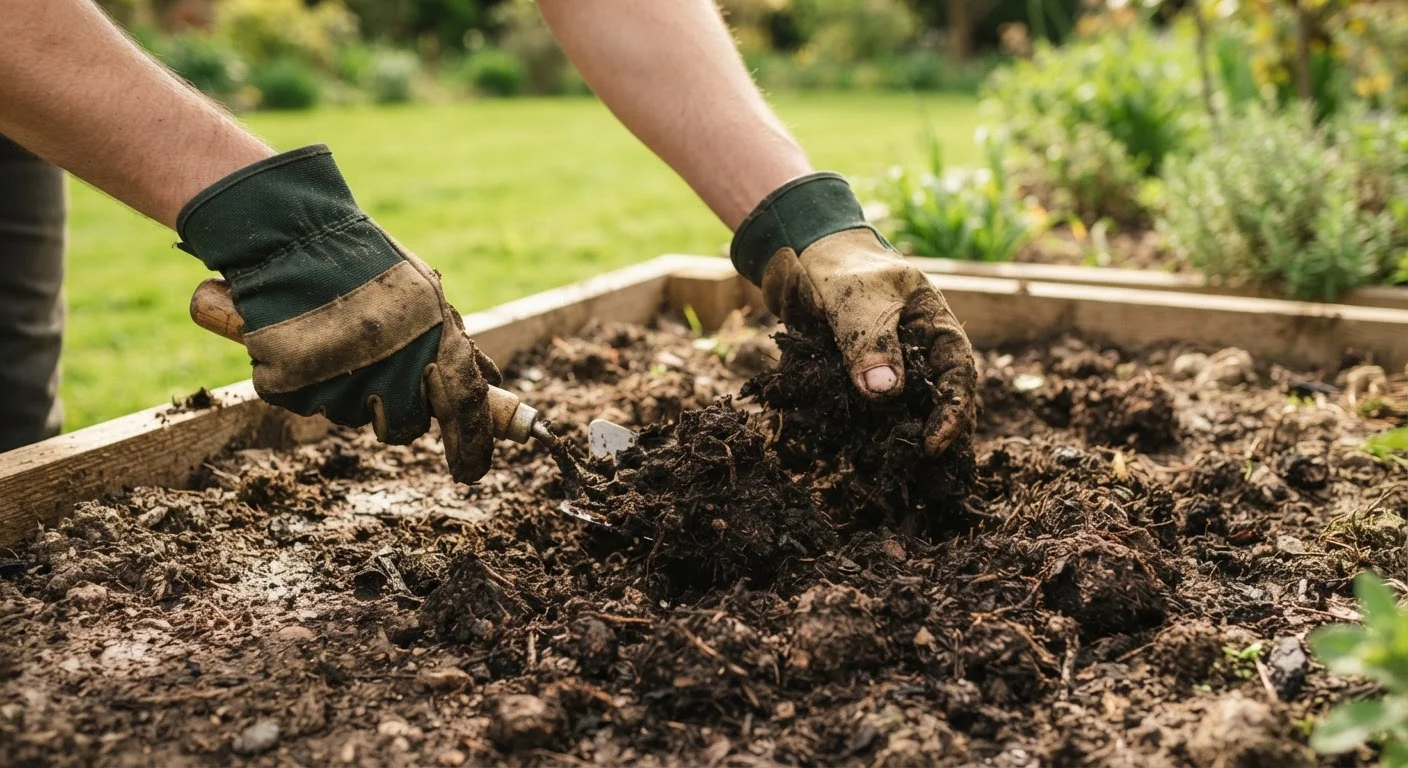
Photo: QuickSearches.net | It Doesn't Get Quicker Than This! editorial
Key Takeaways
- Soil amendments change the soil environment itself, not just nutrient levels.
- A soil test is the only reliable way to know which amendments your lawn actually needs.
- Common amendments include compost, lime, sulfur, gypsum, and perlite - each solves a different problem.
- Applying amendments your soil doesn't need can create new imbalances and waste money.
- Most lawns benefit most from organic matter like compost, which improves nearly any soil type.
What Soil Amendments Actually Do
Most homeowners think about lawn care in terms of watering and fertilizing - but the soil underneath is where the real story begins. Soil amendments are materials you add to existing soil to change how it behaves, not just what nutrients it contains. That distinction matters because many common lawn problems - compaction, poor drainage, nutrient lockout - aren't solved by feeding the grass. They require fixing the soil first.
Amendments work along two main axes. Physical amendments change soil texture and structure. Compost, for example, opens up dense clay soil so water and air can penetrate. Perlite (a volcanic glass material often used in garden beds) improves drainage in compacted or waterlogged areas. Chemical amendments alter pH or the availability of nutrients. Lime raises pH in overly acidic soil, while sulfur lowers it in alkaline conditions. When pH is off, grass roots can't absorb nutrients even if those nutrients are technically present.
Understanding this is important before you spend anything. Our article on reading your backyard soil walks through how texture and color can reveal what type of problem you're dealing with.
~6.0-7.0
Ideal soil pH range for most lawn grasses
According to university extension guidelines, most cool- and warm-season turf grasses absorb nutrients most efficiently within this pH range.
3-6 months
Time for lime to significantly shift soil pH
Cooperative extension research consistently notes that ground limestone reacts slowly and should be applied well before the growing season for measurable results.
Less than 5%
Organic matter in typical urban lawn soils
Many residential lots, especially in newer developments, have severely depleted organic matter after construction disturbance, according to soil science literature.
The Most Common Amendments and What Each One Fixes
There's no shortage of products at the garden center, but most lawns only ever need a handful of proven amendments. Here's a practical breakdown:
- Compost: The most versatile amendment available. It improves drainage in clay soils, adds water retention in sandy soils, feeds soil microbes, and gently supplies nutrients. Most lawns benefit from a thin annual top-dressing of finished compost. If you want to produce your own, composting at home is more straightforward than most people expect.
- Lime (calcitic or dolomitic): Raises soil pH. Commonly needed in the eastern U.S. where rainfall tends to acidify soil over time. Dolomitic lime also adds magnesium. Do not apply without a soil test confirming your pH is low.
- Sulfur: Lowers soil pH. Used in western states where alkaline soils are common, or around acid-loving plants like blueberries and azaleas. Works slowly - expect results over several months.
- Gypsum (calcium sulfate): Helps break up compacted clay and improves drainage without significantly changing pH. Often recommended for lawns with heavy clay content.
- Perlite or coarse sand: Improves aeration and drainage, typically used in garden beds or when establishing new turf areas. Adding sand alone to clay-heavy lawns without organic matter can backfire - always pair it with compost.
To understand how these interact with what you may already be applying, decoding fertilizer labels is a useful companion read.
“The most important thing a homeowner can do before adding anything to their soil is find out what's already there. Amending without testing is like medicating without a diagnosis.”
— Extension Soil Scientist, Land-grant university cooperative extension service
How to Tell If Your Lawn Needs Amendments - and Which Ones
The single most important step before amending is getting a soil test. Many state cooperative extension services offer them at low or no cost, and they tell you exactly what your soil pH is, what nutrients are low or excess, and what amendments to apply at what rates. Skipping this step and guessing is how homeowners end up over-liming, creating new imbalances, and spending money that didn't need to be spent.
Beyond the test, some visual and physical clues are worth noting:
- Water pools after rain or irrigation and drains slowly: likely compaction or heavy clay - consider gypsum or compost.
- Grass yellows despite regular watering and fertilizing: pH may be off, locking out nutrients the grass can't absorb. Summer yellowing has multiple causes, and a soil test will distinguish pH problems from others.
- Soil feels like concrete when dry: compaction is the likely culprit. Aeration followed by compost top-dressing is a common remedy.
- Thin, struggling turf despite good practices: organic matter may be severely depleted, especially in newer construction where topsoil is often stripped away.
If you're heading into spring and want to time amendments correctly, include soil testing in your pre-season lawn prep checklist before you mow for the first time.
Get a Soil Test Before You Buy Anything
Applying Amendments the Right Way
Timing and application rate matter as much as choosing the right product. For most amendments, fall is the preferred window - materials have time to integrate and react with the soil before the growing season demands results. Lime, in particular, takes months to shift pH, so applying it in October gives it a full winter to work.
When top-dressing a lawn with compost, keep the layer thin - no more than about a quarter to half an inch - so it filters down between grass blades rather than smothering them. Rake or drag it lightly to distribute it evenly. For garden beds where you can work the soil, incorporate amendments 6-8 inches deep for best root-zone contact.
Always re-test your soil 6-12 months after applying pH-adjusting amendments. Lime and sulfur corrections are gradual, and applying additional product before confirming results can push pH too far in the opposite direction. When in doubt, apply conservatively - it's much easier to add more than to correct an over-amendment.
If improving soil health is part of a broader effort to reduce lawn maintenance and water use, these same principles apply directly to establishing a drought-tolerant yard, where healthy soil structure is foundational to success.
Frequently Asked Questions
The content on this site is provided for informational purposes only and should not be considered a substitute for professional advice. While we strive to provide accurate and up-to-date information, we make no guarantees regarding its completeness or accuracy. Always consult a qualified professional for advice specific to your circumstances before making any decisions