
Lawn & Garden

Why Your Grass Turns Yellow in Summer (And What to Do About It)

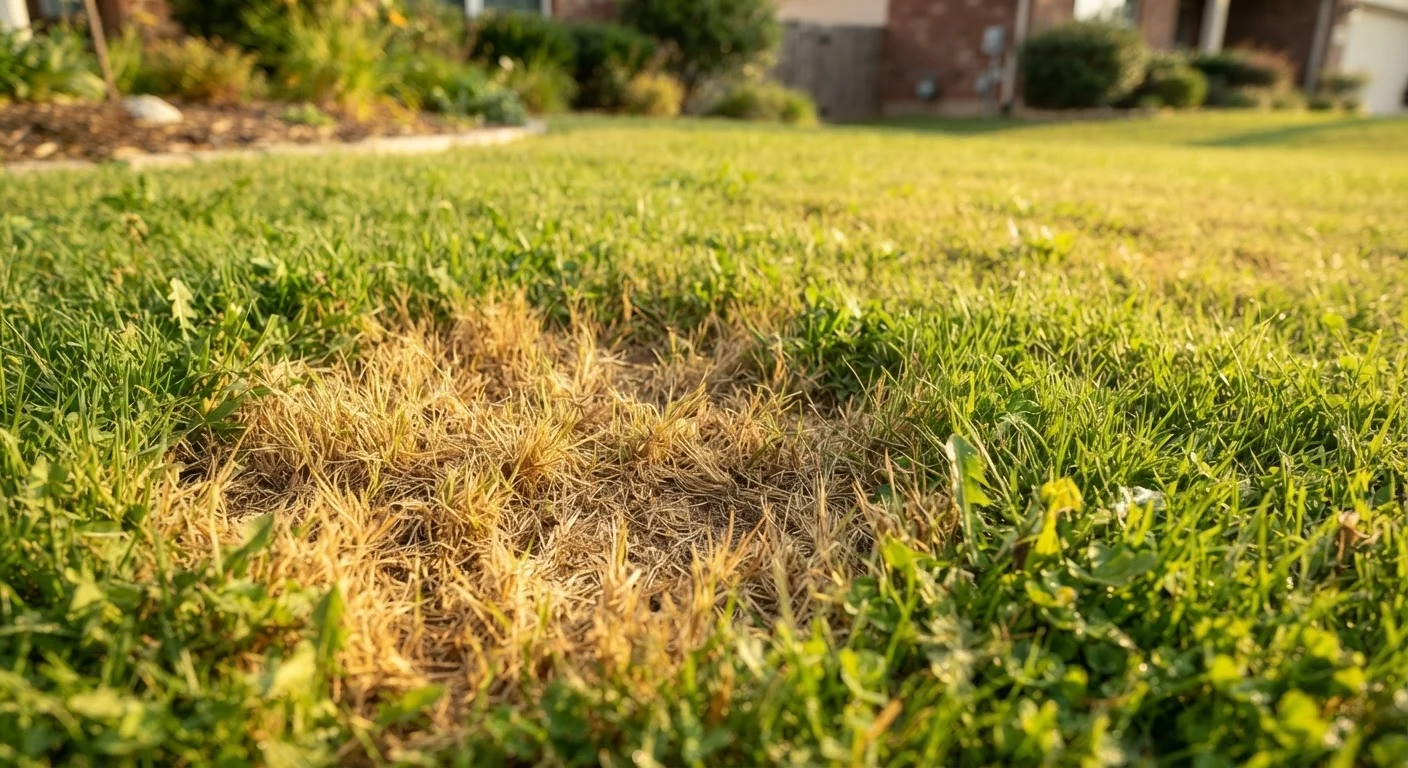
Why Your Grass Turns Yellow in Summer (And What to Do About It)

Photo: QuickSearches.net | It Doesn't Get Quicker Than This! editorial

Yellow patches aren't always a drought problem. Learn the most common causes of summer lawn yellowing and how to diagnose the right fix.

Key Takeaways

  • Yellow grass in summer is rarely caused by just one thing — diagnosis comes first.
  • Overwatering is as damaging as underwatering and can cause identical-looking yellowing.
  • Soil pH imbalances block nutrient absorption even when fertilizer has already been applied.
  • Mowing too short stresses grass and makes it far more vulnerable to heat and drought.
  • A simple soil test can save you money by pinpointing exactly what your lawn needs.

Why Summer Turns Lawns Yellow — and Why One Answer Isn't Enough

Yellow grass is one of the most common summer lawn complaints, and also one of the most misdiagnosed. The instinct to water more, fertilize, or simply wait out the heat is understandable — but acting without a clear diagnosis often prolongs the problem or creates new ones.

Summer stressors on turf are numerous: heat, drought, excess moisture, nutrient imbalances, fungal disease, insect damage, and even compacted soil can all produce a lawn that looks yellow and tired. The tricky part is that many of these problems look similar at a glance. That's why the first step is always observation — not action.

Walk your yard and note where the yellowing appears. Is it uniform across the whole lawn, or only in certain zones? Are the patches circular, irregular, or along edges? Does the soil feel soggy or bone dry? These details point toward the right cause — and the right fix. For a broader seasonal perspective, the seasonal lawn care calendar can help you understand what your grass should be experiencing at different points in the year.

Diagnose Before You Treat

Applying fertilizer, extra water, or fungicide to a lawn without knowing the root cause often makes the problem worse, not better. Yellow grass caused by overwatering will not recover from more water. Before spending money on any product or treatment, take time to observe the pattern of yellowing, check your soil moisture, and consider getting a soil test. Most county cooperative extension offices offer low-cost soil testing services.

The Most Common Mistakes Homeowners Make When Grass Turns Yellow

Most cases of summer lawn yellowing trace back to a handful of preventable errors. Understanding why these mistakes happen — and how to course-correct — is far more useful than reaching for a quick fix.

1

Assuming all yellow grass means the lawn needs more water.

Why it happens: Drought is the most visible summer stressor, so homeowners instinctively reach for the hose. But overwatered lawns can look nearly identical to underwatered ones — both show yellowing, thinning, and wilting.
How to avoid: Before watering, push a screwdriver or finger 2–3 inches into the soil. If it feels wet or the ground is soft and spongy, hold off on irrigation. Check out common lawn watering myths to calibrate your watering habits with what turf science actually supports.
2

Mowing the lawn too short during summer heat.

Why it happens: Many homeowners cut grass short to reduce how often they mow. But scalping the lawn removes the leaf blade that shades soil, retains moisture, and drives photosynthesis — leading to rapid yellowing and root stress.
How to avoid: Follow the one-third rule: never remove more than one-third of the grass blade in a single mowing. During summer, raise your mower deck to keep cool-season grasses at 3–4 inches and warm-season grasses at 2–3 inches, depending on the variety.
3

Fertilizing without knowing your soil's actual nutrient levels or pH.

Why it happens: Yellowing is often associated with nitrogen deficiency, so adding fertilizer feels like a logical response. In reality, high or low soil pH can lock nutrients in place, making them unavailable to grass roots regardless of how much fertilizer is applied.
How to avoid: Get a soil test before applying any amendment. Understanding what your soil actually needs — and doesn't need — prevents wasted money and potential nutrient burn. Our guide to soil amendments and when your lawn needs them walks through what the results mean.
4

Ignoring the possibility of lawn disease or grub damage.

Why it happens: Most homeowners don't think of lawn disease until the problem is advanced. Fungal conditions like dollar spot or brown patch, and subsurface grub feeding, can produce irregular yellow or brown patches that look like drought stress.
How to avoid: Look at the pattern. Disease often produces circular or irregular patches with defined borders; grub damage causes turf that lifts easily like loose carpet because roots have been eaten. Pull back a small section of affected turf to check for white grub larvae. If disease or pests are confirmed, consult your local cooperative extension office for regionally appropriate guidance.
5

Skipping thatch management and letting buildup block water and air.

Why it happens: A thin thatch layer (under half an inch) is harmless, but homeowners often let it accumulate over years without realizing it can prevent water and nutrients from reaching the root zone — causing widespread, patchy yellowing.
How to avoid: Check thatch depth each spring by removing a small plug of turf and measuring the spongy brown layer above the soil. If it exceeds half an inch, dethatch or aerate. Refer to the spring lawn prep checklist to work thatch management into your regular routine.

Don't Fertilize a Stressed Lawn

Applying nitrogen fertilizer during a heat wave or drought can burn already-stressed grass roots and deepen yellowing rather than reverse it. If temperatures are consistently above 90°F, hold off on any fertilizer application until conditions cool. Focus on proper watering and mowing height first.

If your lawn has struggled through multiple summers despite your best efforts, it may be worth exploring a longer-term strategy. Transitioning to more resilient grass varieties or ground covers is one option covered in our guide to establishing a drought-tolerant yard.

~40%

Residential water use on landscaping

According to the U.S. Environmental Protection Agency, nearly 40% of residential water use during summer months goes toward lawns and gardens, much of it applied inefficiently.

6.0–7.0

Ideal soil pH range for most grass types

Most turfgrass species absorb nutrients most efficiently in a soil pH between 6.0 and 7.0; readings outside this range can cause visible yellowing even in fertilized lawns.

Home & Garden Editorial Team

QuickSearches.net | It Doesn't Get Quicker Than This!

Home & Garden Editorial Team is the collective byline for our editorial team and contributor network. Articles published under this byline or an editorial pen name are researched, written, and reviewed according to our editorial standards for clarity, consistency, and independence before publication.

Home ImprovementLawn & GardenHome Organization
View author profile

The content on this site is provided for informational purposes only and should not be considered a substitute for professional advice. While we strive to provide accurate and up-to-date information, we make no guarantees regarding its completeness or accuracy. Always consult a qualified professional for advice specific to your circumstances before making any decisions