
Cash Stuffing: A Closer Look at the Physical Envelope Trend

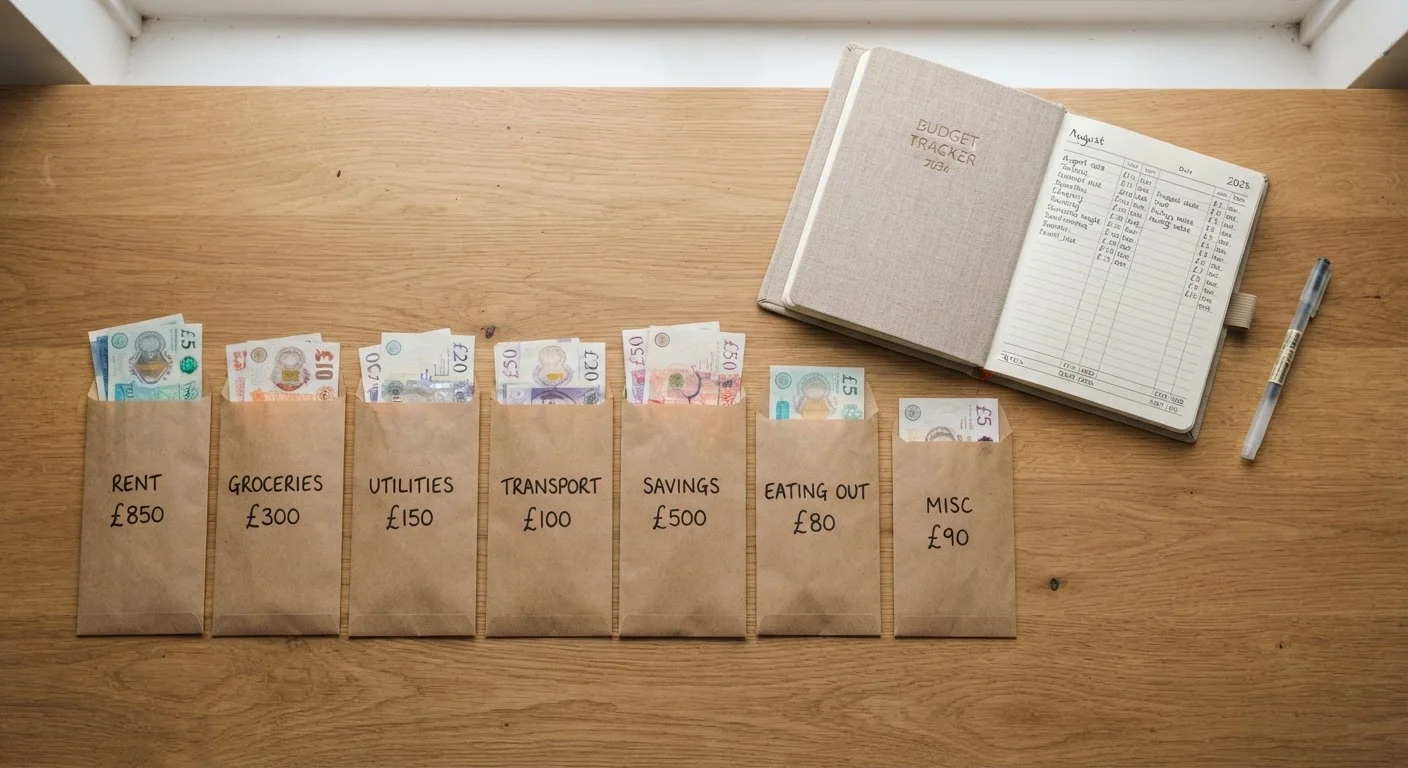
Photo: QuickSearches.net | It Doesn't Get Quicker Than This! editorial
Key Takeaways
- Cash stuffing assigns physical cash to labeled envelopes for each spending category, making overspending immediately visible.
- The method works best for variable, discretionary categories like groceries and dining out - not fixed bills.
- Cash carries real risks: it's uninsured, earns no interest, and cannot be used for online purchases.
- A hybrid approach - cash for problem categories, digital accounts for everything else - suits most people.
Creates immediate, visual spending limits
When the grocery envelope is empty, the money is gone - no mental math required. This physical visibility removes the ambiguity that makes digital overspending so easy.
Reduces impulse spending through payment friction
Handing over physical bills feels more significant than tapping a card, a pattern supported by consumer behavior research on the 'pain of paying.' That friction naturally discourages unplanned purchases.
No app, account, or subscription required
Cash stuffing works with envelopes and a pen. It's accessible to anyone regardless of smartphone access, banking status, or tech comfort level.
Eliminates overdraft risk for cash categories
You can't overdraft an envelope. For people who have struggled with overdraft fees, using cash for variable spending removes that risk entirely for those categories.
Helps identify problem spending categories quickly
Watching one envelope drain faster than others is an immediate diagnostic. Many people discover their real overspending category is not where they assumed it was.
Cash is uninsured and unrecoverable if lost or stolen
Unlike bank deposits, which are insured by the FDIC up to $250,000, cash in an envelope has no protection. Theft, fire, or loss means that money is simply gone.
Unusable for online purchases and many modern payments
A growing share of everyday spending - utilities, streaming, e-commerce, ride-shares - requires a card or digital payment. Cash envelopes can't cover these categories at all.
Earns no interest while sitting in envelopes
Money kept as physical cash doesn't grow. Even a basic high-yield savings account generates returns that compound over time, a benefit cash stuffers forfeit on their allocated funds.
Carrying cash creates safety and logistical burdens
Withdrawing and transporting meaningful amounts of cash regularly exposes people to theft risk and requires planning around ATM access, fees, and bank hours.
Difficult to track spending history or spot trends
Bank accounts and cards automatically generate transaction records useful for reviewing patterns over months. Cash leaves no trail, making long-term budget analysis harder.
What Cash Stuffing Actually Is
Cash stuffing - also called the envelope budgeting method - is straightforward: at the start of each pay period, you withdraw cash and divide it into labeled envelopes, one per spending category. Groceries get their envelope. Gas gets its envelope. Dining out gets its envelope. When an envelope is empty, spending in that category stops until the next pay period.
The idea isn't new. Financial educators have taught envelope budgeting for decades. What changed is the social dimension: short-form videos of people stuffing envelopes and decorating budget binders turned a personal finance staple into a widely shared practice, drawing in younger adults who had never budgeted with cash before.
For a broader look at how the classic envelope system works and how digital tools replicate it, see our guide to the envelope system and its digital equivalents.
Creates immediate, visual spending limits
When the grocery envelope is empty, the money is gone - no mental math required. This physical visibility removes the ambiguity that makes digital overspending so easy.
Reduces impulse spending through payment friction
Handing over physical bills feels more significant than tapping a card, a pattern supported by consumer behavior research on the 'pain of paying.' That friction naturally discourages unplanned purchases.
No app, account, or subscription required
Cash stuffing works with envelopes and a pen. It's accessible to anyone regardless of smartphone access, banking status, or tech comfort level.
Eliminates overdraft risk for cash categories
You can't overdraft an envelope. For people who have struggled with overdraft fees, using cash for variable spending removes that risk entirely for those categories.
Helps identify problem spending categories quickly
Watching one envelope drain faster than others is an immediate diagnostic. Many people discover their real overspending category is not where they assumed it was.
The Real Drawbacks Worth Knowing
Cash stuffing works in ways that matter - but it also creates problems that many enthusiasts understate. Before committing fully, it's worth being clear-eyed about where the method struggles.
Cash is uninsured and unrecoverable if lost or stolen
Unlike bank deposits, which are insured by the FDIC up to $250,000, cash in an envelope has no protection. Theft, fire, or loss means that money is simply gone.
Unusable for online purchases and many modern payments
A growing share of everyday spending - utilities, streaming, e-commerce, ride-shares - requires a card or digital payment. Cash envelopes can't cover these categories at all.
Earns no interest while sitting in envelopes
Money kept as physical cash doesn't grow. Even a basic high-yield savings account generates returns that compound over time, a benefit cash stuffers forfeit on their allocated funds.
Carrying cash creates safety and logistical burdens
Withdrawing and transporting meaningful amounts of cash regularly exposes people to theft risk and requires planning around ATM access, fees, and bank hours.
Difficult to track spending history or spot trends
Bank accounts and cards automatically generate transaction records useful for reviewing patterns over months. Cash leaves no trail, making long-term budget analysis harder.
Cash Stuffing Doesn't Cover Fixed Bills
Cash stuffing is not a complete budget. It handles discretionary spending well, but it does nothing for automated fixed expenses like rent, utilities, or loan payments. Most people need a complementary system for those categories, whether a digital account setup or automatic transfers. For ideas on keeping multiple financial buckets organized, see managing multiple bank accounts without losing track.
Who Gets the Most From It - and Who Doesn't
Cash stuffing delivers the most benefit to people whose main budget problem is discretionary overspending - the kind that happens at grocery stores, restaurants, and shopping trips. If you regularly reach the end of the month wondering where your money went, the forced accountability of an empty envelope is hard to replicate digitally. The spending categories that derail most household budgets are exactly the ones where cash stuffing can impose the hardest limits.
On the other hand, if your finances are primarily digital - subscriptions, online purchases, bill autopay - cash stuffing covers only a slice of your spending and may create more logistical hassle than it's worth. Similarly, anyone building or rebuilding credit should understand that paying exclusively in cash means missing out on the credit history that responsible card use creates. If that context is relevant to you, see how secured credit cards factor into credit building.
~18%
U.S. adults who are unbanked or underbanked
According to FDIC data, roughly 18% of U.S. adults were unbanked or underbanked as of their most recent survey, a segment for whom cash-based budgeting may be one of few accessible options.
$35
Typical bank overdraft fee per transaction
The Consumer Financial Protection Bureau has reported that overdraft fees commonly run around $35 per transaction, making cash-only spending an appealing way to avoid this cost for variable categories.
A hybrid model - using cash envelopes only for two or three problem categories, and keeping everything else digital - gives most people the discipline benefits without the full inconvenience.
This article is for general informational purposes only and does not constitute personalized financial advice. Consult a qualified financial professional for guidance specific to your situation.
The content on this site is provided for informational purposes only and should not be considered a substitute for professional advice. While we strive to provide accurate and up-to-date information, we make no guarantees regarding its completeness or accuracy. Always consult a qualified professional for advice specific to your circumstances before making any decisions