
Fertilizer Labels Decoded: What N-P-K Numbers Actually Mean

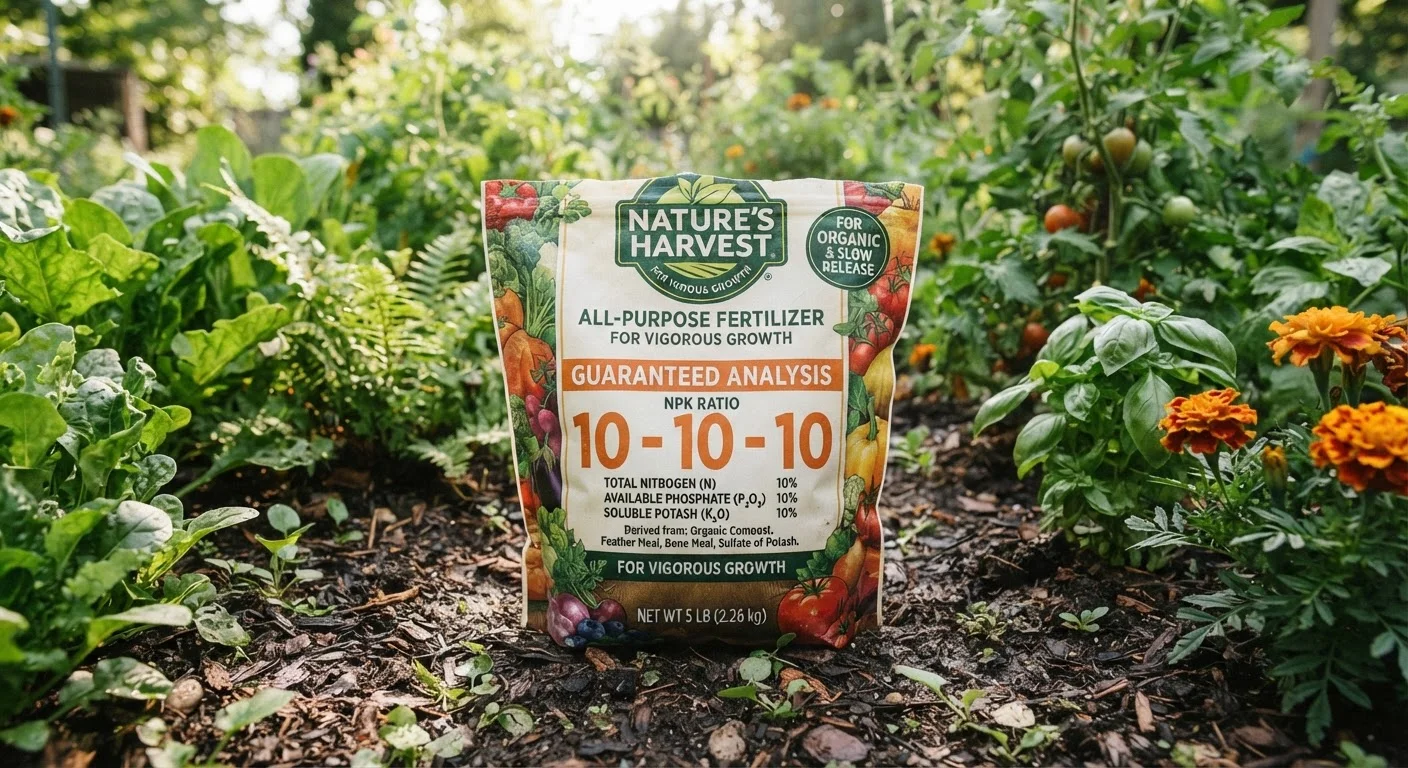
Photo: QuickSearches.net | It Doesn't Get Quicker Than This! editorial
Key Takeaways
- N-P-K stands for nitrogen, phosphorus, and potassium - the three primary plant nutrients.
- Each number shows the percentage of that nutrient in the fertilizer by weight.
- Nitrogen drives leafy green growth; phosphorus supports roots and blooms; potassium builds overall plant resilience.
- A soil test helps you match the right N-P-K ratio to your yard's actual needs.
- Applying too much of any nutrient can harm plants and pollute waterways.
- Equal-ratio fertilizers are not always best - different plants and seasons call for different formulas.
Breaking Down the Three Numbers
Flip any fertilizer bag around and you'll find three numbers separated by dashes - printed boldly enough that they're hard to miss. What's easier to miss is what those numbers actually tell you. They aren't random codes or brand identifiers. Each one represents a specific macronutrient, listed in the same order on every product you'll ever buy: nitrogen (N), phosphorus (P), and potassium (K).
The number itself is a percentage. A bag labeled 10-6-4 contains 10% nitrogen, 6% phosphorus (measured as phosphate), and 4% potassium (measured as potash) by total weight. The remaining 80% is carrier material - typically sand, granules, or other inert fillers - that helps distribute the nutrients evenly when applied.
Understanding this simple math helps you compare products and avoid overpaying for heavy filler. Two bags with the same ratio, say 5-5-5 and 10-10-10, deliver the same nutrient balance - you'd just need twice as much of the lower-concentration product to achieve the same result.
3
Primary macronutrients all plants require
Nitrogen, phosphorus, and potassium are universally recognized by horticultural and agricultural sciences as the three essential macronutrients needed in the greatest quantities for plant growth.
~80%
Typical filler content in granular fertilizer
In many granular fertilizer products, the majority of the bag's weight is inert carrier material - only the labeled nutrient percentages are active ingredients.
46-0-0
Most nitrogen-concentrated common fertilizer
Urea, rated at 46-0-0, is one of the most widely used and nitrogen-dense fertilizers available to home gardeners and commercial growers alike.
What Each Nutrient Does for Your Plants
Nitrogen (N) is the nutrient most directly linked to lush, green, leafy growth. It's a core component of chlorophyll - the compound that lets plants convert sunlight into energy. Lawns and leafy vegetables respond quickly to nitrogen, which is why it typically carries the highest number in turf fertilizers. Too little nitrogen leads to yellowing and sluggish growth; too much can burn grass and push leafy growth at the expense of roots or fruit.
Phosphorus (P) works below the surface. It promotes strong root development and supports the energy transfer processes that plants need to flower and produce fruit or seeds. It's especially important when establishing new plantings or encouraging blooms. Mature, established lawns in nutrient-rich soil often need little to no added phosphorus - which is why many lawn fertilizers show a zero in the middle position.
Potassium (K) functions more like a regulator than a builder. It supports the overall cellular functions that help plants manage water uptake, tolerate drought, resist disease, and withstand temperature stress. Adequate potassium helps grass bounce back after summer heat or foot traffic, and helps vegetables develop thicker cell walls.
“The single most important thing a gardener can do before buying fertilizer is test their soil. Without that data, you're just guessing - and guessing often means wasting money or making things worse.”
— University Cooperative Extension Horticulture Program, Land-grant university extension service guidance on soil fertility management
Matching the Right Ratio to Your Yard
The most common mistake homeowners make is grabbing a bag labeled "all-purpose" or "balanced" without knowing what their soil already contains. A 10-10-10 fertilizer sounds sensibly even, but if your soil already has adequate phosphorus - which is common in many American yards - you're adding a nutrient you don't need, and potentially contributing to runoff that can harm local water quality.
The smartest first step is a soil test. Many county cooperative extension offices offer low-cost or free testing, and home test kits are widely available at garden centers. Results will tell you current nutrient levels and pH, so you can choose a fertilizer that fills actual gaps rather than guessing.
As a general rule of thumb based on common gardening guidance:
- Established lawns often benefit from a high-nitrogen, low-phosphorus formula like 24-0-12.
- New seedings or sod need more phosphorus to establish roots - look for a starter fertilizer with a higher middle number.
- Flowering plants and vegetables do well with a more balanced ratio, especially during bloom and fruit set.
- Trees and shrubs in healthy soil may need very little supplemental fertilizer at all.
For a broader look at how fertilizers fit into overall soil health, see our guide to soil amendments - it explains when compost, lime, or other additions may be more appropriate than synthetic fertilizer.
Get a Soil Test Before You Buy
Applying Fertilizer Safely and Effectively
Even the right fertilizer can cause problems when applied incorrectly. Always read and follow the application rates on the label - manufacturers calculate these rates to deliver effective nutrition without overdoing it. Applying more than directed is one of the most common causes of fertilizer burn, where concentrated salts draw moisture out of plant roots and grass blades.
Timing matters too. Most fertilizers work best when applied to moist soil, with rain or irrigation to follow - this helps nutrients move into the root zone rather than sitting on the surface where they can volatilize or wash away. Avoid applying before heavy rain, which can carry nutrients into storm drains and local waterways before plants can absorb them.
Slow-release fertilizers, which deliver nutrients gradually over weeks or months, are often worth considering for busy homeowners. They reduce the risk of over-application and require fewer treatments per season, which can offset their slightly higher upfront cost over time.
Reading fertilizer labels confidently is a small skill with outsized payoff. Once you understand what those three numbers mean and what your soil actually needs, you stop guessing - and start making every dollar you spend on yard care count.
Frequently Asked Questions
The content on this site is provided for informational purposes only and should not be considered a substitute for professional advice. While we strive to provide accurate and up-to-date information, we make no guarantees regarding its completeness or accuracy. Always consult a qualified professional for advice specific to your circumstances before making any decisions