
Driving Safely Across Every Season: A Year-Round Preparedness Guide

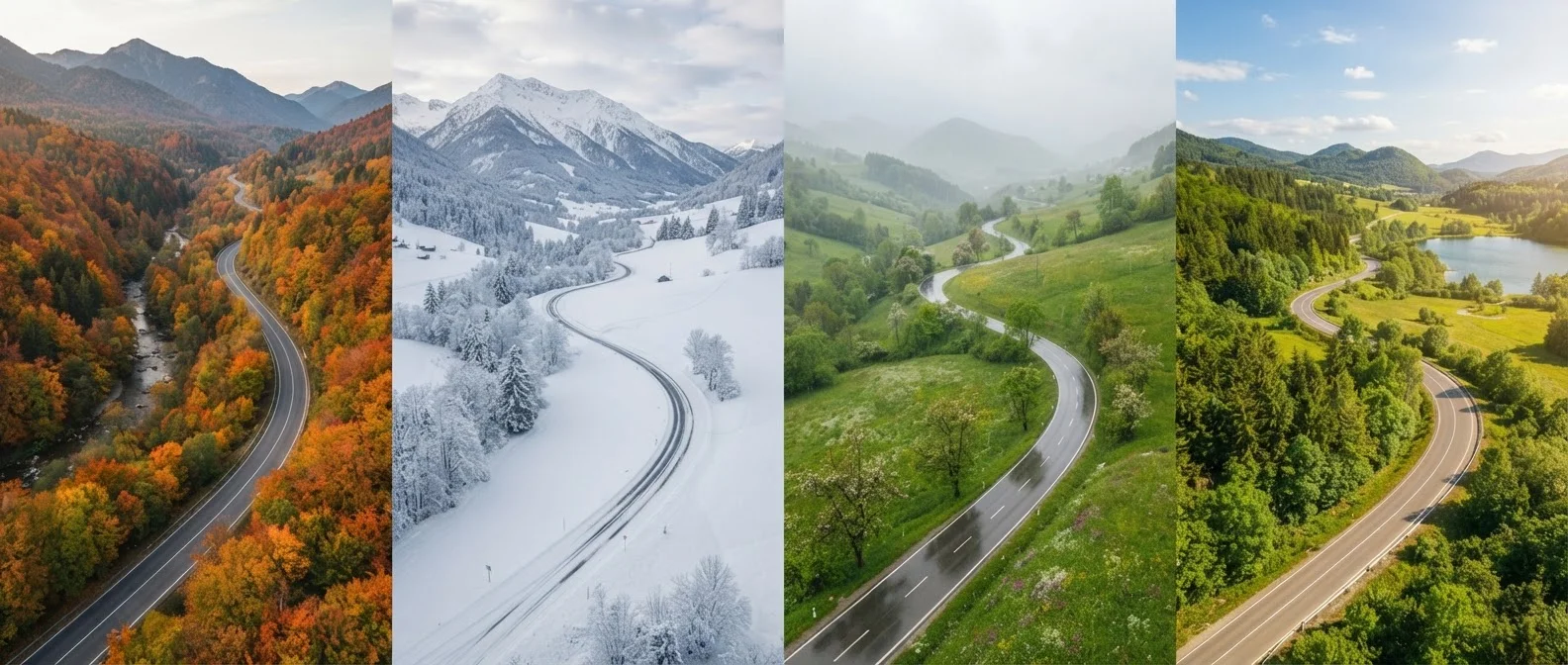
Photo: QuickSearches.net | It Doesn't Get Quicker Than This! editorial
Key Takeaways
- Each season introduces distinct hazards that require adjusted driving habits and vehicle preparation.
- Tires, brakes, and visibility systems are the most critical safety items to check at every seasonal transition.
- A well-stocked emergency kit should be adapted for the conditions you're most likely to face.
- Slowing down and increasing following distance is the single most effective adjustment in low-traction conditions.
- Seasonal car checks pair directly with safer driving - both must work together.
Why Seasonal Driving Demands a Different Mindset
Most drivers treat road safety as a fixed set of habits - buckle up, obey signals, watch your speed. Those fundamentals never change. But the environment those habits operate in changes dramatically four times a year, and drivers who fail to adapt pay for it in close calls and collisions.
Seasonal driving isn't just about adding snow tires in December. It's about recognizing that friction, visibility, fatigue, and mechanical stress all shift with the temperature and the weather pattern. The same road you drove confidently in August can become genuinely dangerous in February - not because you changed, but because the physics did.
This guide walks through what each season demands from you and your vehicle, and how to build a consistent preparedness habit that keeps you safer all year. For the vehicle-specific inspection side of this equation, see our seasonal car care checklist. And if you want to deepen your understanding of hazard anticipation, what defensive driving actually means is essential reading.
Winter: Ice, Snow, and Reduced Visibility
Winter is statistically the most dangerous driving season. Ice - particularly black ice, which is nearly invisible - can form at temperatures just above freezing, especially on bridges and overpasses where cold air circulates underneath the road surface.
- Increase following distance to at least 8-10 seconds on snow or ice. Stopping distances can increase by up to ten times on icy roads compared to dry pavement.
- Accelerate and brake gently. Sudden inputs break traction; gradual ones preserve it.
- Keep headlights on in all precipitation, even during the day. Many states require this by law.
- Know your traction control system's limits. Electronic stability control helps you stay on course but cannot fully compensate for excessive speed on ice.
Black Ice: The Hazard You Won't See Coming
If you begin to skid, steer gently in the direction you want the front of the vehicle to go and ease off the accelerator - do not slam the brakes. Practice this mental model before you need it. For a broader look at what your car's safety systems can and cannot do, read Your Car's Safety Systems Don't Drive for You.
Spring: Rain, Flooding, and Debris
Spring brings welcome warmth, but also heavy rainfall, rapidly rising water levels, and road surfaces littered with winter debris. Hydroplaning - where a layer of water lifts your tires off the pavement - becomes a real risk when tread depth is low and speeds are high.
- Check tire tread depth at the start of spring. The penny test (tread should cover Lincoln's head) is a basic minimum; the quarter test gives more margin.
- Slow down in rain. Hydroplaning typically starts around 35 mph on worn tires and higher speeds on new ones - but wet roads reduce grip well before that threshold.
- Never drive through standing water of unknown depth. Just six inches of fast-moving water can knock a person down; a foot can move a small vehicle. Turn around, don't drown.
- Watch for potholes - winter damage to road surfaces peaks in early spring. Hitting a deep pothole at speed can damage tires, wheels, and alignment.
After heavy spring rains, drive the first stretch of a familiar road at reduced speed - potholes and washed-out shoulders can appear overnight in spots you know well.
If you encounter a flooded road and choose to cross - which is generally not advisable - open your car door slightly before entering to allow water pressure to equalize, making it easier to exit if the vehicle stalls.
Summer: Heat, Glare, and Heavy Traffic
Summer puts mechanical stress on your vehicle that's easy to overlook. High ambient temperatures push coolant systems, tires, and batteries harder than most drivers realize.
- Check tire pressure more frequently. Tire pressure rises roughly 1 PSI for every 10°F increase in temperature. Overinflated tires have a smaller contact patch and are more prone to blowouts.
- Monitor engine temperature. If your temperature gauge climbs into the red, pull over safely and shut the engine off. Running a hot engine causes serious damage; opening a radiator cap on a hot engine causes serious injury - let a qualified mechanic handle it.
- Combat sun glare. Low morning and evening sun can be as blinding as ice is slippery. Keep a quality pair of polarized sunglasses in the vehicle and keep your windshield clean inside and out.
- Adjust for vacation traffic. Summer sees a spike in unfamiliar drivers on highways and rural routes. Increase your awareness and give yourself extra space around vehicles with loaded roof racks or towing trailers.
If your summer driving includes road trips through unfamiliar cities, the principles in our staying safe in unfamiliar cities guide apply on the road as much as on foot.
Fall: Wet Leaves, Deer, and Fading Light
Fall is deceptively hazardous. Wet leaves on pavement are nearly as slippery as ice - they compress into a smooth, low-friction mat that can surprise even experienced drivers during turns or braking. Meanwhile, deer activity peaks during the October-December rut, with dawn and dusk being the highest-risk windows.
- Treat leaf-covered roads like wet pavement - reduce speed, avoid sharp braking, and give yourself extra room at intersections.
- Scan the road edges at dawn and dusk in rural and suburban areas. If you see one deer, assume more are nearby. The differences between rural and urban driving demands matter especially here.
- Adjust to earlier darkness. As daylight shrinks, more of your commute falls in low-light conditions. Ensure all exterior lights - including less-noticed ones like marker lights - are working.
- Check your battery. Cold nights accelerate battery decline. A battery that barely starts the car in October may fail entirely in January.
A Simple Fall Battery Check Saves Winter Headaches
Your Year-Round Emergency Kit
No matter how prepared a driver you are, circumstances sometimes force you to stop and wait for help. A basic emergency kit is inexpensive to assemble and can make a stranded situation far less dangerous. Adapt it to your current season.
| Item | Year-Round | Add for Winter | Add for Summer |
|---|---|---|---|
| Jumper cables or jump starter pack | ✓ | - | - |
| Reflective triangles or road flares | ✓ | - | - |
| First-aid kit | ✓ | - | - |
| Flashlight and spare batteries | ✓ | - | - |
| Phone charger / power bank | ✓ | - | - |
| Ice scraper and snow brush | - | ✓ | - |
| Blanket and warm gloves | - | ✓ | - |
| Small bag of kitty litter or sand (traction aid) | - | ✓ | - |
| Extra water (sealed) | - | - | ✓ |
| Sunscreen and sunglasses | - | - | ✓ |
Before long drives in any season, consult our pre-trip preparation checklist to make sure nothing critical has been overlooked. Consistent preparation - not luck - is what separates uneventful drives from preventable emergencies.
For all things related to keeping your vehicle safe and road-ready throughout the year, our Car Ownership hub offers ongoing guidance on maintenance, insurance, and cost management.
The content on this site is provided for informational purposes only and should not be considered a substitute for professional advice. While we strive to provide accurate and up-to-date information, we make no guarantees regarding its completeness or accuracy. Always consult a qualified professional for advice specific to your circumstances before making any decisions