
Travel Safety & Health

Staying Safe in Unfamiliar Cities: A Practical Framework for Budget Travelers

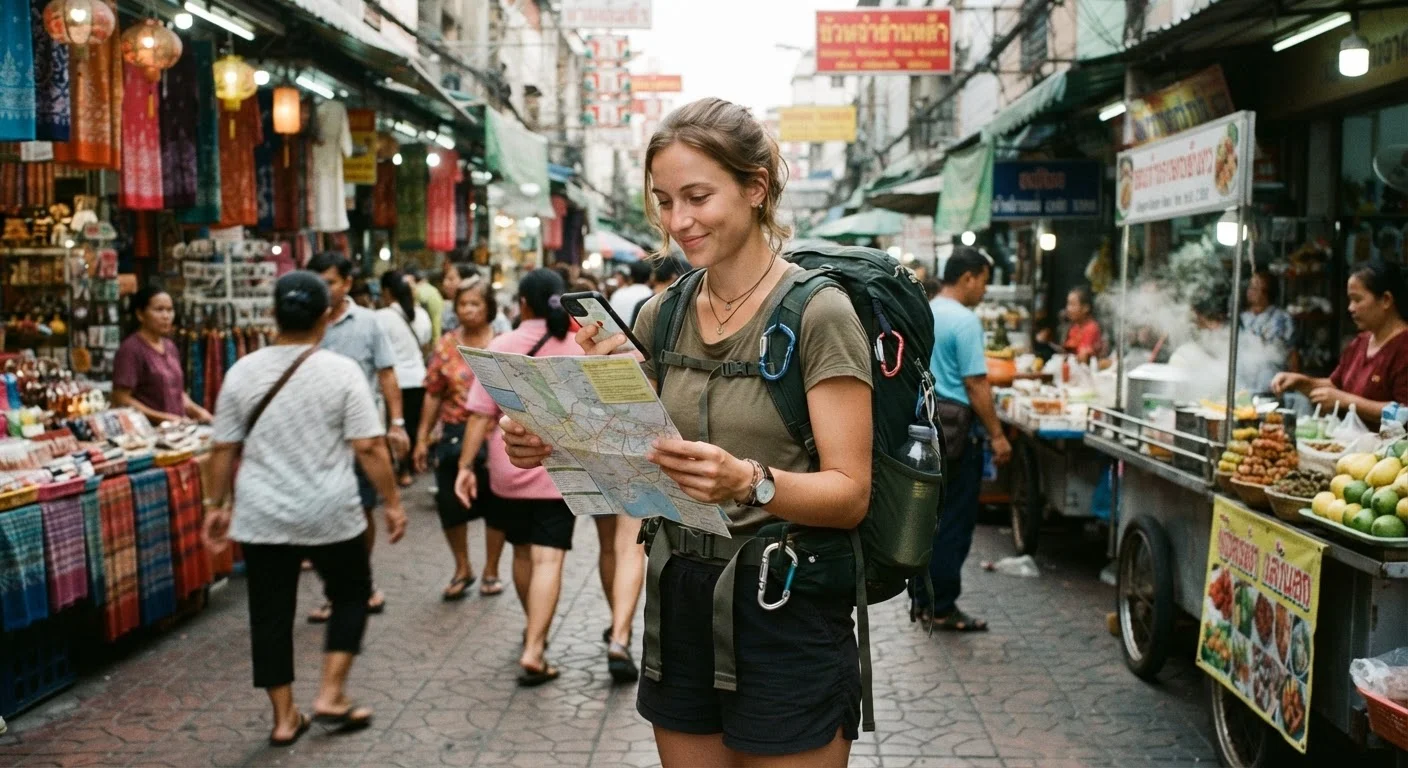
Staying Safe in Unfamiliar Cities: A Practical Framework for Budget Travelers

Photo: QuickSearches.net | It Doesn't Get Quicker Than This! editorial

Budget travel often means less predictability. These situational safety habits help you navigate new cities confidently without expensive precautions.

Key Takeaways

  • Situational awareness — not expensive gadgets — is the foundation of urban travel safety.
  • Most common travel risks are predictable and preventable with simple pre-trip habits.
  • Knowing where to get help, water, and medical care matters more than carrying everything yourself.
  • Digital security on public networks is a real but manageable risk with basic precautions.
  • Budget travelers who plan contingencies recover from setbacks faster and cheaper.

Why Budget Travelers Face Distinct Safety Challenges

Traveling on a tight budget usually means more unpredictability: shared accommodations in less-central neighborhoods, late-night transit to catch cheap connections, and less margin for error when things go sideways. That's not a reason to avoid budget travel — it's a reason to approach it with a clear head and a practical framework.

Most urban safety incidents that affect travelers aren't random. They cluster around predictable situations: arriving in a new place at night without a plan, using your phone openly in high-theft areas, or ignoring early warning signs in unfamiliar surroundings. Understanding those patterns is more useful than any piece of gear you could buy.

Before you leave home, a solid pre-trip foundation makes everything easier. The pre-trip planning checklist covers documents, contingencies, and logistics that directly affect your safety margin on the road.

Core Safety Practices Worth Building Into Every Trip

The habits below aren't about paranoia — they're about removing the gaps where problems tend to enter.

1

Map your arrival before you land, not after you touch down.

The most disorienting moment of any trip is arriving somewhere new, tired, with your bags, not knowing which direction to walk. That's when mistakes happen. Knowing your route from the airport or station to your accommodation — including which transit line, approximate cost, and a backup option — removes the vulnerable window where travelers get overcharged, misdirected, or worse.
Example: Download an offline map of your destination city before your flight, and screenshot your accommodation's address and nearest transit stop so you can access it without a data connection.
2

Keep one copy of critical documents separate from the originals.

Losing your passport is one of the most disruptive and expensive things that can happen on a trip. A photo stored in cloud storage and a paper copy kept in a different bag from your original gives you a starting point for embassy assistance and replaces the panic with a process.
Example: Email yourself a PDF of your passport, travel insurance policy number, and emergency contacts before departure — accessible from any internet-connected device anywhere in the world.
3

Use your phone deliberately in public, not reflexively.

Smartphone theft is among the most common crimes against travelers in busy urban areas. The behavior that increases risk isn't simply owning a phone — it's using it openly while distracted in crowded spaces. Checking directions, then pocketing the device before moving, is a simple habit that significantly reduces exposure.
Example: Step into a shop doorway or sit at a café table to check your map rather than stopping mid-sidewalk with your phone out in a busy market or transit hub.
4

Know the basic digital hygiene rules for public Wi-Fi.

Free Wi-Fi at hostels, cafés, and airports is a budget traveler's lifeline — but open networks carry real risks, particularly for logging into accounts or transmitting sensitive information. Understanding what's actually risky — versus what's theoretical — helps you make practical decisions rather than avoiding useful networks entirely.
Example: Avoid accessing your bank account or entering passwords on unsecured networks; use a VPN if you regularly handle sensitive logins while traveling. For a grounded breakdown, see what's actually risky on public Wi-Fi.
5

Identify the nearest pharmacy, clinic, or urgent care equivalent on day one.

Minor health issues — a stomach bug, a blister that gets infected, a prescription you forgot — can escalate quickly if you don't know where to go. Taking five minutes on your first day in a new city to locate the nearest pharmacy or walk-in clinic means you're not scrambling when you feel unwell.
Example: Ask your hostel or hotel front desk which pharmacy is closest and whether it's open late — this single question covers most minor medical needs without requiring a hospital visit.

For travelers going it alone, these habits become even more important. See our guide on solo travel safety habits for additional situational strategies.

Health and Food Safety on a Budget

Getting sick on the road is expensive, disruptive, and usually avoidable. Budget travelers are sometimes more exposed here — eating at lower-cost venues, drinking tap water without checking, or skipping travel health consultations to save money upfront.

Travel Health Preparation Varies by Destination

Health risks differ significantly between destinations — what's a non-issue in one country may require vaccinations or medication in another. General hygiene habits help everywhere, but they don't replace destination-specific guidance. Consult a travel medicine clinic or your healthcare provider well before departure, particularly for international trips to regions with different disease profiles. Always verify entry-related health requirements with official government sources, as requirements can change.

Understanding where the real food and water risks come from — and where they don't — helps you make smarter choices without anxiety. Our breakdown of food and water safety abroad covers the specific mistakes that lead to most traveler illness.

If your trip involves eating affordably at local spots — which is genuinely one of the joys of budget travel — eating well on the road offers grounded guidance on choosing safely and cheaply.

This article provides general travel safety information and is not a substitute for advice from a licensed healthcare provider. Consult a travel medicine professional before your trip for personalized health guidance, vaccinations, or medication recommendations.

Quick Wins You Can Act On Before You Leave

Safety preparation doesn't have to be time-consuming. These actions take under an hour total and meaningfully reduce your exposure to the most common travel problems.

high Share your itinerary with one trusted contact at home before you depart, including accommodation names and dates.
high Download an offline map of your destination city tonight — apps like Maps.me or Google Maps offline mode work without a data connection.
high Write your travel insurance policy number and the emergency claim phone number on a slip of paper kept in your wallet.
medium Check your government's official travel advisory page for your destination to understand current conditions before finalizing plans.
medium Set up a low-balance secondary payment method — a prepaid card or separate account — to use for daily spending, keeping your main account details off public networks.

Once you've covered the basics, consider how safety fits into the larger picture of trip planning. The anatomy of a well-planned trip walks through how research, budgeting, and contingency planning work together — including safety as a built-in layer, not an afterthought.

Travel Editorial Team

QuickSearches.net | It Doesn't Get Quicker Than This!

Travel Editorial Team is the collective byline for our editorial team and contributor network. Articles published under this byline or an editorial pen name are researched, written, and reviewed according to our editorial standards for clarity, consistency, and independence before publication.

Budget Travel TipsTrip Planning BasicsTravel Safety & Health
View author profile

The content on this site is provided for informational purposes only and should not be considered a substitute for professional advice. While we strive to provide accurate and up-to-date information, we make no guarantees regarding its completeness or accuracy. Always consult a qualified professional for advice specific to your circumstances before making any decisions