
Your Car's Safety Systems Don't Drive for You

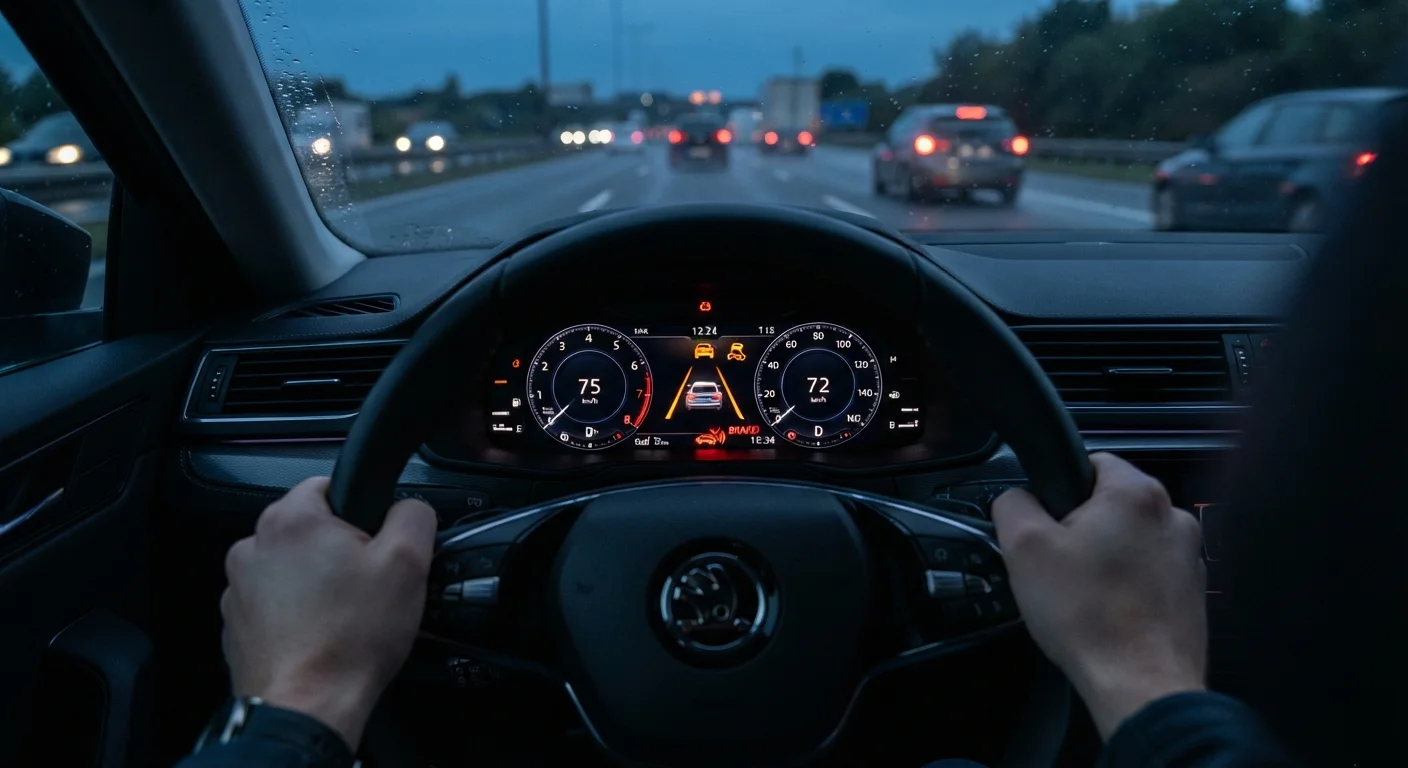
Photo: QuickSearches.net | It Doesn't Get Quicker Than This! editorial
Key Takeaways
- Driver-assistance systems reduce certain crash risks but cannot substitute for an alert, engaged driver.
- Overreliance on automation is itself a recognized safety hazard documented by traffic safety researchers.
- Every active safety feature has documented limitations, including weather, speed, and sensor conditions.
- Legal responsibility for safe vehicle operation always remains with the licensed driver, not the vehicle.
- Understanding what your car's systems actually do helps you use them correctly and stay safer.
What Driver-Assistance Systems Actually Are
Modern vehicles increasingly come equipped with a suite of driver-assistance technologies: automatic emergency braking, lane-keeping assist, blind-spot monitoring, adaptive cruise control, and rear cross-traffic alerts, among others. These systems represent genuine engineering advances and, used correctly, they do reduce the frequency and severity of certain crash types.
The problem is not the technology - it's the gap between what drivers believe these systems do and what they actually do. That gap is where crashes happen. Understanding the real capabilities and hard limits of driver-assistance features is as important as knowing how to use them.
For context on how these features affect vehicle value and ownership decisions, see our overview of car ownership fundamentals.
Myth
If my car has automatic emergency braking, it will always stop me before I hit something.
Fact
Automatic emergency braking (AEB) is designed to reduce collision severity in specific scenarios - it cannot guarantee a stop in every situation.
AEB systems use forward-facing cameras or radar to detect objects and apply brakes faster than most drivers can react. However, they are calibrated for particular speed ranges, object types, and detection distances. They generally perform less reliably at highway speeds, in poor visibility, or when detecting pedestrians at night. The National Highway Traffic Safety Administration (NHTSA) has documented scenarios where AEB systems activate late or not at all. Treat AEB as a valuable backup layer, not a guaranteed failsafe.
Myth
Lane-keeping assist means I don't have to actively steer on the highway.
Fact
Lane-keeping assist provides gentle corrective nudges; it is not a steering system and requires continuous driver input and attention.
Lane-keeping assist detects lane markings via camera and applies minor steering torque or braking if the vehicle begins to drift. Most systems will disengage or issue warnings if they detect no steering input for more than a few seconds. They also fail to function correctly when lane markings are faded, obscured by snow or glare, or absent entirely - conditions common on secondary roads. This system is a drift-prevention alert, not cruise control for steering.
Myth
Blind-spot monitoring tells me it's safe to change lanes.
Fact
Blind-spot monitoring detects vehicles in adjacent lanes within a sensor range; it does not assess the full picture of whether a lane change is safe.
Blind-spot warning systems typically use rear-facing radar to detect vehicles approaching or alongside your car. They do not account for vehicles approaching at very high speeds from far back, cyclists close to the vehicle, or objects in the adjacent lane beyond the sensor range. A clear blind-spot indicator means no detected vehicle in that zone at that moment - it does not mean the lane change is unambiguously safe. Checking mirrors and doing a physical head-check remains best practice before every lane change.
Myth
Adaptive cruise control handles everything in stop-and-go traffic, so I can relax.
Fact
Adaptive cruise control manages speed and following distance within set parameters - attention and readiness to brake are still required at all times.
Adaptive cruise control (ACC) uses sensors to maintain a set following distance from the vehicle ahead, slowing and accelerating automatically. Many drivers report feeling comfortable enough to check phones or let their attention drift, which significantly raises crash risk. ACC has known failure modes: it can struggle with stationary objects, cut-in vehicles, and tight urban intersections. Research on driver behavior with automation consistently shows that increased reliance on automation leads to degraded manual driving skills and slower reaction times - a phenomenon safety researchers call automation complacency. See our guide on distracted driving research for more on how divided attention impairs response.
Myth
If the car manufacturer calls it 'Autopilot' or 'Full Self-Driving,' the car drives itself.
Fact
Marketing names for driver-assistance packages do not reflect the vehicle's actual autonomous capability - no consumer vehicle available today drives itself.
Feature branding varies widely across manufacturers and is not regulated to match actual capability levels. The Society of Automotive Engineers (SAE) defines six levels of driving automation (Level 0-5); the vast majority of consumer vehicles sold today operate at Level 2, meaning the system assists with steering and speed simultaneously but requires the driver to monitor the environment at all times. Level 5 - true full autonomy requiring no human oversight - does not exist in production consumer vehicles. Understanding this distinction is essential for safe use of any driver-assistance package.
Specific Myths That Put Drivers at Risk
The myths below are not fringe misunderstandings - they reflect patterns of actual driver behavior documented by traffic safety researchers. Each one involves a real feature that works, just not in the way many drivers assume.
You Are Always the Driver
Automation complacency - the tendency to disengage mentally when a system takes over a task - is well-documented in aviation, industrial safety, and increasingly in driving research. The more capable a system appears, the more tempting it is to stop paying attention. That's precisely when a system limitation becomes a crash.
For a broader grounding in attentive, hazard-aware driving, our guide on what defensive driving actually means covers the underlying principles that no technology can replace.
Conditions That Undermine System Performance
Driver-assistance systems depend on sensors - cameras, radar, ultrasonic detectors - that have physical limits. Weather is among the most significant. Heavy rain reduces camera clarity and can scatter radar signals. Snow and ice accumulate on sensor housings. Bright sun at low angles can wash out lane-marking detection. These are not rare edge cases; they are ordinary driving conditions.
Sensors Have Real-World Limits
Speed is another critical variable. Many AEB systems are tested and rated within specific speed ranges, often performing well at urban speeds but with reduced effectiveness at freeway speeds. Some lane-keeping systems require a minimum speed to activate at all. Always read your vehicle's owner's manual section on system limitations - it will list the specific conditions under which each feature may not function.
Conditions like wet roads, black ice, and reduced visibility also interact with these systems in important ways. Our guide on traction hazards and wet roads explains how surface conditions change vehicle behavior, with or without electronic assistance.
Using Technology as a Tool, Not a Replacement
The right mental model for driver-assistance technology is that of a skilled co-pilot who handles narrow, specific tasks - not a replacement driver who takes over responsibility. AEB can react faster than you in a forward-collision scenario; that's genuinely useful. But it cannot navigate an intersection, interpret a flagman's signal, or recognize a child running between parked cars.
Keep your hands on the wheel, your eyes scanning the road, and your attention on the driving task - even when systems are active. Maintain proper following distance regardless of what adaptive cruise control indicates, because your judgment of the full scene is broader than any single sensor's field of view.
For year-round driving readiness - including how seasonal conditions interact with vehicle systems - see our year-round driving preparedness guide. The safest driver is one who understands both the tools available and the irreplaceable role of their own attention.
Level 2
Automation level of most consumer driver-assistance vehicles
According to the SAE International automation scale, Level 2 systems assist with both steering and speed but require continuous driver supervision.
94%
Of serious crashes involving human choice or error
NHTSA research has attributed approximately 94% of serious crashes to human factors, underscoring that driver attention remains the primary safety variable.
~50%
Reduction in rear-end crashes linked to AEB in some studies
Insurance Institute for Highway Safety (IIHS) research has found significant rear-end crash reductions in vehicles equipped with forward collision warning and AEB - under conditions where the systems function as designed.
The content on this site is provided for informational purposes only and should not be considered a substitute for professional advice. While we strive to provide accurate and up-to-date information, we make no guarantees regarding its completeness or accuracy. Always consult a qualified professional for advice specific to your circumstances before making any decisions