
Rural Roads vs. Urban Streets: How Driving Demands Differ

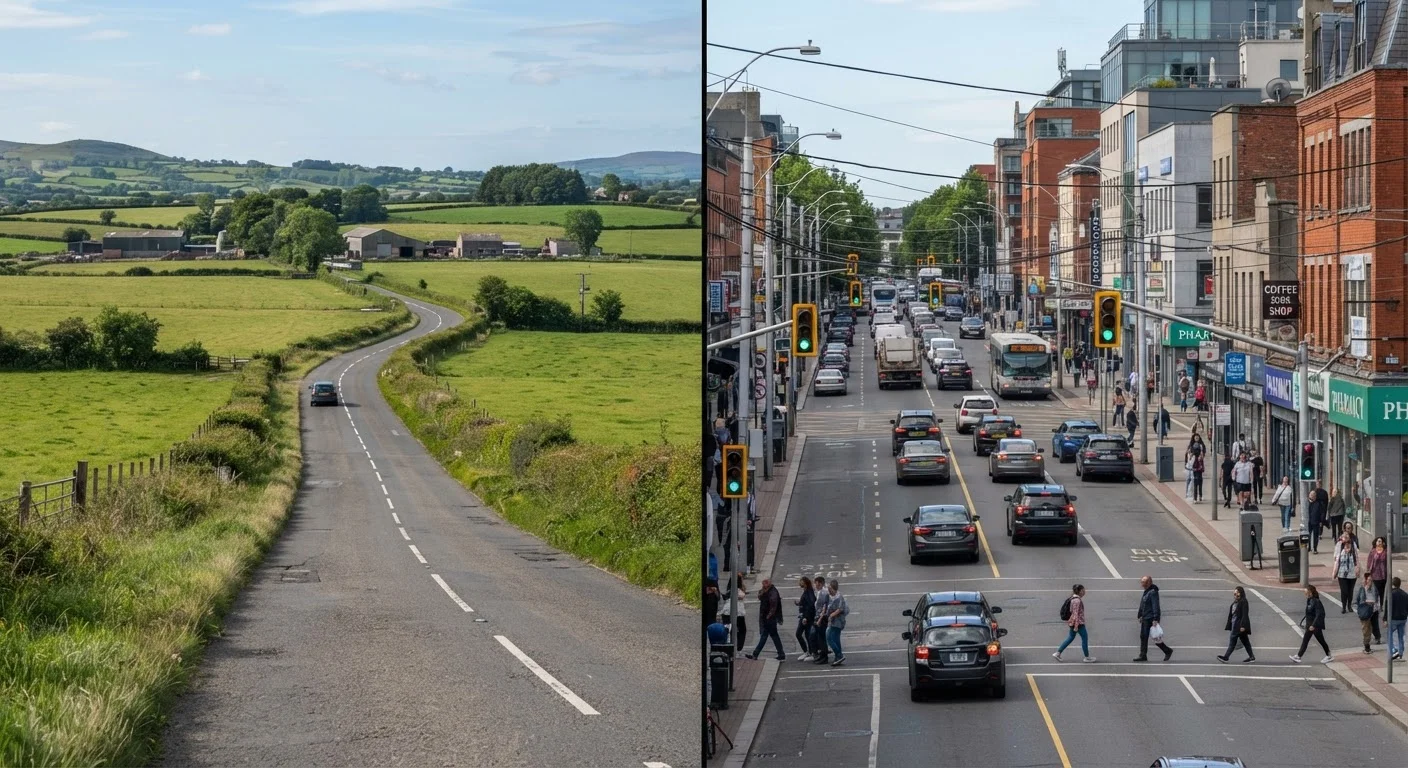
Photo: QuickSearches.net | It Doesn't Get Quicker Than This! editorial
Key Takeaways
- Rural roads account for a disproportionate share of fatal crashes despite carrying less traffic than urban roads.
- Urban driving demands rapid, frequent decisions at lower speeds; rural driving demands sustained alertness at higher speeds.
- Wildlife crossings, narrow lanes, and poor lighting make rural roads especially hazardous after dark.
- Pedestrians, cyclists, and complex intersections are the primary hazards in city driving environments.
- Both environments require different following distances, speed management, and hazard-scanning habits.
The Numbers Behind the Risk
A common assumption is that city driving - with its dense traffic, pedestrians, and intersections - is inherently more dangerous than open country roads. The data tells a more complicated story. According to the National Highway Traffic Safety Administration (NHTSA), rural roads consistently account for roughly half of all U.S. traffic fatalities despite carrying far less traffic volume than urban roads. Higher speeds, longer emergency response times, and a lack of safety infrastructure all contribute to rural roads' outsized fatality rate.
Urban roads, by contrast, produce more total crashes due to sheer traffic density, but those crashes are more likely to involve lower speeds and faster access to emergency care. Understanding where serious risk actually concentrates helps drivers allocate their attention appropriately - both on the road and when preparing their vehicles for travel.
~50%
Share of U.S. traffic fatalities on rural roads
NHTSA data consistently shows rural roads account for roughly half of annual traffic deaths despite much lower traffic volumes than urban areas.
3x
Higher fatality rate per mile traveled on rural roads
Research published by the Insurance Institute for Highway Safety (IIHS) indicates rural roads have a fatality rate approximately three times that of urban roads per mile driven.
1.5 million
Annual deer-vehicle collisions in the U.S.
The State Farm annual deer-strike report estimates approximately 1.5 million deer-vehicle collisions occur each year, the vast majority on rural roads.
Head-to-Head: Key Differences at a Glance
The table below captures the practical differences that shape how drivers should behave in each setting. Neither environment is uniformly safer - they simply demand different things from you behind the wheel.
| Criterion | Rural Roads | Urban Streets |
|---|---|---|
| Typical speed | 55-65 mph posted limits | 25-35 mph posted limits |
| Primary hazards | Wildlife, curves, fatigue, poor lighting | Pedestrians, cyclists, complex intersections |
| Decision frequency | Lower but sustained vigilance | High - constant rapid decisions |
| Emergency response time | Often 20+ minutes in remote areas | Typically faster access to services |
| Road markings & signage | Often minimal or absent | Dense - signals, lane lines, signs |
| Traffic volume | Low - fewer vehicles | High - dense, unpredictable flow |
| Fatal crash rate | Disproportionately high per mile | Lower fatality rate per crash |
| Key scanning habit | Long-range - scan far ahead | Short-range - near and lateral awareness |
Rural Road Hazards: What Demands Your Attention
Rural driving is defined by speed and space - but those two factors create their own danger. Higher posted speed limits (often 55-65 mph) mean that reaction time is compressed and crash energy is dramatically greater. Many rural roads lack shoulders, guardrails, centerline rumble strips, or adequate lighting. A distracted moment at 60 mph is far more consequential than the same moment at 25 mph in a parking garage.
Wildlife is a serious and underappreciated hazard. Deer-vehicle collisions are heavily concentrated in rural areas, particularly at dawn and dusk. Curves, hills, and driveways may not be marked with warning signs. For a deeper look at how to read the signs that are present, see our guide to U.S. road signs.
Rural roads also become far more dangerous after dark. Poor ambient lighting, the absence of streetlights, and animals crossing at night combine to create elevated risk. Our article on why night driving carries greater risk explains the visibility mechanics in detail.
Fatigue is another outsized rural threat. Long, monotonous stretches offer fewer natural breaks in attention than urban driving does. Drivers should plan rest stops intentionally and recognize early signs of drowsiness before they become dangerous.
Urban Street Hazards: What Demands Your Attention
City driving compresses your decision-making timeline. At any given intersection, you may need to track traffic signals, pedestrians in crosswalks, cyclists in bike lanes, double-parked delivery vehicles, and vehicles merging from side streets - often simultaneously. The pace of decisions is high even when the pace of travel is slow.
Pedestrian and cyclist conflicts are among the most serious urban hazards. Distracted walking, jaywalking, and cyclists filtering through traffic all require drivers to anticipate movement that may not follow a predictable path. Checking mirrors and blind spots more frequently than you would on a rural highway is not optional - it is essential.
Urban drivers also contend with aggressive driving patterns. Tight lanes, competitive lane changes, and stop-and-go frustration can escalate quickly. Understanding how road aggression escalates - and how to de-escalate - is a practical safety skill in high-density environments.
Wet or slick roads compound urban hazards by extending stopping distances on roads already crowded with vehicles and pedestrians. Our traction hazards guide covers how rain and ice affect vehicle control at lower urban speeds as well as highway speeds.
Adapting Your Habits When Crossing Environments
Many drivers move between rural and urban roads within a single trip - a suburban commuter may travel a country highway before merging onto city streets. The mental shift required is often underestimated. Rural driving builds habits of long-range scanning and sustained speed maintenance; urban driving demands short-range awareness and constant speed adjustment. Neither set of habits transfers automatically.
When transitioning from highway or rural roads to city streets, consciously reduce your following distance, lower your scanning horizon from distant to near, and increase your check frequency on mirrors and blind spots. When transitioning from city to rural, expand your scanning range ahead and prepare for the absence of the visual cues - signals, crosswalks, lane markings - that city driving provides as a constant reference.
Seasonal changes also affect both environments differently. Rural roads are more susceptible to ice patches, flooding, and debris, while urban roads may concentrate surface water at intersections and experience reduced visibility in heavy rain. Our year-round driving preparedness guide addresses how to adjust for each season in both settings.
This article is for general informational purposes only. Always observe posted speed limits, obey local traffic laws, and consult official driver safety resources in your state for guidance specific to your jurisdiction.
The content on this site is provided for informational purposes only and should not be considered a substitute for professional advice. While we strive to provide accurate and up-to-date information, we make no guarantees regarding its completeness or accuracy. Always consult a qualified professional for advice specific to your circumstances before making any decisions