
Data Caps: How They Work and When They Actually Affect You

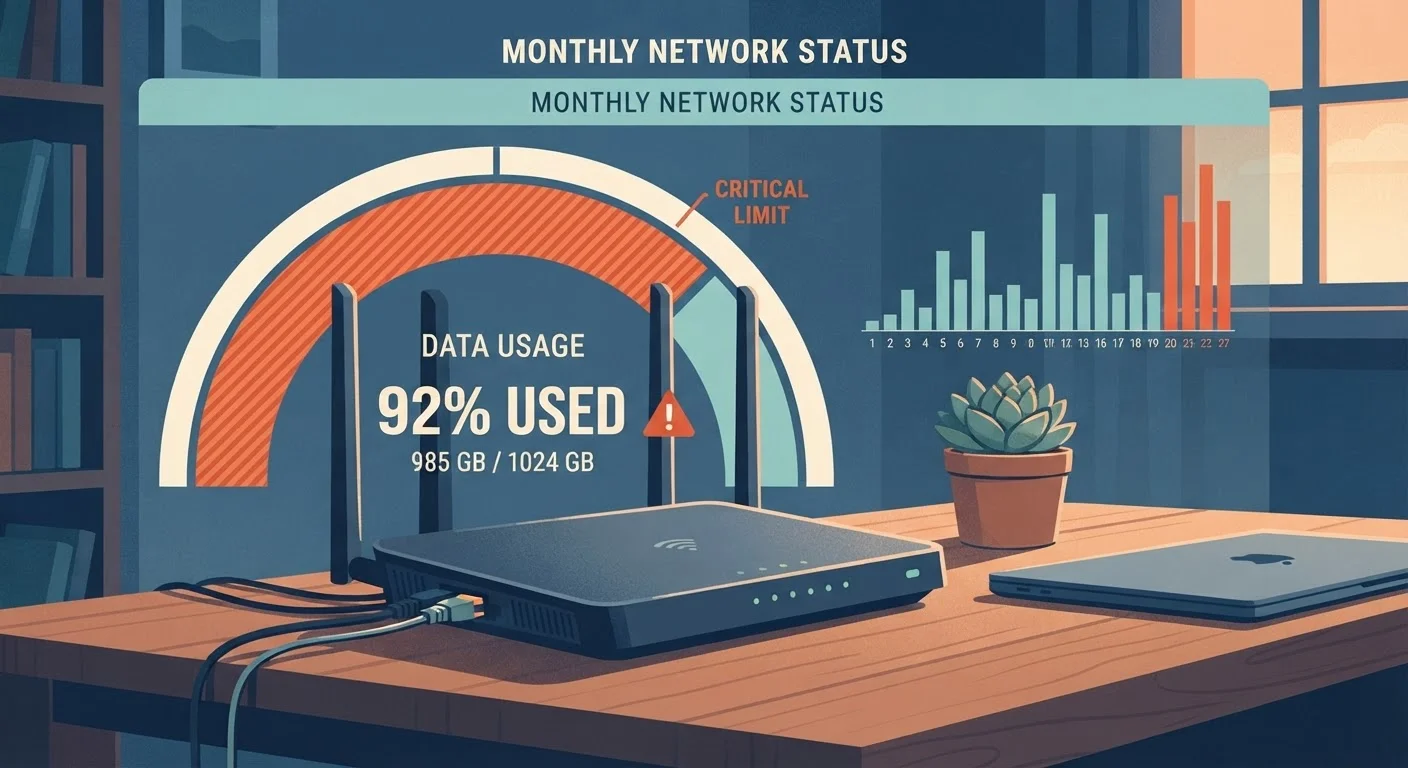
Photo: QuickSearches.net | It Doesn't Get Quicker Than This! editorial
Key Takeaways
- Data caps limit total monthly usage and trigger either overage fees or speed throttling when exceeded.
- Plans marketed as 'unlimited' can still include a soft cap that reduces speeds after a set threshold.
- Satellite and DSL plans are most likely to impose strict caps; fiber plans are less commonly capped.
- Streaming video, video calls, and gaming consume far more data than browsing or email.
- Monitoring your usage through your router or ISP account dashboard can prevent surprise charges.
- Understanding what happens at the cap - throttling vs. overage fees - matters as much as the cap number itself.
What a Data Cap Actually Measures
Every time you load a webpage, stream a show, send an email, or join a video call, data moves across your internet connection. A data cap counts all of that activity - uploads and downloads combined - against a monthly allowance measured in gigabytes (GB) or terabytes (TB). When that counter hits the limit your ISP has set, the terms of your plan determine what happens next.
It's worth pairing this concept with a clear picture of how speeds work. Understanding Mbps and Gbps helps you see how bandwidth and data volume are related but distinct - speed tells you how fast data moves, while a cap controls how much can move total in a given month.
The type of connection you have also shapes how likely a cap is. Different home internet technologies carry different cap norms: satellite and DSL plans are historically more likely to impose strict hard caps, while many fiber plans offer genuinely unlimited data.
Hard Caps, Soft Caps, and the 'Unlimited' Illusion
Data caps come in two flavors, and the distinction matters a great deal for your day-to-day experience.
- Hard caps trigger overage charges once you exceed your allowance. ISPs typically charge a set fee for each additional block of data - for example, a flat rate per 50 GB increment. These charges can add up quickly in a high-usage month.
- Soft caps (also called speed thresholds) don't generate extra fees, but your speeds drop sharply after you cross the threshold - sometimes to a fraction of your normal rate. This is the mechanism hiding inside many so-called 'unlimited' plans.
The phrase 'unlimited' in plan marketing does not guarantee uncapped performance. Many plans include fine print describing a data threshold - often 20 GB, 50 GB, or more - after which speeds are reduced for congestion management. This practice is distinct from, but related to, deprioritization on wireless networks. Deprioritization, throttling, and data caps are three different mechanisms carriers use, and understanding each one helps you read plan terms accurately. Similarly, unlimited plans vary significantly once you look past the headline.
1.2 TB
Average U.S. household monthly internet data use
According to OpenVault's Broadband Insights Report, average household consumption has grown substantially year over year, with heavy users regularly exceeding this threshold.
~7 GB
Data used per hour streaming 4K video
Streaming service technical documentation consistently estimates 4K ultra-HD content consumes approximately 7 GB per hour per stream.
1 TB
Common soft-cap threshold on major cable plans
Several large cable ISPs in the U.S. apply a 1 TB monthly data allowance, after which overage charges or speed reductions may apply depending on the specific plan.
Which Activities Eat Through Your Allowance Fastest
Not all internet activity consumes data equally. The gap between light and heavy usage habits is enormous:
| Activity | Approximate Data Use |
|---|---|
| Streaming HD video (1080p) | ~3 GB per hour |
| Streaming 4K video | ~7 GB per hour |
| Video calling (HD) | ~1.5 GB per hour |
| Online gaming (active play) | 0.05-0.3 GB per hour |
| Music streaming | ~0.05-0.15 GB per hour |
| Web browsing / email | Under 0.05 GB per hour |
A household with multiple people streaming simultaneously can exhaust a 1 TB (1,000 GB) cap within a month without doing anything unusual. If your plan has a cap well below that, evaluating your actual usage patterns first - before assuming the cap is a problem - is the most practical approach.
Set a Usage Alert Before You Hit the Cap
How to Track Your Usage and Avoid Surprises
Most ISPs provide a usage meter in your online account dashboard or mobile app. Checking it mid-cycle - especially in the week or two before your billing date resets - gives you time to adjust habits if you're running close to the limit.
Your home router may also offer built-in usage tracking. Some third-party routers provide per-device breakdowns, which can help identify which devices or streaming services are consuming the most data. If you share a household with several people or have smart home devices that update automatically, that visibility becomes especially useful.
For light internet users, a capped plan may represent genuine savings over an unlimited tier. Light users often overpay for unlimited plans when their actual monthly consumption never comes close to triggering a cap - a principle that applies to home internet as well as mobile plans.
Before signing up for any plan, ask specifically: Is there a data cap? What happens when I hit it? Is there a way to buy additional data, or will my speeds simply drop? Getting clear answers to those questions in writing is the most reliable way to avoid bill shock later.
Frequently Asked Questions
The content on this site is provided for informational purposes only and should not be considered a substitute for professional advice. While we strive to provide accurate and up-to-date information, we make no guarantees regarding its completeness or accuracy. Always consult a qualified professional for advice specific to your circumstances before making any decisions