
Unlimited Data Plans Are Not All the Same

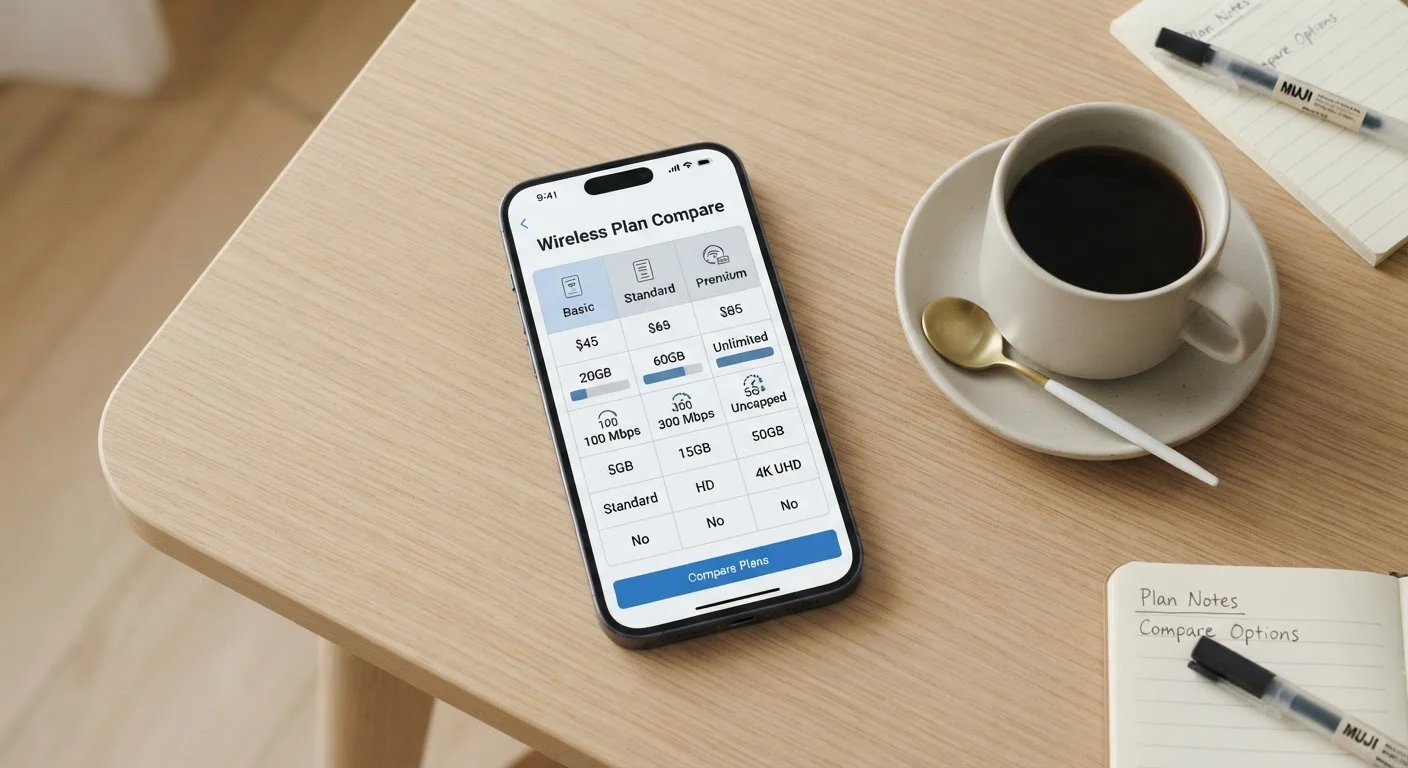
Photo: QuickSearches.net | It Doesn't Get Quicker Than This! editorial
Key Takeaways
- "Unlimited" data plans routinely cap speeds, throttle service, and restrict hotspot use after set thresholds.
- Deprioritization can slow your connection during peak hours even before you hit any data threshold.
- Mobile hotspot data is almost always capped separately from your phone's data allotment.
- Reading a plan's full policy document - not just the headline price - is the only way to compare plans accurately.
- Light users may pay significantly more than necessary for unlimited tiers they never fully use.
What Carriers Mean When They Say 'Unlimited'
The word "unlimited" in wireless marketing is legally permissible even when the plan includes hard speed caps, data thresholds that trigger throttling, and separate limits on hotspot use. The Federal Trade Commission has scrutinized carriers over this language in the past, but the term remains common. Understanding what sits behind the headline is essential before you commit to any plan.
Every carrier's unlimited plan is governed by a policy document - sometimes called a Fair Use Policy or Network Management Policy - that details exactly when and how speeds can be reduced. If you haven't read that document, you don't actually know what you're buying. See our phone plan shopping checklist for a structured way to catch these details before signing up.
Myth
An unlimited plan means I can use as much data as I want at full speed, all the time.
Fact
Most unlimited plans reduce speeds - either through hard caps or deprioritization - after you reach a defined data threshold or during congested network periods.
Carriers are permitted to manage network traffic, and virtually all unlimited plans include a threshold - often called a Premium Data Allowance - after which your connection may be deprioritized behind other users during busy periods. Some entry-level unlimited plans also apply permanent speed caps on video streaming, regardless of how much data you've used. Neither practice technically violates the term "unlimited" because your data is never cut off entirely - it's just slowed.
Myth
My phone's hotspot uses the same unlimited data pool as everything else on my plan.
Fact
Mobile hotspot data is metered separately on nearly every unlimited plan, with full-speed access capped at a fixed monthly amount.
Even on the most expensive unlimited tiers, hotspot (also called tethering) data is treated as a distinct bucket. Once you exhaust the included hotspot allotment - which can be as low as a few gigabytes on base plans - hotspot speeds typically drop to 600 Kbps or slower, making video calls and most web browsing impractical. If connecting other devices through your phone is important to your workflow, verify the hotspot allotment specifically, not just the overall data claim.
Myth
Paying more for a premium unlimited tier guarantees better speeds.
Fact
Higher tiers generally improve your priority during congestion and raise your hotspot cap, but they cannot override the physical limits of your local network coverage.
Premium tiers typically offer a higher deprioritization threshold and better video streaming quality, but your real-world speed still depends on signal strength, tower capacity in your area, and your device's capabilities. In a rural area with weak coverage, a premium plan won't deliver meaningfully faster speeds than a base plan - you're primarily paying for better treatment when the network is congested. Coverage maps give a rough picture, but user-reported data from independent sources tends to be more reflective of daily experience.
Myth
All carriers define 'unlimited' the same way, so price is the main differentiator.
Fact
Deprioritization thresholds, hotspot allotments, video quality limits, and international roaming policies vary significantly across carriers and even across tiers within the same carrier.
A plan that advertises the same monthly price as a competitor's may have a deprioritization threshold that is half as generous, a hotspot cap that is a fraction of the size, or a video streaming cap locked to standard definition. Comparing plans on price alone without reading the associated policy documents is a reliable way to end up on a plan that underperforms for your specific usage patterns. Build a simple side-by-side comparison using the four key metrics - deprioritization threshold, video quality cap, hotspot data, and all-in monthly cost - before deciding.
Myth
Deprioritization only affects people in major cities during special events.
Fact
Deprioritization can occur on any congested cell tower, which includes busy suburban intersections, highways, stadiums, and commuter corridors throughout the day.
Tower congestion is a function of how many users are connecting to a specific antenna relative to its capacity, and it happens routinely during morning and evening commute hours in many suburban and semi-rural areas - not just at large events. If your daily route takes you through areas with consistent congestion, a plan with a higher deprioritization threshold will offer more consistent performance, even if you never approach the threshold at home.
Speed Caps, Deprioritization, and Hotspot Limits Explained
Three mechanisms can limit your service on an unlimited plan, and they work very differently. It helps to understand each one on its own terms before evaluating any specific plan. Our article on deprioritization, throttling, and data caps covers the mechanics in detail.
~15-25%
Typical fee and tax increase above advertised plan price
Regulatory fees, surcharges, and taxes commonly add 15-25% to the base monthly price shown in carrier advertisements, according to general industry analysis of US wireless billing.
5 GB-50 GB
Hotspot data range across common unlimited plan tiers
The included high-speed hotspot allotment on mainstream US unlimited plans varies widely by tier, reflecting how differently carriers define 'unlimited' in practice.
Speed caps are fixed ceilings applied to certain plan tiers regardless of network conditions. An entry-level unlimited plan might permanently limit video streaming to standard definition, for instance, regardless of how much data you've used or how congested the network is.
Deprioritization is different - it only affects you when a specific cell tower is congested. Customers on premium tiers get bandwidth first; customers on lower tiers experience slowdowns during busy periods. If you live or commute through dense urban areas, this can noticeably affect daily performance.
Hotspot data is almost always metered separately. Most unlimited plans give you a defined amount of full-speed hotspot data per month - often between 5 GB and 50 GB depending on the tier - after which hotspot speeds drop sharply. This matters if you rely on your phone to connect a laptop or tablet. For context on how data thresholds work more broadly, see our piece on how data caps actually affect you.
Matching the Right Plan to Your Actual Usage
Once you understand the mechanics, the practical question becomes whether you actually need an unlimited plan at all. Carriers have a financial incentive to move customers to higher tiers, but a significant share of subscribers use far less data than they assume. If your monthly usage consistently falls under 5 GB, a premium unlimited plan is almost certainly costing you more than it should - our guide for light data users walks through how to right-size your plan.
Always Compare the Full-Speed Thresholds, Not Just the Price
When comparing plans, focus on four specific numbers: the full-speed data threshold before deprioritization kicks in, the maximum video streaming resolution allowed, the hotspot data allotment, and the per-line price after all fees and taxes. Carrier websites display pre-tax prices; the actual monthly charge can be 10-20% higher once regulatory fees and surcharges are added. Before committing to any contract, review our guidance on reading ISP and carrier contracts carefully so you don't get caught by auto-renewal terms or early termination fees.
The content on this site is provided for informational purposes only and should not be considered a substitute for professional advice. While we strive to provide accurate and up-to-date information, we make no guarantees regarding its completeness or accuracy. Always consult a qualified professional for advice specific to your circumstances before making any decisions