
Mulching Your Garden Beds: Material Types, Depth, and Timing

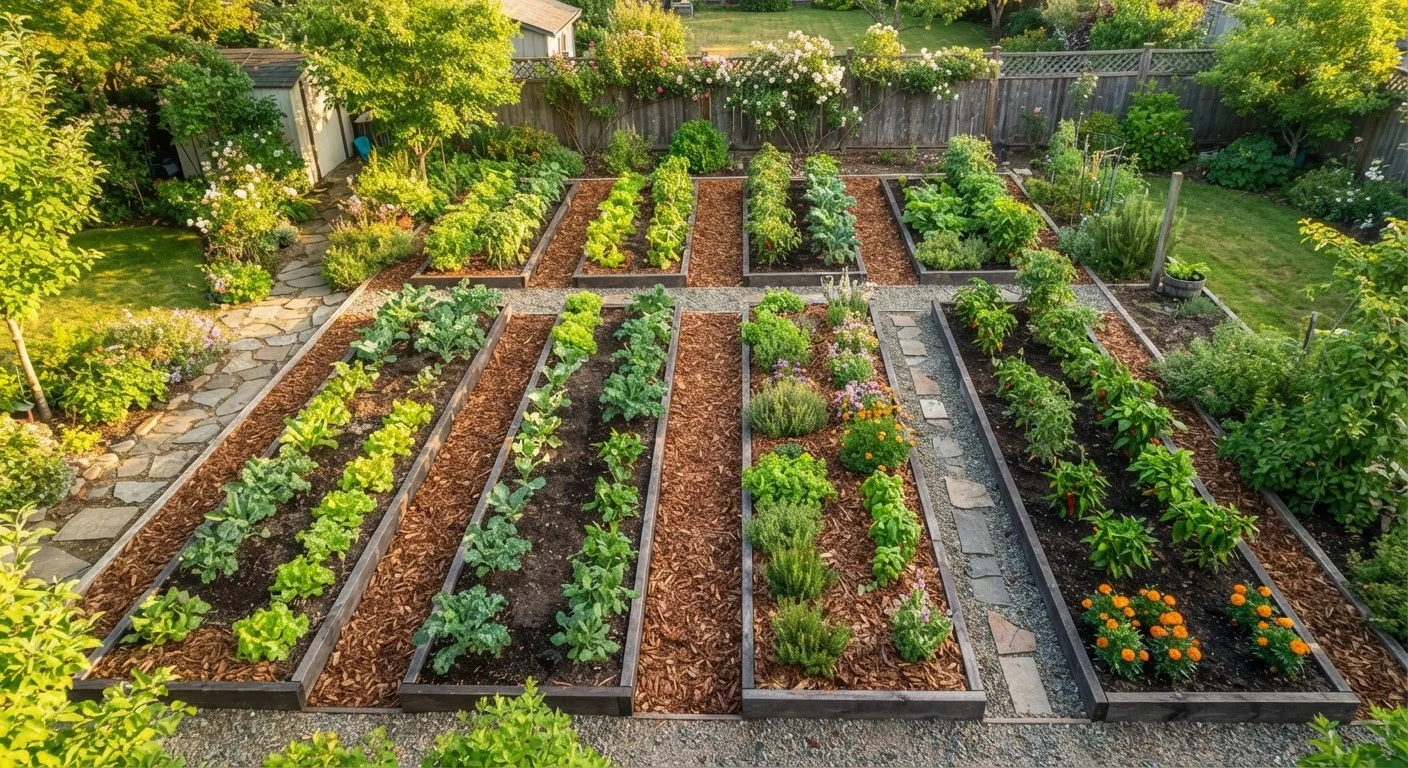
Photo: QuickSearches.net | It Doesn't Get Quicker Than This! editorial
Why Mulch Belongs in Every Garden Bed
Mulch does more quiet work than almost any other gardening practice. A proper layer slows water evaporation, moderates soil temperature, suppresses weeds, and - depending on the material - gradually improves soil structure as it breaks down. For budget-conscious homeowners, that translates to lower water bills, fewer hours pulling weeds, and healthier plants with less supplemental fertilizer.
Before choosing a mulch, it helps to understand your soil. Reading what your soil is already telling you can help you pick a material that complements, rather than worsens, existing conditions - for example, avoiding moisture-retaining mulch over already waterlogged ground.
| Ideal mulch depth (most materials) | 2-4 inches (University Cooperative Extension general guidance) |
| Clearance from plant stems | 2-3 inches minimum |
| Wood chip decomposition rate | 2-4 years |
| Best timing for spring application | After soil has begun to warm |
| Straw vs. hay | Use straw - hay contains weed seeds |
| Free mulch sources | Municipal compost programs, tree service companies |
Common Mulch Materials at a Glance
Different materials suit different goals. Here's how the most widely available options compare:
- Wood chips: Durable, widely available (often free from tree services or municipal programs), and excellent for pathways or around trees and shrubs. They break down slowly - over 2-4 years - gradually feeding soil with organic matter. Avoid fresh, green wood chips directly around vegetable seedlings, as they can temporarily tie up nitrogen during decomposition.
- Shredded bark: Finer texture than chips, stays in place well on slopes, and is a common choice for ornamental beds. Breaks down moderately fast, adding organic matter within 1-2 seasons.
- Straw (not hay): Lightweight and easy to spread, straw is popular in vegetable gardens because it doesn't mat and lets water pass through freely. It decomposes within a single season, so plan to replenish annually. Avoid hay, which typically contains weed seeds.
- Pine needles (pine straw): Long-lasting, attractive, and excellent for acid-loving plants like blueberries, azaleas, and rhododendrons. Despite common belief, they don't significantly acidify soil unless applied in very large quantities over many years.
- Shredded leaves: A free resource in autumn, shredded leaves break down quickly and enrich soil. Whole leaves can mat and repel water - run them through a mower or shredder first.
- Compost: Technically a mulch when applied as a top dressing, compost feeds soil biology immediately but provides little weed suppression on its own. Often best layered beneath a coarser mulch. See our guide to soil amendments and when your lawn needs them for more on how compost fits into your overall soil strategy.
Organic mulch
Any mulch made from plant-based material - wood chips, straw, leaves, bark - that decomposes over time and adds organic matter to the soil.
Inorganic mulch
Non-decomposing materials like gravel, landscape fabric, or rubber. They suppress weeds and last longer but don't improve soil health.
Nitrogen drawdown
A temporary reduction in available soil nitrogen that occurs when high-carbon materials like fresh wood chips decompose. Affects plants closest to the decomposing layer.
Top dressing
Applying a thin layer of material - often compost - over the soil surface without working it in, allowing it to slowly incorporate through rainfall and worm activity.
Mulch volcano
A common - and harmful - practice of piling mulch high against a tree trunk. It traps moisture against bark, promotes rot, and invites pests. Always keep mulch away from the trunk flare.
How Deep to Apply - and When to Refresh
Depth matters as much as material choice. Too thin and you lose the weed-suppression and moisture-retention benefits; too thick and you risk smothering roots or creating conditions for fungal problems.
| Mulch Type | Recommended Depth | Refresh Frequency |
|---|---|---|
| Wood chips | 3-4 inches | Every 2-3 years |
| Shredded bark | 2-3 inches | Annually to every 2 years |
| Straw | 3-4 inches | Every season |
| Pine needles | 2-3 inches | Every 1-2 years |
| Shredded leaves | 2-3 inches | Every season |
| Compost (top dress) | ½-1 inch | 1-2 times per year |
Timing: Apply or refresh mulch in early spring after soil has warmed slightly - mulching cold, wet soil can delay warming and slow plant growth. A second application in late fall helps insulate perennial root zones through winter. Keep mulch pulled back 2-3 inches from plant stems and tree trunks to prevent rot and deter pests.
If you're planting into raised beds, mulching principles are the same, though bed walls help contain looser materials like straw. The raised beds vs. in-ground comparison covers drainage and weed-control trade-offs that affect which mulch works best in each setup. Mulch is also a cornerstone of water-wise landscaping - if you're working toward a drought-tolerant yard, a consistent 3-inch layer can cut irrigation needs substantially.
Landscape Fabric Is Not a Substitute for Mulch
The content on this site is provided for informational purposes only and should not be considered a substitute for professional advice. While we strive to provide accurate and up-to-date information, we make no guarantees regarding its completeness or accuracy. Always consult a qualified professional for advice specific to your circumstances before making any decisions