
The Anatomy of a Credit Report: Every Section Explained

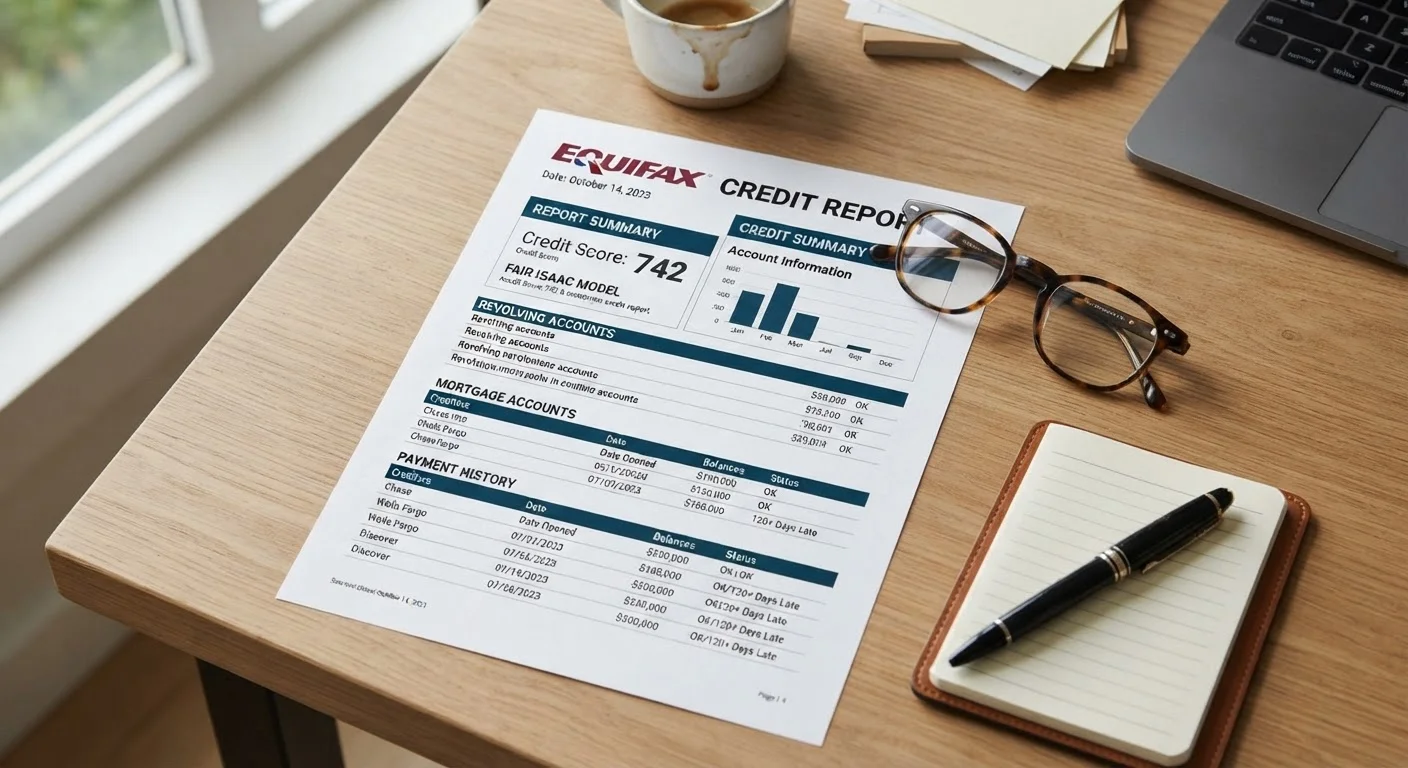
Photo: QuickSearches.net | It Doesn't Get Quicker Than This! editorial
Personal Information
The top of every credit report lists identifying data: your name (including variations), current and past addresses, date of birth, Social Security number (partially masked), and sometimes employer history. This section does not affect your credit score - it's purely administrative.
Still, review it carefully. A misspelled name or an address you don't recognize could signal mixed files (where another person's data was merged with yours) or identity theft. If you're new to understanding credit basics, the plain-English starting point for credit newcomers covers how these files get built in the first place.
Account History (Tradelines)
This is the largest and most consequential section. Every credit account you've opened - credit cards, auto loans, mortgages, student loans - appears here as a tradeline. For each account, the report typically shows:
- Creditor name and account number (partially masked)
- Account type (revolving, installment, mortgage)
- Date opened and date of last activity
- Credit limit or original loan amount
- Current balance and monthly payment
- Payment history - usually shown month by month as on-time, late, or missed
- Account status - open, closed, charged off, or in collections
Payment history is the single biggest driver of your credit score, typically accounting for the largest share of scoring model calculations. A single 30-day late payment can remain on your report for seven years. To understand exactly how these factors translate into your score, see what your credit score actually measures.
Public Records and Collections
Public records on a credit report are limited to bankruptcies following changes the bureaus made in 2017-2018, which removed civil judgments and tax liens. A Chapter 7 bankruptcy stays on your report for 10 years; a Chapter 13 stays for 7 years from the filing date.
Separately, a collections section lists accounts that have been sold or assigned to a third-party debt collector. Each collection entry shows the original creditor, the collection agency, the amount, and the date of first delinquency - which determines when the item ages off your report. Even if you pay a collection account, the record typically remains visible until its 7-year clock expires, though its status updates to reflect payment.
Inquiries
The inquiries section records who has accessed your credit report and why. There are two types:
- Hard inquiries
- Generated when you apply for credit - a mortgage, car loan, or credit card. These are visible to lenders and can modestly lower your score for up to 12 months, though they drop off after two years.
- Soft inquiries
- Generated by background checks, employer screenings, your own report pulls, or pre-approval offers. These are not visible to lenders evaluating your creditworthiness and do not affect your score.
Multiple hard inquiries for the same loan type (auto, mortgage) within a short window - typically 14 to 45 days depending on the scoring model - are usually treated as a single inquiry to encourage rate shopping. Understanding how inquiries interact with your overall profile matters especially if your credit score is at a transitional life stage.
How to Use This Information
Pulling all three reports - from Equifax, Experian, and TransUnion - gives you a complete picture, since not all lenders report to all bureaus. When you review each section:
- Verify personal information is accurate and belongs to you.
- Check every tradeline: confirm the balance, status, and payment history reflect your actual history.
- Look for collections you don't recognize - these are a common sign of identity theft or creditor error.
- Scan the public records section for any bankruptcy entries you weren't expecting.
- Review hard inquiries for applications you don't recall authorizing.
If something looks wrong, the Fair Credit Reporting Act gives you the right to dispute it. The step-by-step dispute process walks through exactly how to file with each bureau. Keep in mind that lenders also consider factors your credit report doesn't show - such as income - so understanding your debt-to-income ratio gives you a fuller picture of how you look to a lender.
This article is for general informational and educational purposes only and does not constitute personalized financial or legal advice. Consult a qualified financial professional for guidance specific to your situation.
The content on this site is provided for informational purposes only and should not be considered a substitute for professional advice. While we strive to provide accurate and up-to-date information, we make no guarantees regarding its completeness or accuracy. Always consult a qualified professional for advice specific to your circumstances before making any decisions