
Credit Scores Across the Lifespan: How Scores Evolve as Life Changes

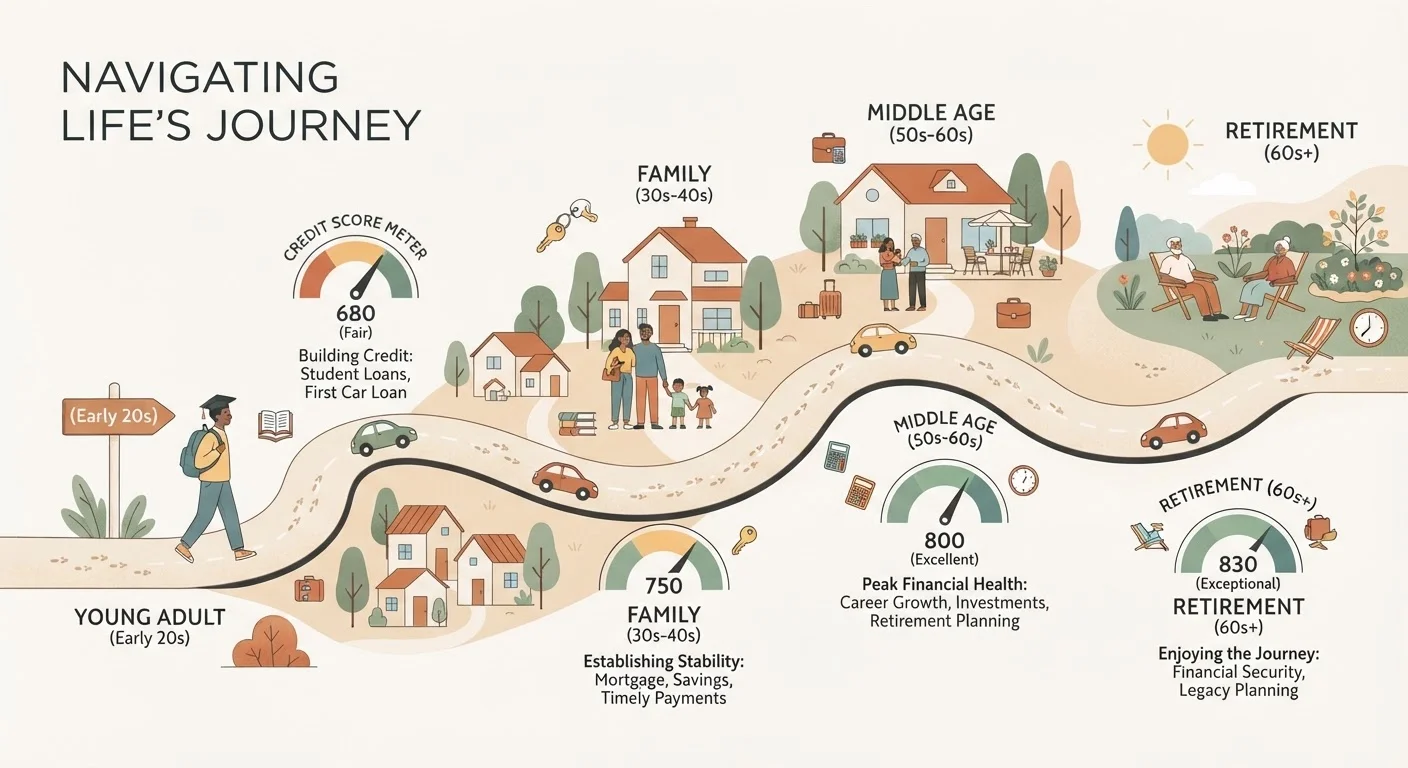
Photo: QuickSearches.net | It Doesn't Get Quicker Than This! editorial
Key Takeaways
- Credit scores typically start low - not because of mistakes, but simply because there's no history yet.
- Major life events like marriage, divorce, buying a home, and job loss each affect credit in predictable ways.
- Average FICO scores tend to rise with age, largely due to longer credit history and more stable payment patterns.
- Knowing what to expect at each stage lets you protect your score before a hit happens, not after.
- Errors on your credit report can drag down your score at any age - checking regularly matters throughout life.
Starting From Zero: Young Adults and First Credit
Most people enter adulthood as a credit blank slate. No score exists until you have at least six months of history with a reported account - and that first score is rarely impressive. A thin file simply lacks the data lenders want to see.
Common first steps - a secured card, a student loan, or being added as an authorized user on a parent's account - begin building that history. At this stage, the biggest risk isn't overspending; it's missing payments. Payment history accounts for 35% of a FICO score, so one late payment in a sparse file does disproportionate damage.
If you're new to credit entirely, common credit myths debunked can help you avoid the mistakes that slow progress from the start. And a plain-English credit overview covers the core concepts without jargon.
Start Thin-File Strategy Early
The Accumulation Years: 30s and 40s and Major Milestones
This stretch of life tends to involve the most credit activity - and the most credit volatility. Buying a home, taking on auto loans, starting a family, and career changes all leave marks on a credit report.
A mortgage is typically the largest credit event most people experience. The hard inquiry at application causes a small, temporary dip, but a mortgage also adds a new account type and, over time, builds significant positive history. What credit scores actually mean for mortgage eligibility is worth understanding before you apply.
Job loss or income disruption during this period poses real risk. Missed payments are the fastest way to damage a score - and the damage lingers for up to seven years. Carrying high balances relative to credit limits (your credit utilization ratio) also suppresses scores during financially stretched periods.
715
Average FICO score for Americans age 40-49
According to Experian's 2023 State of Credit report, average scores rise steadily by decade, from 680 for those in their 20s to 760 for those 60 and older.
7 years
How long a missed payment stays on your credit report
Under the Fair Credit Reporting Act, most negative items - including late payments - remain on your report for up to seven years from the original delinquency date.
35%
Weight of payment history in a FICO score
Payment history is the single largest factor in a FICO score, making consistent on-time payments the highest-impact habit at every life stage.
Divorce, if it occurs, doesn't directly lower scores, but unresolved joint accounts can. If an ex-partner stops paying a joint card, both names on the account take the hit. Closing or refinancing joint accounts during a settlement is a practical protective step.
Settling In: Credit Scores in Your 50s
By the time most people reach their 50s, credit history is long, major loans are further into repayment, and financial patterns have stabilized. Average FICO scores tend to be higher in this decade than any earlier one - not because of age itself, but because the underlying factors have had time to compound positively.
The risk in this stage is complacency. Habits that quietly erode credit health - like letting a card go unused until it closes, or carrying balances that seem manageable but inflate utilization - can erode a score that took decades to build.
This is also the decade when errors on a credit report matter most, because borrowing costs on a home refinance or vehicle loan are significant. Understanding every section of your credit report makes it easier to spot problems before they cost you.
Retirement and Beyond: Keeping Credit Healthy When You're Done Borrowing
Many retirees stop using credit regularly - and that's where scores can quietly slide. Scores require ongoing activity to stay current. A card that goes unused for months may be closed by the issuer, which shrinks available credit and shortens average account age.
The fix is simple: keep at least one card active with occasional small purchases paid in full each month. That preserves the account age and keeps utilization low without carrying any debt.
It's also worth monitoring for identity theft, which disproportionately affects older adults. A fraudulent account opened in your name will appear on your credit report before you ever notice unusual activity. How to formally dispute credit report errors walks through the process with each major bureau step by step.
Finally, estate planning and credit intersect more than most people realize. What happens to credit accounts after death explains what families and estates typically navigate - including debts that don't simply disappear.
This article is for general informational purposes only and does not constitute personalized financial or legal advice. Consult a qualified financial professional for guidance specific to your situation.
Frequently Asked Questions
The content on this site is provided for informational purposes only and should not be considered a substitute for professional advice. While we strive to provide accurate and up-to-date information, we make no guarantees regarding its completeness or accuracy. Always consult a qualified professional for advice specific to your circumstances before making any decisions