
Disputing an Error on Your Credit Report

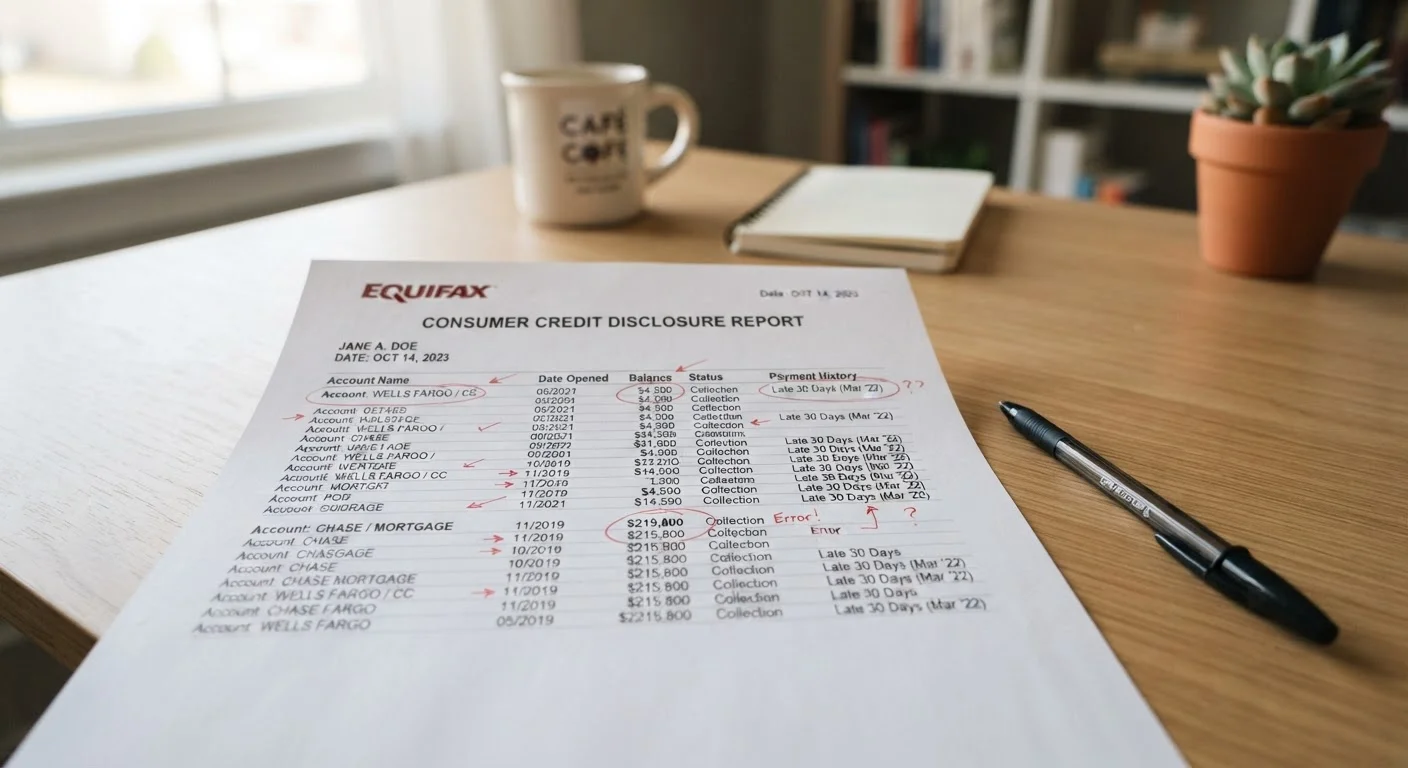
Photo: QuickSearches.net | It Doesn't Get Quicker Than This! editorial
Key Takeaways
- You are legally entitled to dispute inaccurate information on your credit report under the Fair Credit Reporting Act.
- Disputes must be filed with the credit bureau reporting the error, not directly with your lender alone.
- Bureaus generally have 30 days to investigate and respond to a dispute.
- Gather supporting documentation before filing - it significantly strengthens your case.
- You can dispute online, by mail, or by phone; certified mail creates the strongest paper trail.
- If a bureau doesn't correct a legitimate error, you can escalate to the Consumer Financial Protection Bureau.
Why Credit Report Errors Are Worth Taking Seriously
Credit report errors are surprisingly common. A Federal Trade Commission study found that roughly one in five consumers had an error on at least one of their three credit reports. These mistakes range from minor typos to serious inaccuracies - like a debt that isn't yours, an account incorrectly marked as delinquent, or a paid-off balance still showing as owed. Any of these can lower your credit score and affect your ability to get approved for a loan, rent an apartment, or even land certain jobs.
Before you can dispute anything, you need to know what's actually on your reports. Each of the three major bureaus - Equifax, Experian, and TransUnion - may hold different information, so check all three. You're entitled to free weekly reports from all three bureaus through AnnualCreditReport.com, which is the only federally authorized source. For a breakdown of what each section of your report means, see The Anatomy of a Credit Report.
What you will need
How to File a Dispute: Step by Step
The Fair Credit Reporting Act (FCRA) gives you the right to dispute any item you believe is inaccurate or incomplete. Here's how to work through the process effectively.
Identify the specific error
Review your reports from all three bureaus and note exactly which item is wrong, which bureau is reporting it, and what the correct information should be. Common errors include accounts that don't belong to you (possible identity theft), incorrect payment status, duplicate accounts, and wrong personal information like an old address listed as current.
Gather your supporting documentation
The stronger your evidence, the better your outcome. Useful documents include bank statements showing a payment was made, a letter from your lender confirming an account was paid or closed, a police report if identity theft is involved, or correspondence that contradicts what the bureau is reporting. Make copies - never send originals.
File a dispute with the correct bureau
You must dispute with whichever bureau is reporting the error - or all three if the error appears on multiple reports. Each bureau has an online dispute portal: Equifax.com/personal/credit-report-services, Experian.com/disputes, and TransUnion.com/credit-disputes. You can also file by phone or by certified mail. When disputing by mail, send your letter to the bureau's dispute address (listed on their website) and request a return receipt so you have proof of delivery.
Write a clear dispute letter (if filing by mail)
Your letter should state your full name and address, identify the specific item in dispute, explain clearly why the information is inaccurate, and request that it be corrected or removed. Attach copies of your supporting documents. Keep your letter factual and concise - one to two paragraphs is usually sufficient. The Consumer Financial Protection Bureau offers a sample dispute letter template on its website.
Also notify the data furnisher
In addition to filing with the bureau, consider sending a dispute directly to the creditor or lender (the data furnisher) that reported the incorrect information. Under the FCRA, furnishers are also required to investigate disputes and correct errors they find. Send this correspondence the same way - certified mail with copies of your documentation - and address it to the company's billing disputes or compliance department.
Track your dispute and follow up
Keep a log of every action you take: when you filed, with whom, by what method, and what confirmation or case number you received. Set a reminder to follow up if you haven't received a response within 30 days. After the investigation closes, check your report again to confirm the correction was applied accurately.
Dispute Each Bureau Separately
What Happens After You File
Once a bureau receives your dispute, it typically has 30 days to investigate - or 45 days if you submit additional information after the initial filing. During that window, the bureau contacts the data furnisher (usually your lender or creditor) to verify the item. The furnisher must review the dispute and report back.
After the investigation, the bureau must send you written results. If the item is corrected or removed, you can request that the bureau notify anyone who pulled your report in the past six months. If the bureau sides with the furnisher and keeps the item unchanged, you have options: you can add a 100-word consumer statement to your report explaining your position, refile with stronger evidence, or escalate the complaint to the Consumer Financial Protection Bureau (CFPB) at consumerfinance.gov.
Watch Out for Credit Repair Scams
If a dispute affects your credit score ahead of a major financial decision - like applying for a mortgage - it's worth understanding how credit scores interact with loan approvals. See how credit scores affect mortgage eligibility for context on what lenders actually look at.
This article is for general informational purposes only and does not constitute financial, legal, or credit counseling advice. For guidance specific to your situation, consult a licensed financial professional or a nonprofit credit counselor.
The content on this site is provided for informational purposes only and should not be considered a substitute for professional advice. While we strive to provide accurate and up-to-date information, we make no guarantees regarding its completeness or accuracy. Always consult a qualified professional for advice specific to your circumstances before making any decisions