
What Your Credit Score Actually Measures - and What It Doesn't

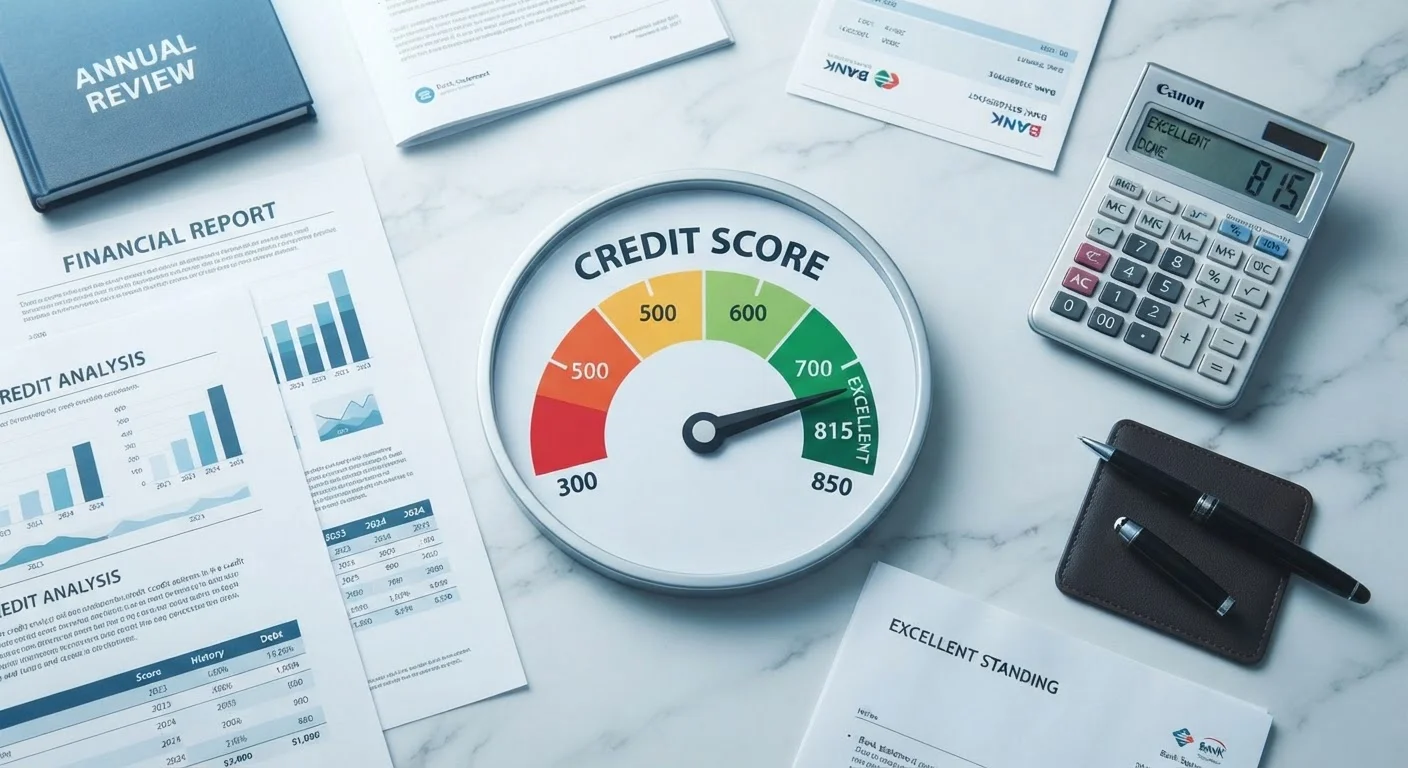
Photo: QuickSearches.net | It Doesn't Get Quicker Than This! editorial
Key Takeaways
- A credit score is calculated from your credit report data - not your income, savings, or net worth.
- Payment history and amounts owed together make up roughly two-thirds of a FICO score.
- Credit scores do not reflect your income, employment status, or whether you're good with money overall.
- Lenders often look at more than just your score - debt-to-income ratio matters too.
- Errors on your credit report can drag your score down unfairly; you're entitled to free annual reports.
- No single score tells the whole financial story - it's one data point, not a verdict.
The Five Inputs That Build Your Score
Your credit score isn't mysterious - it's calculated from a specific set of data points pulled from your credit report. Understanding what goes in helps you focus on what actually moves the needle.
For the widely used FICO model, five weighted factors drive the number:
- Payment history (~35%): Whether you've paid past bills on time. A single missed payment can cause a noticeable drop.
- Amounts owed (~30%): How much of your available credit you're using, known as credit utilization. Keeping this below 30% is a common benchmark.
- Length of credit history (~15%): How long your accounts have been open. Older, well-managed accounts help.
- Credit mix (~10%): Whether you have a variety of account types - credit cards, installment loans, a mortgage.
- New credit (~10%): Recent applications for new credit, which generate hard inquiries on your report.
See our breakdown of all five FICO factors for a deeper look at how each one is weighted and what you can do about it.
Focus on the Big Two First
What the Score Deliberately Leaves Out
This is where a lot of people are surprised. Federal law - specifically the Equal Credit Opportunity Act - prohibits credit scores from factoring in race, color, religion, national origin, sex, marital status, or age. But several other financial details are also absent, even though they feel relevant:
- Your income and employment status - A score says nothing about whether you earn $30,000 or $300,000 a year.
- Your savings or assets - A large emergency fund or retirement account balance doesn't factor in at all.
- Your net worth - Someone with significant assets but little credit history can have a thin or low score.
- Your spending habits - Frugal behavior, budgeting discipline, and living below your means are invisible to the model.
- Rent and utility payments - Unless a landlord or service explicitly reports them (which most don't), they won't appear.
This matters because lenders who only look at a credit score miss a significant part of your financial picture. That's why many also evaluate your debt-to-income ratio - a separate calculation that your score alone doesn't capture.
Rent Reporting Programs Now Exist
Where the Score Gets Its Data - and Where Errors Creep In
Your credit score is only as accurate as the credit report it's built from. The data comes from the three major credit bureaus: Equifax, Experian, and TransUnion. Lenders and creditors report your activity to one or more of these bureaus - but not always all three - which is why your score can differ slightly depending on which bureau a lender pulls from.
Errors are more common than most people expect. Accounts that don't belong to you, payments incorrectly marked late, or outdated negative information can all suppress your score unfairly. Under the Fair Credit Reporting Act, you're entitled to a free copy of your report from each bureau annually. Reviewing it regularly is one of the most practical things you can do for your credit health.
For a section-by-section guide to reading your report, see our article on the anatomy of a credit report.
~26%
Americans with errors on their credit reports
A Federal Trade Commission study found roughly one in four consumers had at least one error on their credit report that could affect their score.
35%
Weight of payment history in a FICO score
According to Fair Isaac Corporation, payment history is the single largest factor in a standard FICO score calculation.
300-850
Range of FICO and VantageScore credit scores
Both major scoring models use this range; scores of 670 and above are generally considered 'good' by most lenders.
How to Think About Your Score Without Obsessing Over It
Your credit score is a useful signal, not a final judgment on your financial character. It reflects a narrow slice of behavior - specifically, how you've managed debt - and nothing more. A strong score opens doors: lower interest rates, better loan terms, easier approval for housing. A weak score creates friction and cost. But neither extreme defines your overall financial health.
Scores also shift over time in predictable ways. Credit scores evolve across major life events - taking out a mortgage, closing old accounts, or going through a period of financial hardship all leave a mark, some temporarily and some for years.
The most effective approach is straightforward: pay bills on time, keep card balances low relative to limits, avoid opening multiple new accounts in a short window, and check your report for errors at least once a year. Those four habits address the factors that matter most - without requiring you to become a credit-score optimizer.
This article is for general informational purposes only and does not constitute personalized financial or legal advice. For decisions specific to your financial situation, consult a qualified financial professional.
Frequently Asked Questions
The content on this site is provided for informational purposes only and should not be considered a substitute for professional advice. While we strive to provide accurate and up-to-date information, we make no guarantees regarding its completeness or accuracy. Always consult a qualified professional for advice specific to your circumstances before making any decisions