
Wet Roads, Black Ice, and Hydroplaning: Traction Hazards Explained

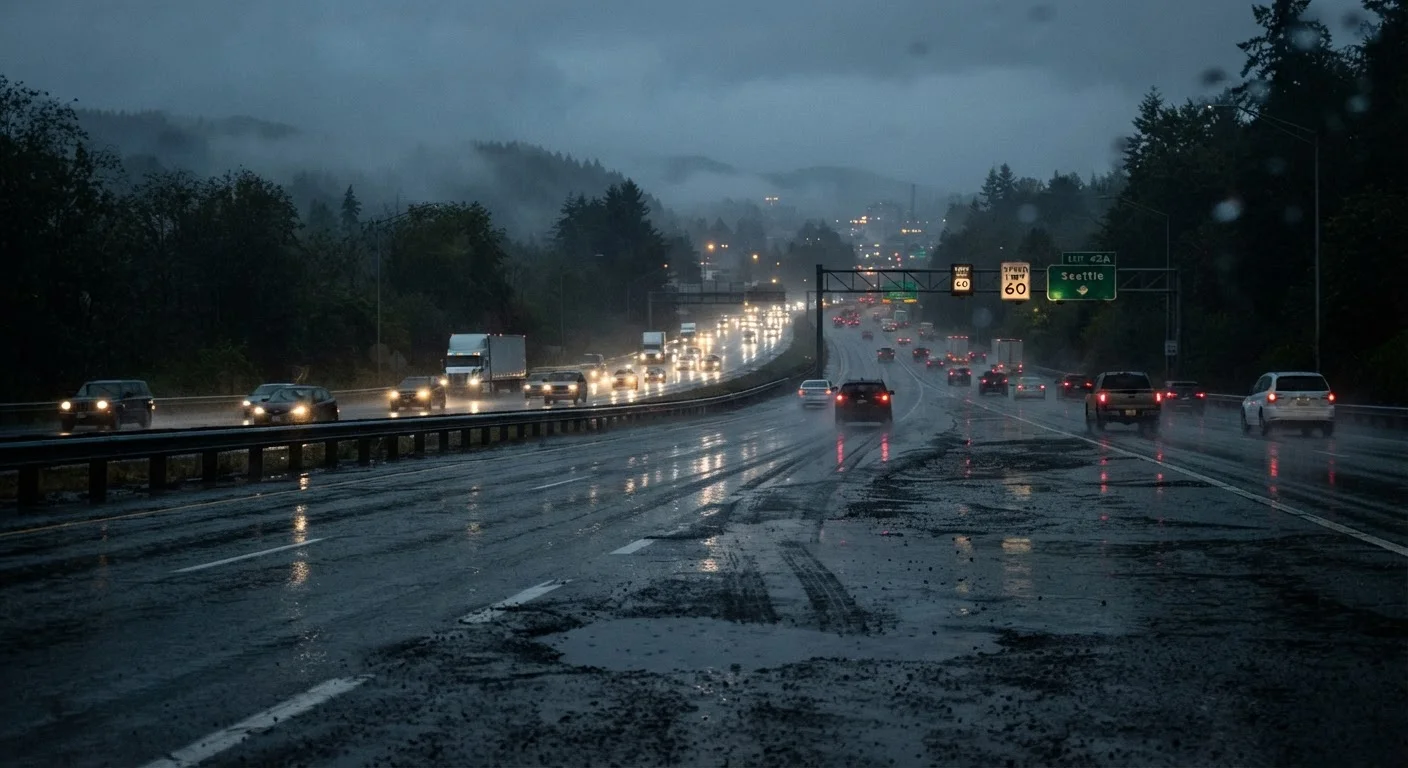
Photo: QuickSearches.net | It Doesn't Get Quicker Than This! editorial
Key Takeaways
- Wet roads reduce braking distances and become most dangerous in the first 10-15 minutes of rain.
- Black ice is nearly invisible and forms most often on bridges, overpasses, and shaded road sections.
- Hydroplaning can occur at speeds as low as 35 mph on standing water with worn tires.
- The correct response to a skid is to ease off the gas and steer smoothly in the direction you want to go.
- Tire tread depth and inflation are your first line of defense against all three traction hazards.
- Modern driver-assistance systems help but cannot fully compensate for inadequate tires or excessive speed.
Why Road Surface Matters More Than You Think
Most drivers calibrate their behavior to speed limits and traffic flow, but the condition of the road surface is just as important as any posted sign. Traction - the friction that lets your tires grip the road - is what makes steering and braking physically possible. Reduce it enough, and even a routine lane change can become uncontrollable.
Three distinct conditions are responsible for the majority of weather-related loss-of-control crashes in the U.S.: wet pavement, black ice, and hydroplaning. Each behaves differently, forms under different circumstances, and demands a different driver response. Understanding the mechanics behind each one is the first step toward avoiding them.
This is also the reason that seasonal vehicle preparation matters - tire condition, tread depth, and inflation pressure have a direct bearing on how your car handles every one of these hazards.
Wet Roads: Danger in the Ordinary
Rain feels familiar, which is part of why it's so dangerous. Wet asphalt reduces tire friction significantly, lengthening stopping distances and making the vehicle less responsive to steering inputs. The Federal Highway Administration estimates that roughly 70 percent of weather-related crashes occur on wet pavement.
70%
Weather-related crashes on wet pavement
According to the Federal Highway Administration, approximately 70 percent of weather-related vehicle crashes occur on wet road surfaces.
35 mph
Minimum speed hydroplaning can begin
Safety researchers note that hydroplaning can initiate at speeds as low as 35 mph when tires are significantly worn and water depth is sufficient.
~0.1
Friction coefficient on ice vs. 0.7 on dry asphalt
Engineering and tire research sources indicate that ice can reduce the tire-road friction coefficient to below 0.1, compared to roughly 0.7-0.8 on dry pavement.
Counterintuitively, light rain can be more treacherous than a heavy downpour. In the first minutes of rainfall, water combines with accumulated oil and rubber residue on the road, creating a slick film that heavy rain eventually washes away. Intersections, toll plazas, and drive-through lanes - anywhere vehicles idle regularly - are prone to heavy oil buildup.
Appropriate adjustments include reducing speed below the posted limit, increasing following distance to at least four seconds, and using headlights even in daylight rain. Avoid using cruise control on wet roads; if a wheel loses traction momentarily, the system may accelerate to maintain speed, worsening the situation.
Black Ice: The Invisible Threat
Black ice earns its name because it's nearly transparent - a thin glaze of ice that takes on the dark color of the pavement beneath it. It forms when air temperatures are at or near freezing and moisture - from light rain, fog, or melting snow - refreezes on the road surface. Unlike snow, there's no visual cue that something is wrong until a vehicle starts sliding.
Bridges and overpasses are the most common black ice locations because they're exposed to cold air on all sides, causing them to freeze faster than road sections with ground beneath them. Shaded curves, underpasses, and areas near bodies of water are also high-risk zones.
Watch for These Black Ice Warning Signs
If you begin to slide on black ice, the instinct to brake hard is counterproductive. Instead, ease off the accelerator, keep the wheel pointed in your intended direction of travel, and allow the car to slow gradually. Sudden steering or braking on ice dramatically increases the risk of a spin. For more emergency response context, see our guide on what to do when braking fails.
Hydroplaning: When Tires Lose Contact Entirely
Hydroplaning occurs when a tire encounters more water than it can channel away through its tread grooves, causing the tire to ride up on a wedge of water and lose contact with the road altogether. At that moment, the driver has no steering, no braking, and no traction - the vehicle is effectively floating.
Speed and tire condition are the two biggest factors. Hydroplaning can begin at speeds as low as 35 mph with significantly worn tires. Fresh tires with adequate tread can handle the same conditions at higher speeds because the tread channels disperse water efficiently. Tire inflation also matters: underinflated tires have a larger contact patch but deform under water pressure more readily, reducing their ability to clear water.
To reduce hydroplaning risk: maintain proper tire tread and inflation, reduce speed in heavy rain, and avoid standing water where possible. If you do hydroplane, resist the urge to brake - lift off the accelerator smoothly, hold the steering wheel steady, and wait for traction to return as the vehicle slows.
It's worth remembering that modern safety systems like stability control can help manage some traction loss, but they cannot prevent hydroplaning if the tire has no road contact at all. These tools complement good judgment - they don't replace it.
Building Better Habits for Low-Traction Conditions
Recognizing each hazard type is useful; adjusting your habits around them is what actually keeps you safe. A few consistent practices cover all three scenarios effectively.
- Slow down early: Speed multiplies stopping distance exponentially. Reducing speed by 10 mph on wet roads can cut stopping distance by a significant margin.
- Increase following distance: Give yourself more time to react. The standard three-second rule should expand to four or more seconds in rain, and even further on ice.
- Check your tires regularly: Tread depth and inflation directly determine how well your tires handle water and cold. Replace tires before they reach the 2/32-inch minimum tread depth.
- Scan ahead: Watch for shiny patches on pavement (possible black ice), standing water in low spots, and other vehicles moving erratically.
For a broader view of how to prepare your vehicle and habits across changing seasons, the year-round driving preparedness guide covers what to adjust as conditions shift throughout the year.
Frequently Asked Questions
The content on this site is provided for informational purposes only and should not be considered a substitute for professional advice. While we strive to provide accurate and up-to-date information, we make no guarantees regarding its completeness or accuracy. Always consult a qualified professional for advice specific to your circumstances before making any decisions