
Night Driving Is Statistically Deadlier - Here's Why

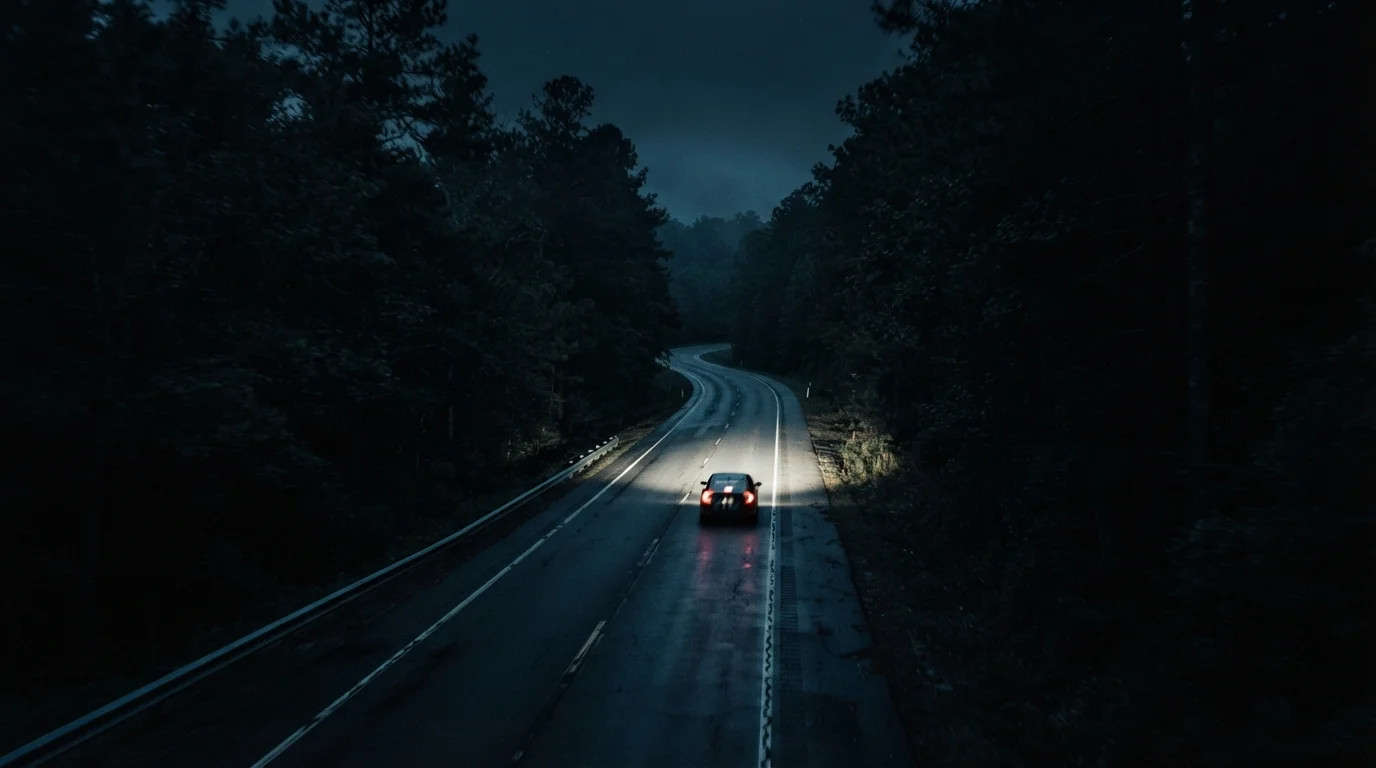
Photo: QuickSearches.net | It Doesn't Get Quicker Than This! editorial
Key Takeaways
- Fatal crash rates per mile driven are substantially higher at night than during the day.
- Human vision degrades in low light - depth perception, color distinction, and peripheral vision all suffer.
- Standard headlights illuminate only 160-250 feet ahead, but stopping distances at highway speeds can exceed that.
- Driver fatigue peaks in the late-night hours, slowing reaction times in ways that mimic impairment.
- Pedestrians and animals are far harder to spot at night, and both are disproportionately involved in fatal crashes after dark.
- Adjusting speed and following distance at night directly compensates for reduced reaction time.
The Numbers Behind the Danger
Nighttime accounts for roughly 25% of all driving, yet it produces a disproportionate share of traffic fatalities in the United States. According to the National Highway Traffic Safety Administration (NHTSA), more than half of all traffic deaths occur during nighttime or low-light conditions. Fatal crash rates per mile driven are approximately three times higher at night than during the day.
This isn't simply explained by people driving drunk or recklessly after dark, though both are more common. Even controlling for behavior, the physical conditions of nighttime driving create hazard exposure that daylight does not. Understanding why helps drivers make better decisions rather than just hoping their luck holds.
~3×
Higher fatal crash rate at night vs. daytime
Per mile driven, nighttime fatal crash rates are approximately three times higher than daytime rates, according to NHTSA traffic safety data.
>75%
Pedestrian deaths occurring in dark conditions
NHTSA consistently reports that more than three-quarters of U.S. pedestrian traffic fatalities happen in dark or low-light conditions.
160 ft
Typical low-beam headlight range
Standard low-beam headlights illuminate roughly 160 feet ahead - less than two seconds of visibility at 60 mph.
25%
Share of driving done at night
Despite nighttime representing only about one-quarter of all vehicle miles traveled, it accounts for a disproportionate share of fatal crashes.
What Darkness Actually Does to Human Vision
Vision is the primary sense used in driving, and darkness degrades it in several distinct ways. The human eye shifts from cone-based vision (sharp, color-aware, central) to rod-based vision in low light. Rod vision is less sharp, nearly colorblind, and much slower to process moving objects. This is why a red car at night can appear almost gray, and why a pedestrian in dark clothing becomes genuinely hard to detect.
Depth perception - the ability to accurately judge how far away an object is - also worsens in low light. This is particularly relevant when approaching curves, judging intersection gaps, or estimating the speed of an oncoming vehicle. Peripheral vision, which normally provides early warning of hazards at the edge of the road, becomes less reliable as well.
Older drivers face a compounding disadvantage. The pupil becomes less able to dilate fully with age, admitting less light. A 50-year-old may need significantly more light to see at the same level as a 30-year-old. This is a well-documented physiological change, not a stereotype.
The Headlight Gap: Why Your Lights Aren't Enough at Speed
Standard low-beam headlights illuminate approximately 160 feet ahead. High beams extend that to roughly 350-500 feet depending on the vehicle. At 60 mph, a car travels about 88 feet per second - which means low beams give you barely over a second of visible road ahead after accounting for typical reaction time and braking distance.
This gap between illumination distance and stopping distance is called overdriving your headlights. It is one of the most underappreciated risk factors in nighttime driving. A deer, a disabled vehicle, or road debris can appear in your low-beam range with insufficient time or distance to stop safely.
The practical correction is straightforward: slow down on unlit roads at night, and use high beams wherever it is legal and safe to do so. Increasing your following distance on highways also creates buffer that partially compensates for delayed hazard detection.
Use High Beams More Than You Think To
Fatigue, Impairment, and the Hours That Concentrate Risk
Human alertness is governed by the circadian rhythm, which dips most sharply between midnight and 6 a.m. Driving during these hours - even after a full night's sleep the day before - carries measurable fatigue risk. Sleep deprivation compounds this substantially. Research published in peer-reviewed sleep science literature has found that being awake for 18 hours produces impairment comparable in driving simulations to a blood alcohol content of 0.05%.
Alcohol-impaired driving is also concentrated after dark. NHTSA data consistently shows that the share of crash-involved drivers with blood alcohol content above the legal limit rises significantly between 10 p.m. and 4 a.m. This means that a sober, attentive driver at night still faces elevated exposure to impaired drivers from other vehicles.
Practicing defensive driving principles - scanning farther ahead, anticipating erratic behavior, maintaining generous gaps - is especially valuable during these hours precisely because you cannot control what other drivers do.
Pedestrians, Animals, and the Visibility Asymmetry
Pedestrian fatalities are heavily concentrated at night. NHTSA data shows that more than 75% of pedestrian deaths in the U.S. occur in dark conditions. Part of the reason is visibility asymmetry: a pedestrian can often see an approaching car's headlights while remaining essentially invisible to the driver until it is too late.
Animals pose a similar challenge on rural roads. Deer, in particular, are most active during dawn and dusk - exactly the low-light transition periods when visual adaptation is slowest. Animal strikes at highway speed can cause serious vehicle damage and injury, and swerving to avoid an animal is itself a leading cause of loss-of-control crashes.
On rural and suburban roads after dark, scanning the roadside edges - not just the center - and reducing speed in known wildlife areas are practical responses. Rural driving environments carry particular animal-strike risk, especially in wooded or agricultural regions.
Practical Adjustments That Actually Reduce Night Driving Risk
No single change eliminates nighttime risk, but several well-established habits reduce exposure meaningfully. Reduce speed on unlit roads to keep stopping distance within your headlight range. Keep headlight lenses clean - clouded or yellowed lenses can reduce light output by 80% or more. Dim your dashboard and instrument lights to protect your eyes' adaptation to darkness.
Avoid staring at oncoming headlights, which temporarily impairs night vision. Shift your gaze to the right edge of your lane when another vehicle approaches. If you feel drowsy, treat it seriously - open a window, turn on the radio temporarily, or pull over safely. Caffeine can blunt the edge of fatigue but does not restore reaction time to rested levels.
Your vehicle's electronic safety systems can provide some buffer. Automatic emergency braking and lane-keep assist may detect hazards a fatigued driver misses, but they are not substitutes for attentiveness and appropriate speed. At night, those tools operate closer to their detection limits, not farther from them.
Frequently Asked Questions
The content on this site is provided for informational purposes only and should not be considered a substitute for professional advice. While we strive to provide accurate and up-to-date information, we make no guarantees regarding its completeness or accuracy. Always consult a qualified professional for advice specific to your circumstances before making any decisions