
Why Your Credit Score Changes the Car Deal More Than the Sticker Price

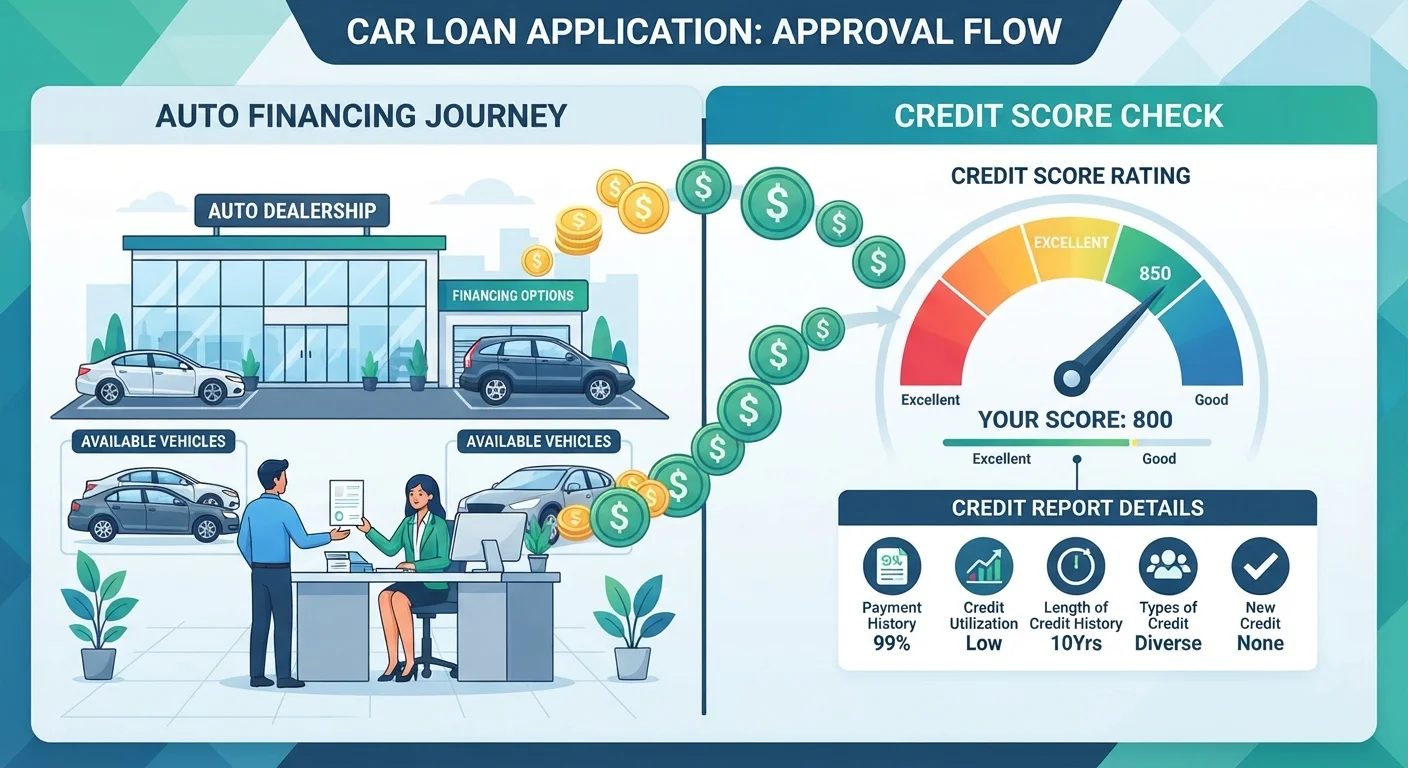
Photo: QuickSearches.net | It Doesn't Get Quicker Than This! editorial
Key Takeaways
- A lower credit score typically means a higher interest rate, which increases total loan cost far beyond any sticker-price negotiation.
- Moving from a subprime to a prime credit tier can save thousands of dollars over a standard 60-month loan.
- Improving your credit before applying for a loan is one of the highest-return financial moves a car buyer can make.
- Lenders use credit score tiers, not individual scores, to set rates - small score improvements can trigger a tier change.
- Shopping your financing separately from the dealer gives you leverage and a clearer picture of true borrowing costs.
The Number That Quietly Controls Your Car Payment
Most car shoppers spend hours researching sticker prices and negotiating hundreds off the sale price - then accept a financing offer without fully understanding what it costs them. The reality is that your credit score has more influence over the total amount you pay for a vehicle than virtually any negotiation you'll have on the lot.
Auto lenders use your credit score to place you in a risk tier, and each tier carries a specific interest rate range. The gap between the best and worst tier rates can be dramatic. A borrower with a strong credit score might qualify for a rate around 5-6%, while a borrower with a subprime score could face a rate of 15% or higher - on the same vehicle, on the same day. For more on how ownership costs stack up beyond the loan itself, see the real cost of owning a car.
5-10%+
Typical rate gap between prime and subprime auto loans
Industry lending data consistently shows that subprime borrowers pay substantially higher rates than prime borrowers for identical loan amounts and terms.
$6,000+
Potential extra interest on a $25,000 / 60-month loan
The difference between a 6% and a 16% rate on a common loan amount illustrates how dramatically credit tier placement affects total borrowing cost.
720+
FICO score range typically needed for top-tier auto rates
Most major lenders reserve their most competitive auto loan rates for borrowers in the prime and super-prime tiers, generally above 720.
How Tier Differences Play Out in Real Dollars
To understand the true stakes, consider a straightforward example. Suppose two buyers each finance $28,000 over 60 months. Buyer A has a prime credit score and qualifies for a 6% rate. Buyer B has a subprime score and receives a 16% rate.
- Buyer A pays roughly $541/month and about $4,500 in total interest.
- Buyer B pays roughly $682/month and about $12,900 in total interest.
That's a difference of over $8,400 in interest alone - far exceeding what most buyers could negotiate off a sticker price. Buyer B is, in effect, paying for a significantly more expensive car.
Credit score thresholds also create a tier-jump effect: crossing from one tier to the next - say, from a 659 to a 661 - can drop your offered rate by two or more percentage points. This is why understanding how credit scores evolve is so valuable before a major purchase.
Practical Steps to Lower Your Borrowing Cost
The most powerful lever a buyer has is time. If your purchase isn't urgent, even three to six months of deliberate credit improvement can move you into a better tier. Key actions that tend to move scores include reducing credit card balances relative to your limits, resolving any collections or derogatory marks, and avoiding new credit applications before applying for a loan.
Check Your Credit Before You Shop
It's also worth separating the financing conversation from the vehicle negotiation entirely. Getting pre-approved through a bank or credit union first gives you a concrete rate to bring to the dealer. If the dealer offers a lower rate, great - if not, you already have financing in hand. For a fuller picture of what you're agreeing to at the dealership, understanding the out-the-door price is equally important.
Also consider the loan term carefully. A longer term lowers the monthly payment but increases total interest paid - a trade-off that compounds the damage of a high rate. Shorter terms, combined with a meaningful down payment, reduce both your rate exposure and your principal balance. For related perspective on how carrying debt affects long-term costs, see minimum payments vs. aggressive payoff.
This article is for general informational purposes only and does not constitute financial or legal advice. Loan terms, rates, and credit score thresholds vary by lender. Consult a qualified financial professional for guidance specific to your situation.
Frequently Asked Questions
The content on this site is provided for informational purposes only and should not be considered a substitute for professional advice. While we strive to provide accurate and up-to-date information, we make no guarantees regarding its completeness or accuracy. Always consult a qualified professional for advice specific to your circumstances before making any decisions