
How to Judge Whether a Used Car's Asking Price Is Fair

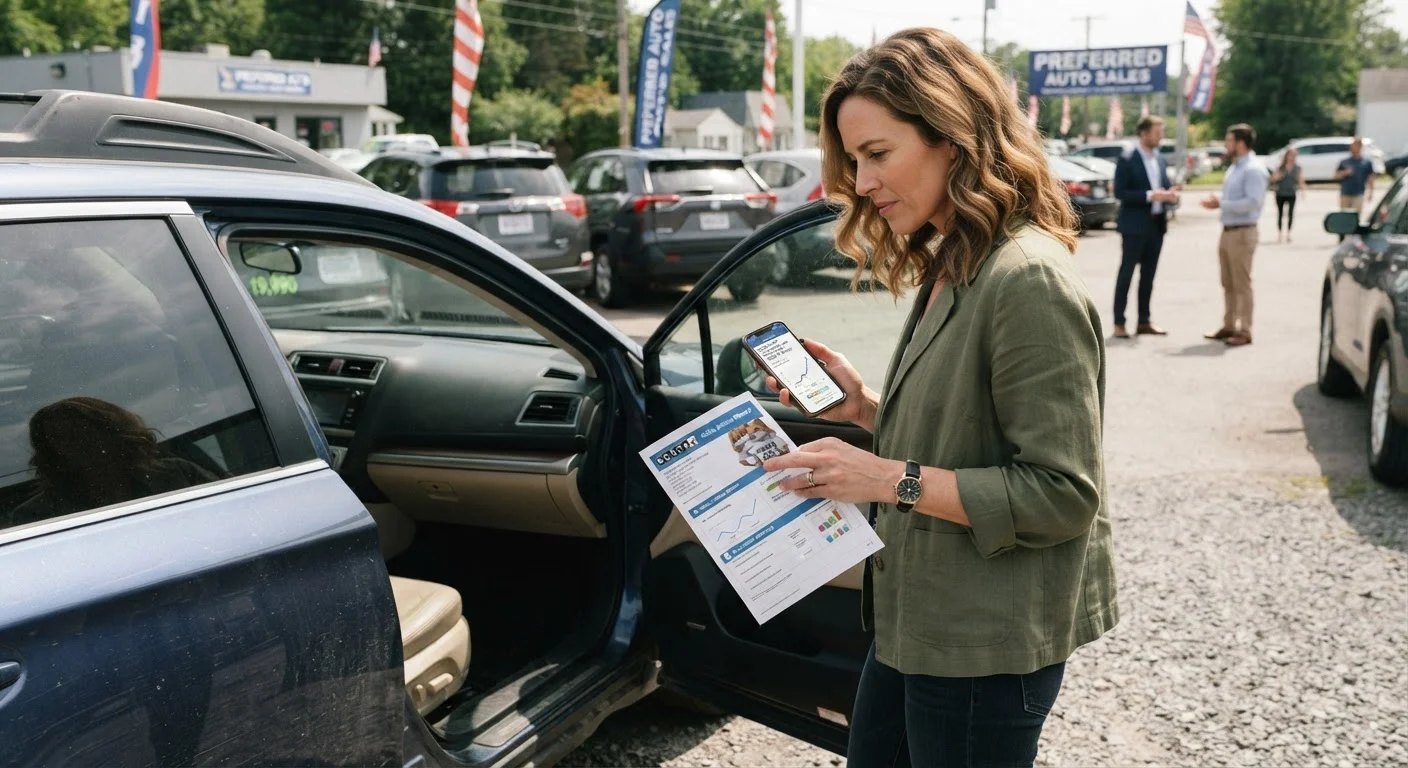
Photo: QuickSearches.net | It Doesn't Get Quicker Than This! editorial
Key Takeaways
- Cross-reference at least two independent pricing sources before accepting any asking price as fair.
- Mileage, condition, accident history, and regional demand all adjust a vehicle's market value significantly.
- A pre-purchase inspection by an independent mechanic is one of the highest-value steps a buyer can take.
- Knowing the fair market range gives you a data-backed starting point for any negotiation.
Start With Market Value, Not the Sticker
The number on the windshield is a starting point for the seller - not a verdict on what the car is worth. Before you respond to any listing, spend 15 minutes researching what similar vehicles are actually trading for in your area.
Three widely used pricing databases - Kelley Blue Book, Edmunds, and the National Automobile Dealers Association (NADA) Guides - each use slightly different methodologies and data sets, which is why their numbers sometimes diverge. Checking at least two of these sources gives you a realistic range rather than a single figure that may favor one side of the transaction.
When you plug in the vehicle, match as many variables as possible: the exact year, trim level, drivetrain, and mileage. A base model and a fully loaded version of the same nameplate can differ by thousands of dollars, and pricing tools are only as accurate as the inputs you give them. Once you have a range, you have a defensible anchor for every conversation that follows. For a broader view of what ownership will actually cost you after the purchase, see our guide on the real cost of owning a car beyond the sticker price.
Adjust for Mileage, Condition, and History
Market databases publish values at standard mileage benchmarks, typically around 12,000 miles per year. If the vehicle you're looking at has significantly more or fewer miles, the fair price shifts accordingly - and by more than most buyers expect.
Always enter the correct trim level when using pricing databases.
Obtain a vehicle history report before evaluating any asking price.
Compare at least 10 active local listings for similar vehicles.
Factor in near-term maintenance costs when calculating the true asking price.
Condition is equally consequential. Pricing tools usually define condition tiers - excellent, good, fair, and poor - with meaningful dollar differences between them. Be honest when assessing where a car actually falls. Surface scratches, worn interior surfaces, and aged tires all move a vehicle down the condition scale and should be reflected in the price.
A vehicle history report (from services such as Carfax or AutoCheck) adds another layer. Accident history, flood damage designation, odometer discrepancies, and the number of previous owners all affect value. A clean title with one careful owner commands a premium; a rebuilt title or a vehicle with multiple reported incidents warrants a meaningful discount.
Account for Regional Demand and Seasonal Timing
Vehicle pricing is not uniform across the country. A four-wheel-drive pickup that commands top dollar in a northern mountain state may sit longer - and sell cheaper - in a coastal city. Convertibles and sports cars often soften in price during winter months and tighten in spring. These patterns are real and quantifiable.
Local listing platforms (such as Facebook Marketplace and Craigslist) are useful supplements to database values because they show what sellers in your specific market are actually asking. Browse 10 to 15 comparable listings and note the distribution: where does the vehicle you're evaluating land relative to the cluster? Outliers - suspiciously cheap or notably expensive - usually signal something worth investigating.
If you're also weighing whether a used vehicle makes more financial sense than buying new, our breakdown of new versus used car numbers walks through the depreciation and financing math in detail.
Use a Pre-Purchase Inspection as a Pricing Tool
An independent pre-purchase inspection (PPI) - performed by a mechanic you choose, not one affiliated with the seller - does two things simultaneously: it reveals hidden mechanical issues and it gives you quantified repair costs you can use to adjust the price you're willing to pay.
If the inspection surfaces $1,200 in near-term maintenance needs on a car priced at market value for a vehicle in good condition, the fair price is closer to market value for fair condition, minus those costs. That's not manipulation - it's accurate pricing. Our article on reading a mechanic's estimate can help you interpret what the inspector's report actually means.
Once you've established a fair price range through this process, you'll be in a much stronger position to negotiate. If that part feels uncomfortable, practical negotiating tactics for reluctant hagglers offers low-pressure strategies for getting a fairer deal.
This article is for general informational purposes only. Pricing guidance reflects general market principles and should not be treated as a guarantee of any specific vehicle's value. Always verify information with qualified professionals and authoritative pricing sources before making a purchase decision.
The content on this site is provided for informational purposes only and should not be considered a substitute for professional advice. While we strive to provide accurate and up-to-date information, we make no guarantees regarding its completeness or accuracy. Always consult a qualified professional for advice specific to your circumstances before making any decisions