
Reading a Mechanic's Estimate Without Getting Lost

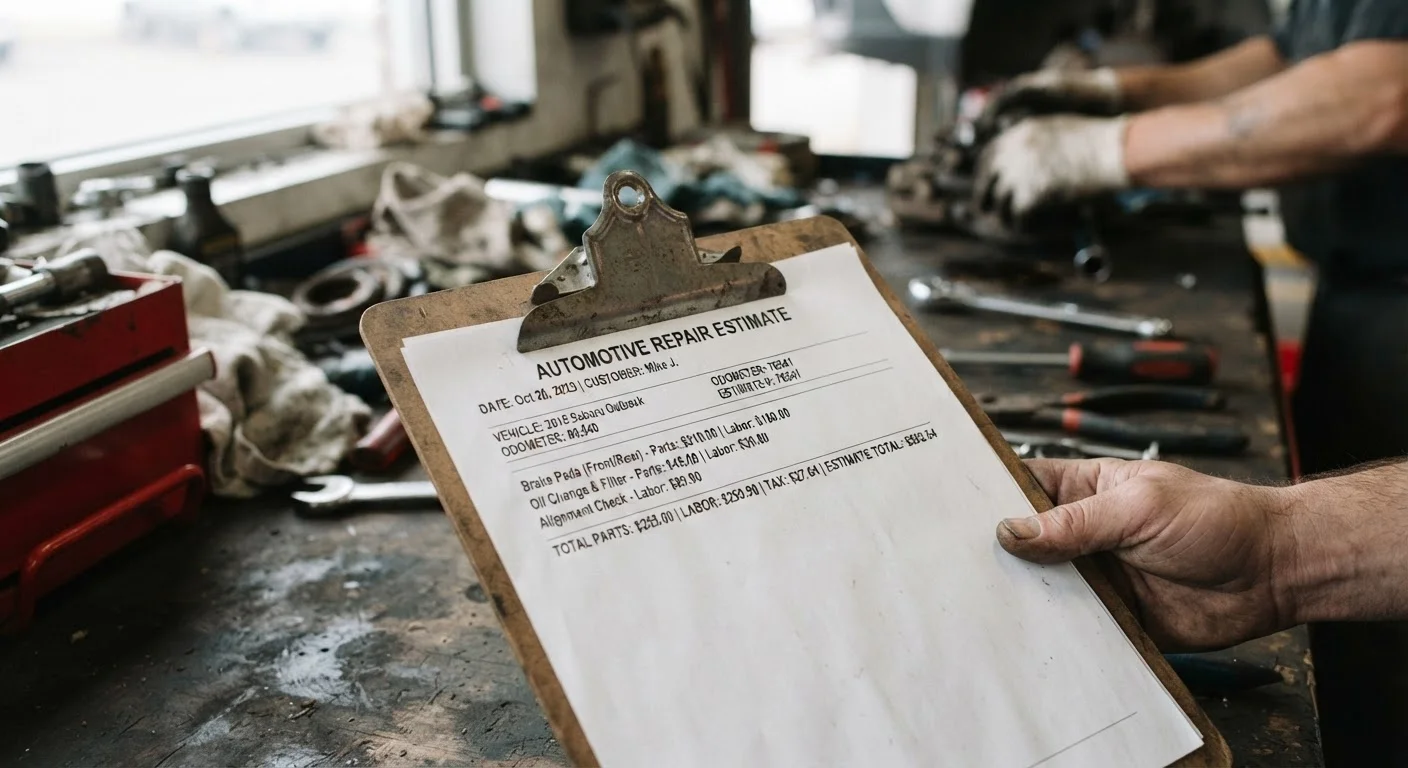
Photo: QuickSearches.net | It Doesn't Get Quicker Than This! editorial
Key Takeaways
- Repair estimates have three main cost categories: parts, labor, and fees - each worth scrutinizing separately.
- Labor rates vary significantly by shop type; understanding how hours are calculated helps you spot overcharges.
- OEM, OE-equivalent, and aftermarket parts differ in price, quality, and warranty coverage.
- A diagnostic fee is standard and legitimate, but you should know whether it applies toward the repair.
- Getting a second estimate on costly repairs is a practical, widely accepted consumer protection step.
What a Repair Estimate Actually Contains
Most written repair estimates follow a fairly consistent structure, even if the formatting differs from shop to shop. Before you can ask smart questions, you need to know what you're looking at. A standard estimate typically includes three cost categories: parts, labor, and shop fees (sometimes called miscellaneous or supplies charges).
Parts are itemized by name and part number. Labor is shown as a number of hours multiplied by the shop's hourly rate. Fees cover consumables like shop rags, disposal costs, and occasionally a diagnostic fee - the charge for the technician's time spent identifying the problem before any repair begins.
Understanding the full picture of repair expenses is one piece of managing long-term car ownership costs. Repairs don't happen in a vacuum; they add up over a vehicle's life.
What you will need
Decoding Labor Charges
Labor is often the largest line item on an estimate, and it's also the most misunderstood. Shops charge a flat hourly rate - which can range from roughly $75 at independent garages to $150 or more at franchised dealerships - multiplied by a flat-rate time. Flat-rate time is a standardized labor time published in industry manuals (such as those from ALLDATA or Mitchell), not necessarily the actual clock time a technician spends on your car.
This means a repair listed as 2.5 hours costs you 2.5 hours regardless of whether the tech finishes in 90 minutes or three hours. That system is industry standard, not a scam - but knowing it exists lets you verify whether the listed hours seem reasonable for the job described.
Always Get the Estimate in Writing
Ask the service advisor to show you the flat-rate time source if a labor charge seems high. Most reputable shops will share this information.
Parts: OEM, OE-Equivalent, and Aftermarket
The parts section of an estimate deserves its own close read. Shops source parts in three main categories:
- OEM (Original Equipment Manufacturer): Made by the vehicle's original supplier, sold through the dealership. Generally the most expensive option and typically carry the manufacturer's warranty for that component.
- OE-Equivalent (also called OE-quality or direct-fit): Made to the same specification as OEM parts, often by the same supplier, but sold under a different brand outside the dealership network. Usually less expensive with comparable performance.
- Aftermarket: A broad category covering parts made by third parties to varying quality standards. Can be significantly cheaper, but quality varies widely by brand and part type.
Ask which category is being used and why. For critical safety components - brakes, steering, suspension - quality matters more than price. For non-safety items, OE-equivalent parts are often a sensible middle ground.
Pressure to Decide Immediately Is a Red Flag
How to Work Through an Estimate Step by Step
Armed with the basics above, here's a systematic way to review any estimate you receive.
Confirm the diagnostic fee and its terms
Find the diagnostic fee line - often listed as "diag," "inspection fee," or "shop assessment." Verify the dollar amount and ask whether it is credited toward the repair if you proceed. Many shops apply it as a credit; some do not.
Match every parts line to the problem described
Read each parts line and make sure it connects logically to the complaint. If you came in for a brake job, brake pads and rotors make sense. An unrelated part appearing without explanation warrants a direct question: "What does this part address?"
Check the labor hours against the job scope
Look at the labor hours assigned to each repair task. A simple oil change should show a fraction of an hour; a transmission rebuild will show many hours. If an estimate lists 4 hours for a job commonly understood to take 1-2, ask the advisor to explain or show the flat-rate source.
Identify the parts category being used
Ask whether each part is OEM, OE-equivalent, or aftermarket. If aftermarket parts are listed, ask the brand name so you can look it up. Shops should be transparent about what they're installing in your vehicle.
Ask about the warranty on parts and labor
Reputable shops offer a warranty on both the parts they install and the labor. Industry norms commonly range from 12 months or 12,000 miles to 24 months or 24,000 miles, though this varies. Get the warranty terms in writing before authorizing work.
Decide whether to get a second estimate
For repairs totaling several hundred dollars or more, it is entirely reasonable to take the written estimate to a second shop. Provide the second shop with the same description of symptoms and ask them to assess independently - this helps you compare apples to apples.
Once you've completed this review, you'll be in a much stronger position to approve, negotiate, or seek a second opinion. For expensive or complex repairs, getting a second estimate is a normal and accepted practice - most reputable shops expect it on jobs over a few hundred dollars.
If you're weighing whether repair costs make sense relative to your vehicle's value, our complete overview of managing car ownership costs walks through how to think about that longer-term calculation.
The content on this site is provided for informational purposes only and should not be considered a substitute for professional advice. While we strive to provide accurate and up-to-date information, we make no guarantees regarding its completeness or accuracy. Always consult a qualified professional for advice specific to your circumstances before making any decisions