
Negotiating a Car Price When You Hate Negotiating

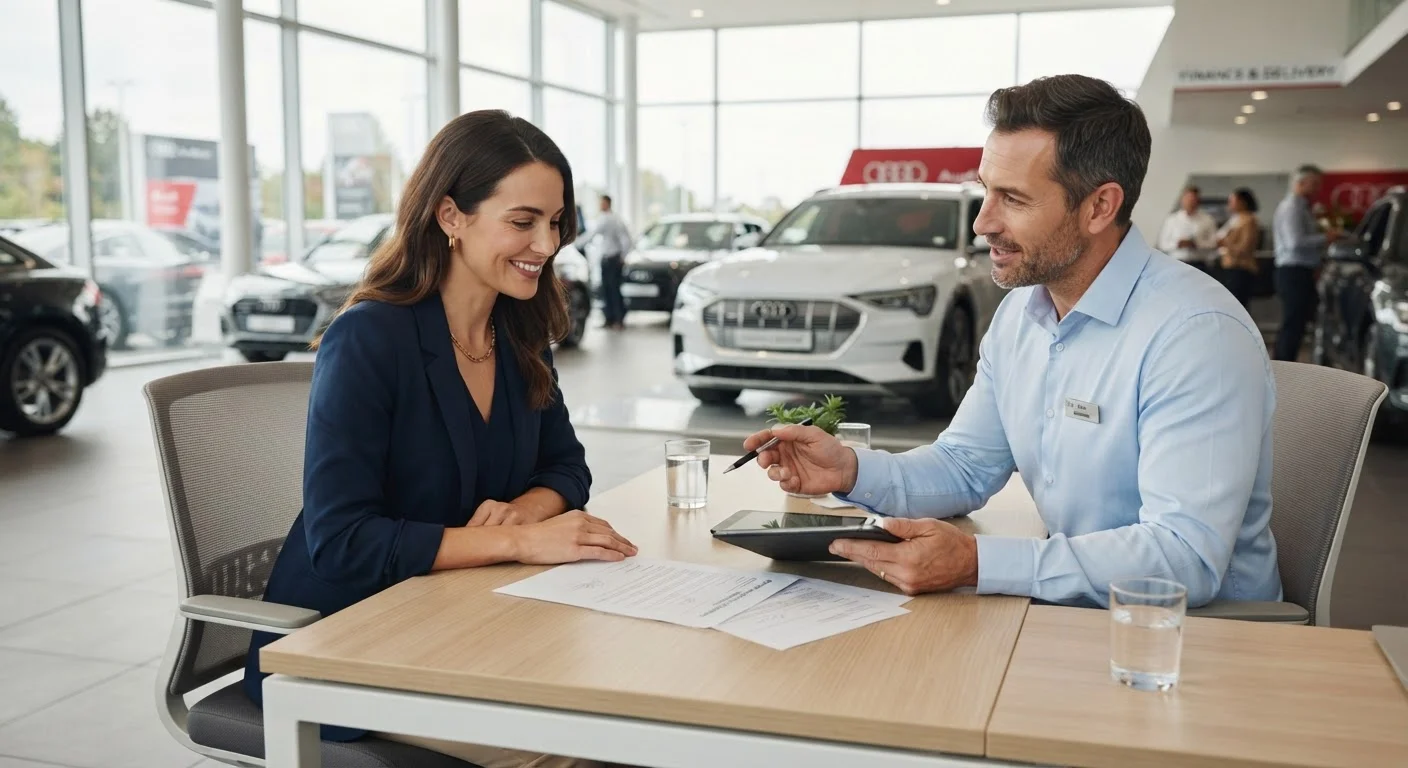
Photo: QuickSearches.net | It Doesn't Get Quicker Than This! editorial
Key Takeaways
- Research the market value of your target vehicle before setting foot in a dealership.
- Getting competing quotes by email shifts leverage away from face-to-face pressure.
- Focus negotiations on the out-the-door price, not monthly payments.
- Silence and patience are among the most effective tools a buyer has.
- Dealer add-ons are negotiable and often where the most avoidable costs hide.
Why Car Negotiation Feels So Hard
Most people find car dealership negotiations uncomfortable for understandable reasons: the environment is designed to favor the seller, salespeople negotiate daily while buyers do it once every several years, and there's often a fear of looking uninformed or being taken advantage of. None of that means you're at a permanent disadvantage.
The core shift is moving from reacting to the dealer's process to running your own. That means deciding your numbers before you arrive, using written quotes to create competition, and treating the negotiation as a series of calm, deliberate exchanges rather than a confrontation. For a broader look at every stage of the purchase, see our complete car-buying walkthrough.
Email Is Your Best Negotiating Tool
Understanding what commonly causes buyers to give up leverage is just as useful as knowing what to do. Rushing, focusing only on monthly payments, and showing too much enthusiasm for a specific vehicle are among the most common missteps - many of which also contribute to post-purchase regret.
What You'll Need Before You Start
Preparation does most of the work. Before contacting any dealer, gather the following:
What you will need
Edmunds / Kelley Blue Book / NADA Guides
Look up fair market value and price ranges for the exact vehicle you want before negotiating.
Pre-approval letter from a bank or credit union
Gives you an independent financing benchmark and reduces dealer leverage over your monthly payment.
Email or phone (for quote requests)
Use to solicit written competing quotes from multiple dealers without face-to-face pressure.
Notepad or phone notes app
Record every number a dealer quotes so you can track changes and spot inconsistencies.
Having a pre-approved loan rate in hand is particularly valuable. It means that even if the dealer offers financing, you have a concrete number to compare it against - and the confidence to walk away from terms that don't improve on what you already have.
Step-by-Step: How to Negotiate Without the Stress
Follow these steps in order. The early steps - research and email quotes - do the heaviest lifting so that by the time you're in the dealership, you're confirming a deal rather than starting from scratch.
Research the vehicle's market value before any contact
Pull the current market value for the exact trim and configuration you want from at least two reputable pricing sources. Note both the average transaction price and the typical price range in your region - these become your reference points for every number the dealer presents.
Get competing quotes by email - not in person
Contact the internet or fleet sales department at three or more dealers by email. Be specific: name the exact year, make, model, trim, and any key options. Ask each dealer to provide their best out-the-door price in writing. This creates competition without you ever entering a showroom under pressure.
Establish your out-the-door number before arriving
Calculate the total you're willing to pay, including taxes, registration, documentation fees, and any other charges. This is your out-the-door (OTD) ceiling. Dealers will often try to steer conversation toward monthly payments - OTD keeps the focus on the actual cost of the vehicle.
Make your opening offer below your target - but not insulting
Start roughly 3-5% below the market value you've researched, not your maximum. This gives you room to move while anchoring the conversation in a realistic range. State your offer clearly and calmly: "Based on my research, I'd like to start at [specific dollar amount] out the door." Then stop talking.
Counter slowly and ask for itemized breakdowns
When the dealer counters, don't match their pace. Ask them to break down the quote line by line: vehicle price, dealer fee, documentation fee, taxes, and any add-ons. Reviewing each line keeps you in control and often reveals items that were quietly added. You can decline or negotiate each one individually.
Decline or negotiate add-ons separately
After settling on the vehicle price, the finance office typically introduces add-ons such as paint protection, extended warranties, and gap insurance. These are almost always negotiable and frequently marked up significantly. Evaluate each on its own merits - not as a bundled package - and feel free to decline items you don't need. For guidance on what these add-ons are actually worth, see our breakdown of common dealer add-ons.
Be willing to walk away - and mean it
If the dealer won't come to a price you're comfortable with, thank them and leave your contact information. Walking away is not rude - it is a legitimate part of the process. Dealers frequently follow up with improved offers within 24-48 hours. At minimum, you'll feel more confident returning or moving to the next dealer on your list.
Don't Reveal Your Maximum Budget Early
If at any point you feel the conversation is moving faster than you're comfortable with, it's always acceptable to say: "I'd like to take a few minutes to review this before we continue." A legitimate dealer will respect that.
Secure Financing Before You Shop
After the Deal: What Comes Next
Once you've agreed on an out-the-door price, review every line of the final contract before signing. Confirm that the numbers match what was discussed verbally - errors and unauthorized additions do occur. If something looks different from what you agreed to, ask for a written explanation before proceeding.
The finance and insurance office is a separate negotiation from the vehicle price. Review add-ons calmly and individually. For a detailed look at what each product typically covers and costs, our guide to dealer add-ons walks through the most common offerings. After the purchase, managing ongoing ownership costs is its own discipline - the Car Ownership hub covers insurance, maintenance, and more.
The content on this site is provided for informational purposes only and should not be considered a substitute for professional advice. While we strive to provide accurate and up-to-date information, we make no guarantees regarding its completeness or accuracy. Always consult a qualified professional for advice specific to your circumstances before making any decisions