
MVNOs Explained: The Smaller Carriers That Run on Big Networks

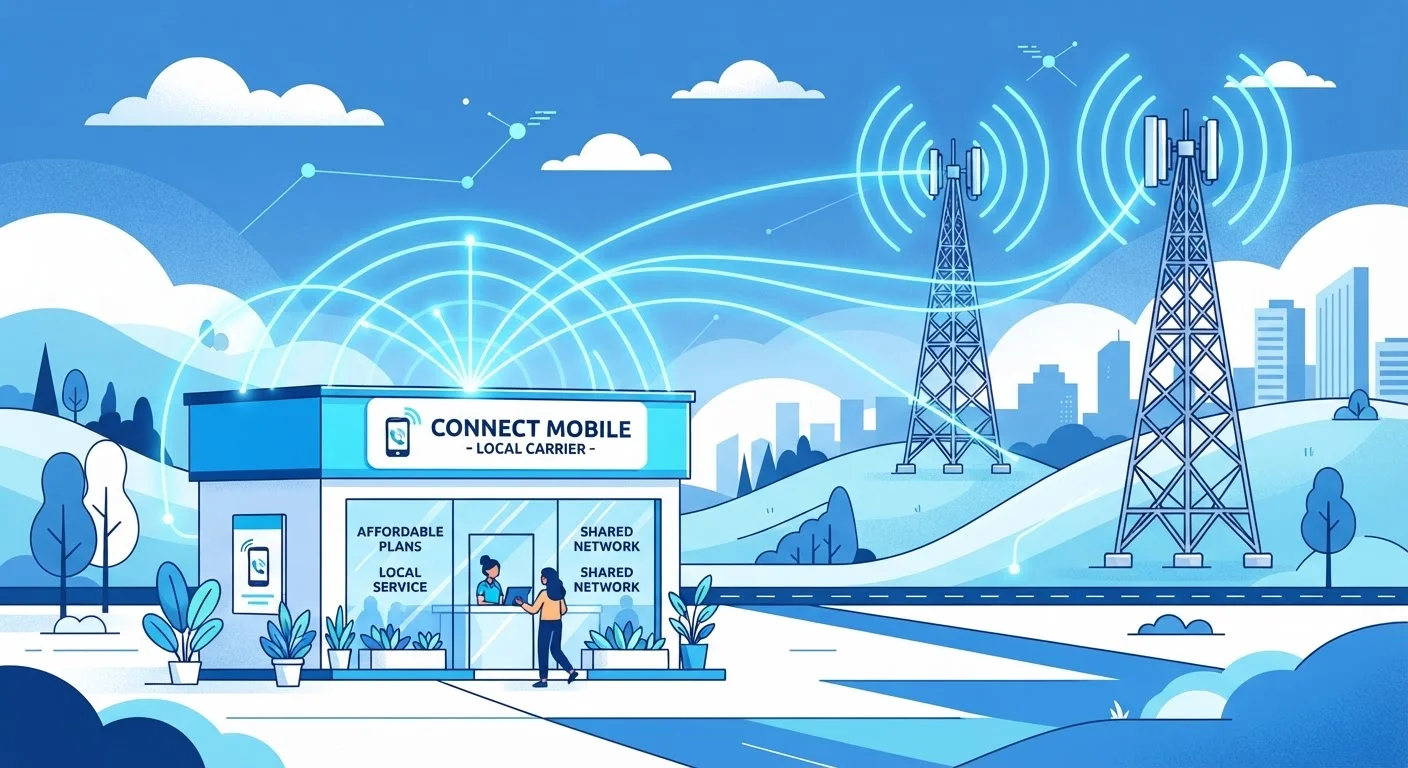
Photo: QuickSearches.net | It Doesn't Get Quicker Than This! editorial
Key Takeaways
- MVNOs use the same cell towers as major carriers but operate under separate brand names and pricing structures.
- Lower monthly costs are the primary draw, but MVNOs often deprioritize data during network congestion.
- Most MVNOs don't own retail stores, which cuts overhead costs that would otherwise be passed to customers.
- Your phone must be compatible with and unlocked for the host network the MVNO uses.
- MVNOs suit light-to-moderate data users who prioritize savings over peak-hour performance.
How MVNOs Actually Work
When you sign up with an MVNO, your calls, texts, and data still travel over one of the major national networks. The MVNO has negotiated a wholesale agreement that grants it a block of that network's capacity. It then packages that capacity into its own plans, sets its own prices, and handles billing and customer service independently.
This arrangement benefits both sides. The host network earns revenue from capacity it might not otherwise sell at retail. The MVNO gets infrastructure without the billions of dollars required to build and maintain a network from scratch. The savings - at least in part - flow to the consumer.
One practical consequence: if you look at a coverage map, the MVNO's coverage footprint mirrors its host network almost exactly. Coverage maps leave out important details, but in terms of raw geography, an MVNO subscriber and a host-network subscriber stand on the same footing.
Not All MVNOs Use the Same Host Network
The Real Trade-Offs: What You Give Up
The savings are real, but so are the trade-offs. Understanding them prevents disappointment after you've already ported your number.
Data Deprioritization
Most MVNO agreements put subscribers lower in the queue when a cell tower is handling heavy traffic. Major carrier customers get bandwidth first; MVNO customers experience slower speeds during congestion. This rarely matters in low-traffic areas or off-peak hours, but it can be noticeable in dense cities during commute times. Deprioritization is different from throttling - it's worth knowing the distinction before you choose a plan.
Customer Support
Major carriers have retail locations where you can walk in for help. Most MVNOs are online-first businesses, which means support is handled by phone, chat, or email. Response times vary widely. If in-person troubleshooting matters to you, weigh that carefully.
Plan Perks
Premium streaming bundles, device payment programs, and international roaming options are features that major carriers use to justify higher prices. MVNOs typically skip these extras. Their value proposition is simple: lower monthly cost for basic talk, text, and data.
~75
Active MVNOs operating in the US
Industry estimates suggest there are dozens of distinct MVNO brands currently active in the United States, ranging from prepaid household names to niche regional operators.
~20-40%
Typical monthly savings vs. postpaid major carriers
Consumer advocacy organizations and plan-comparison analysts frequently cite savings in this range for comparable single-line data plans, though exact figures vary by plan and usage.
$0
Infrastructure investment required from the MVNO
Because MVNOs lease rather than build network capacity, they avoid the capital expenditure that defines major carriers - a structural cost advantage passed partly to subscribers.
Who Gets the Most Value From an MVNO
MVNOs tend to be a strong fit for specific types of users rather than a universal upgrade.
- Light data users who rely mostly on Wi-Fi and use cellular data for maps and messaging - not streaming video - rarely hit the congestion issues that matter most.
- Single-line subscribers benefit most, because MVNOs' per-line pricing is often significantly lower than what major carriers charge. Multi-line family plans from major carriers sometimes close the gap.
- People in suburban or rural areas typically experience less tower congestion, making deprioritization a non-issue in day-to-day use.
- Retirees or secondary phone users who want a working number without premium features at a predictable monthly cost.
Heavy data consumers who stream frequently, work remotely on cellular, or live in high-density urban environments may find that congestion-related slowdowns offset the savings. It's worth examining your own usage before committing.
Navigating Pricing and Your Bill
MVNO pricing is generally more straightforward than major carrier pricing, but it isn't always as simple as the headline number suggests. Taxes and regulatory fees are typically added on top of advertised plan prices - just as they are with major carriers. Line items on your phone bill such as the Federal Universal Service Fund charge and state-level fees apply regardless of which carrier you use.
Some MVNOs advertise taxes-included pricing, which makes budgeting easier - the number you see is the number you pay. Others add fees at checkout. It's worth reading the fine print before you sign up. Our explainer on wireless carrier pricing covers the common charges that appear on nearly every bill.
Check Compatibility Before You Switch
Frequently Asked Questions
The content on this site is provided for informational purposes only and should not be considered a substitute for professional advice. While we strive to provide accurate and up-to-date information, we make no guarantees regarding its completeness or accuracy. Always consult a qualified professional for advice specific to your circumstances before making any decisions