
Coverage Maps and What They Leave Out

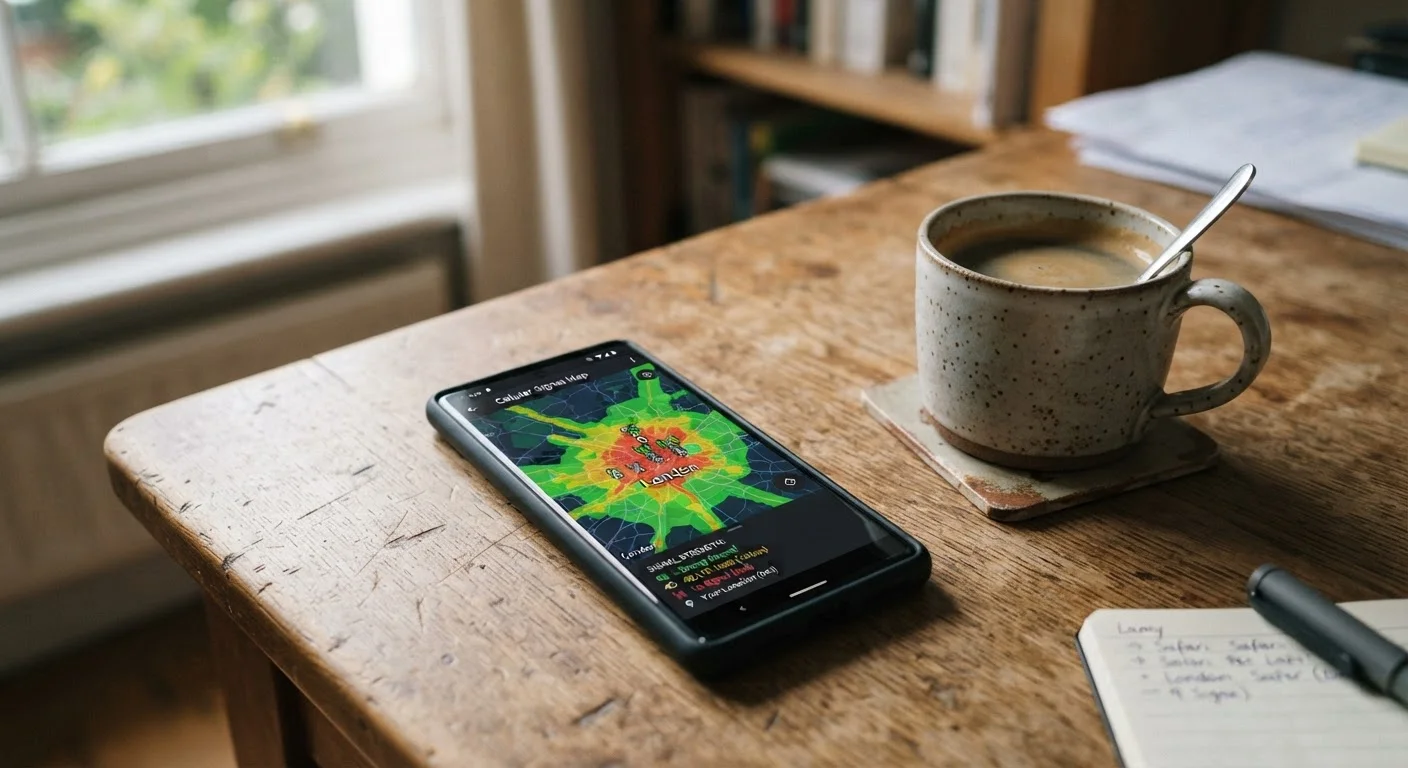
Photo: QuickSearches.net | It Doesn't Get Quicker Than This! editorial
Key Takeaways
- Coverage maps show predicted signal, not guaranteed real-world performance at your location.
- Building materials, terrain, and network congestion can all degrade coverage the map won't show.
- Testing a carrier with a trial SIM or return window is the most reliable way to verify coverage.
- MVNOs share towers with major carriers but may be deprioritized during congestion.
- Indoor and rural performance gaps are consistently the biggest blind spots in published maps.
Why Coverage Maps Are Optimistic by Design
Every major carrier publishes a coverage map, and most of them look impressively thorough - large swaths of the country blanketed in reassuring color. The problem is those maps represent predicted outdoor signal at street level, modeled from tower locations and terrain data. They are not measurements of what you'll actually experience inside your home, office, or on your commute.
Carriers use propagation modeling software to estimate where a signal of a given strength should theoretically reach. The models are legitimate engineering tools, but they make assumptions: flat or averaged terrain, no buildings in the way, and an antenna held at a standardized height outdoors. Real life involves basements, concrete walls, valleys, and the neighbor's building blocking your window.
The FCC has acknowledged that carrier-reported coverage data can overstate actual service availability, particularly in rural areas. Independent researchers have found meaningful gaps between what maps show and what subscribers experience on the ground.
FCC Mapping Reforms Are Ongoing
The Hidden Variables That Maps Can't Show
Even where a map correctly predicts that a signal exists, several factors determine whether that signal translates into a usable phone call or fast data session:
- Building penetration loss: Low-band spectrum (600-850 MHz) travels through walls far better than mid- or high-band frequencies. A carrier leaning heavily on millimeter-wave 5G for map color may show great outdoor coverage that disappears the moment you step inside.
- Network congestion: A tower that handles light traffic at 2 a.m. may slow dramatically during a weekday lunch hour. Maps show coverage - they don't show capacity or how many subscribers are competing for it.
- Deprioritization for MVNOs: If you're on a smaller carrier that resells access to a major network, your data may be slowed during busy periods even on a tower shown as fully covered. See how this works in our guide to MVNOs and how they use big-carrier networks.
- Terrain masking: Hills, canyons, and dense forests create dead zones that propagation models often underestimate, especially between towers.
Best Practices for Verifying Real Coverage
Check crowd-sourced coverage tools alongside official carrier maps.
Test signal at the specific indoor locations that matter most to you.
Use a carrier's free trial period or satisfaction guarantee before fully committing.
Ask neighbors or local community groups about their experience on a specific carrier.
Map your regular travel routes, not just your home address.
Once you've done your homework, use these findings as your checklist before committing to a plan. Our guide on phone plan shopping without getting burned walks through the full vetting process, including how to spot hidden fees and lock-in traps.
Quick Actions You Can Take Today
Coverage research doesn't have to be complicated. A few targeted steps - checking crowd-sourced tools, borrowing a friend's SIM, or simply asking neighbors on your street - can reveal more about real-world performance than any carrier map.
Also worth considering: Wi-Fi calling can bridge meaningful gaps where cellular signal is weak indoors. Understanding when it helps versus when it falls short is a practical complement to coverage research. Our article on Wi-Fi calling vs. regular cellular explains the trade-offs clearly.
The content on this site is provided for informational purposes only and should not be considered a substitute for professional advice. While we strive to provide accurate and up-to-date information, we make no guarantees regarding its completeness or accuracy. Always consult a qualified professional for advice specific to your circumstances before making any decisions