
Wireless Carrier Pricing, Decoded

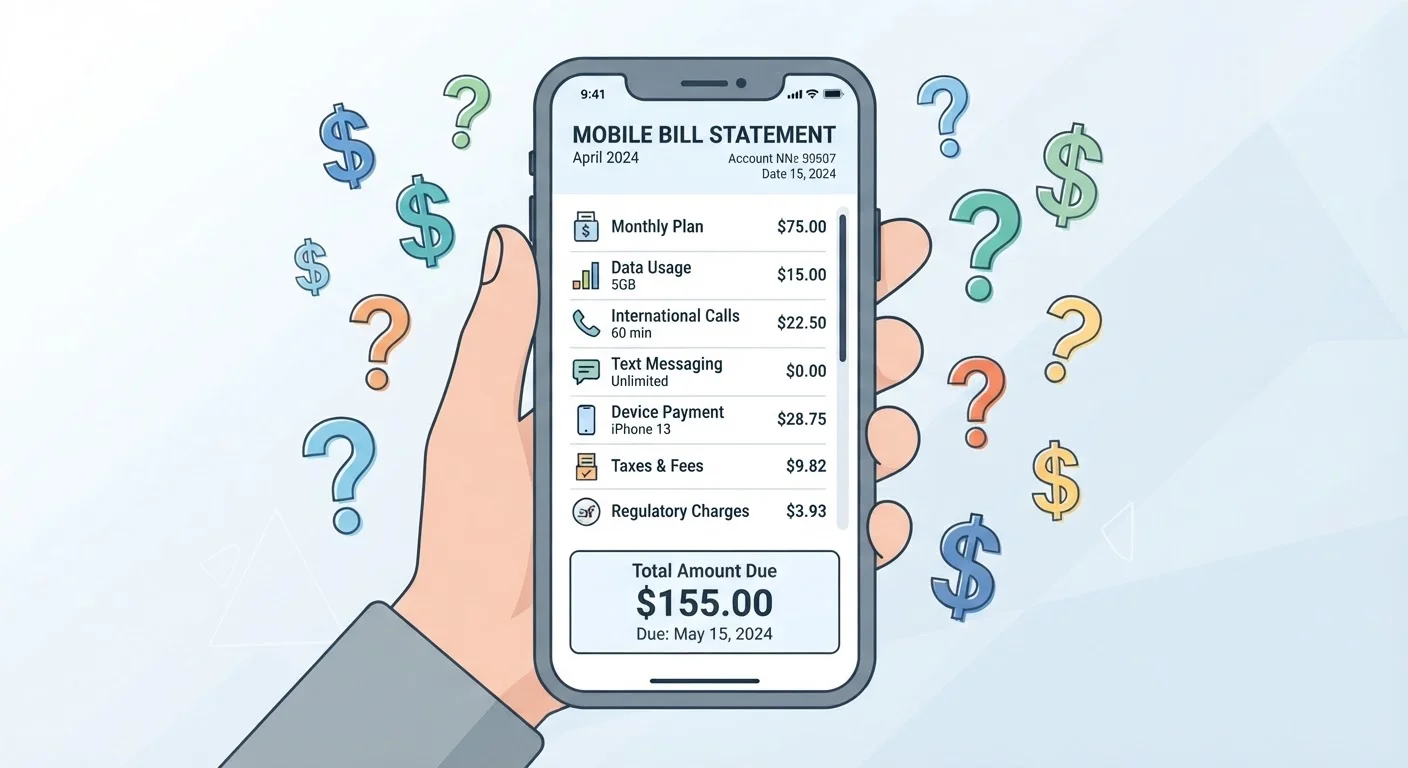
Photo: QuickSearches.net | It Doesn't Get Quicker Than This! editorial
Key Takeaways
- The advertised plan price rarely reflects what you'll actually pay each month.
- Autopay and paperless billing discounts are often required to reach the 'from $X/line' price in ads.
- Device installment plans are separate from your service plan and can significantly change your monthly total.
- Some fees labeled as regulatory or administrative are set by the carrier, not the government.
- Multi-line plans lower the per-line cost but lock more people into the same account.
- Switching carriers can trigger device installment payoff obligations or promo clawbacks.
The Gap Between the Ad Price and Your Actual Bill
Wireless carriers lead with a per-line price - often something like "starting at $25/line" - that requires reading several layers of fine print to actually achieve. That headline figure typically assumes you're enrolling in autopay with a linked bank account or debit card, signing up for paperless billing, and adding multiple lines to the account simultaneously. Miss any one condition and the price climbs.
Beyond the plan rate, your bill will almost always include taxes and government-mandated fees. These vary by state and locality, and carriers have no control over them. What they do control - and what often surprises people - are carrier-imposed surcharges like administrative fees or regulatory cost recovery fees. These are legal, but they are not government fees. They function as additional revenue for the carrier, packaged in language that implies external obligation.
For a detailed breakdown of every labeled charge you might encounter, our line-by-line phone bill guide covers each one in plain terms.
~$127
Average U.S. household monthly wireless spend
According to the U.S. Bureau of Labor Statistics Consumer Expenditure Survey, American households spend roughly this amount annually averaged to a monthly figure on cellular phone services.
$10-$20
Typical monthly tax and fee add-on per line
Industry analysts and consumer advocacy groups consistently estimate that taxes and carrier fees add $10-$20 per line above advertised plan rates, varying by state and locality.
36 months
Common maximum device installment term
Major U.S. carriers have extended device financing terms from 24 to 36 months in recent years to lower monthly installment figures and reduce sticker shock on flagship devices.
Device Installments: A Separate Bill Inside Your Bill
If you financed a phone through your carrier, that monthly installment payment sits alongside - not inside - your service plan cost. Carriers present these as one combined monthly total in marketing materials, which makes it easy to confuse the device cost with the service cost. They are legally distinct: your service plan is a recurring service charge; your device installment is a consumer financing agreement.
This matters because if you pay off your device early or bring your own phone, your monthly total drops by exactly that installment amount - something carriers don't always highlight proactively. It also matters when switching: an unpaid installment balance becomes due in full when you leave, unless a new carrier's promotion covers it. No-contract plans carry their own version of this complexity, worth understanding before assuming flexibility.
Check Your Installment Balance Before Switching
Multi-Line Pricing and How Per-Line Math Actually Works
Family and group plans price each line on a sliding scale - the more lines, the lower each line's cost. A four-line plan might advertise $30 per line, but that same plan for a single line could run $65 or more. The per-line savings are real, but they depend entirely on all lines staying active. If one person leaves the plan or switches to their own account, everyone else's rate can increase automatically.
Promotional credits tied to multi-line enrollment add another layer. A carrier might offer a device credit or monthly bill credit contingent on maintaining a certain number of lines for 24 to 36 months. Dropping a line during that window can cause the promotional credit to stop - or trigger a partial clawback depending on your agreement.
Our complete guide to wireless plans walks through how to evaluate plan structures from scratch, including how to calculate true per-person cost before committing.
MVNO Plans and Why the Towers Are the Same but the Bill Looks Different
Mobile virtual network operators - MVNOs - lease access to major carrier networks and resell service under their own brand. Because they don't build or maintain infrastructure, their pricing models are often simpler and lower overall. You'll typically see fewer promotional structures, no device installment financing, and flat per-line fees without multi-line tiering.
The trade-off is network priority. MVNOs generally sit below the host carrier's own subscribers in deprioritization queues, which means congestion on a busy network hits MVNO customers first. For many users in areas without consistent congestion, this is a non-issue. Understanding how MVNOs work helps clarify whether the price difference is worth the trade-off for your usage pattern.
Frequently Asked Questions
The content on this site is provided for informational purposes only and should not be considered a substitute for professional advice. While we strive to provide accurate and up-to-date information, we make no guarantees regarding its completeness or accuracy. Always consult a qualified professional for advice specific to your circumstances before making any decisions