
Seasonal Lawn Care Calendar for Homeowners in Four Climate Zones

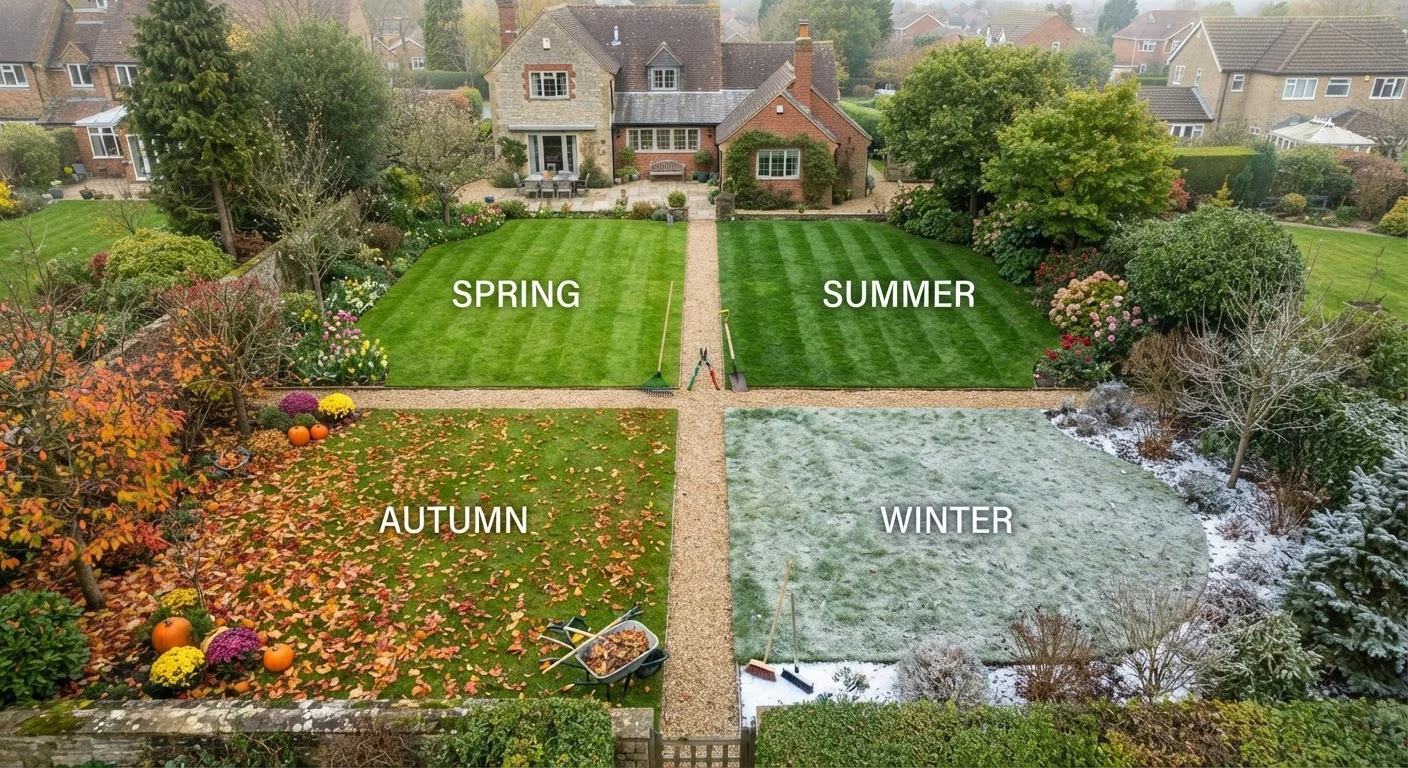
Photo: QuickSearches.net | It Doesn't Get Quicker Than This! editorial
Why a Climate-Zone Calendar Beats Generic Advice
Most lawn care tips you'll find are written for a single, unnamed region. In reality, what you do in March in Georgia can ruin a lawn in Minnesota - and vice versa. Your grass type and local climate dictate when to fertilize, aerate, overseed, and even how short to cut. This calendar is organized around four broad U.S. climate zones and two grass categories: cool-season grasses (Kentucky bluegrass, tall fescue, ryegrass) that thrive in zones with cold winters, and warm-season grasses (Bermuda, zoysia, St. Augustine, centipede) that dominate the South and West.
Pairing this lawn calendar with a broader seasonal home routine pays off. See how to build a home maintenance schedule that actually works for a room-by-room framework that puts lawn care in context with the rest of your property.
Zone-by-Zone Seasonal Task Guide
Zone 1 - Cool & Humid (Upper Midwest, Northeast, Pacific Northwest)
Cool-season grasses. Early spring (March-April): rake out thatch, apply a starter fertilizer once soil hits 50°F, overseed bare spots. Summer (June-August): mow high (3-4 inches) to shade roots; water deeply but infrequently. Fall (September-October): peak season - aerate, overseed, apply a slow-release fall fertilizer. Winter (November-February): keep equipment off frozen or saturated turf.
Zone 2 - Cool & Arid (Northern Plains, Mountain West)
Cool-season grasses with drought stress. Spring: test soil pH; add lime if below 6.0. Aerate in May before summer heat arrives. Summer: deep watering (1 inch/week) is critical; raise mowing height to reduce moisture loss. Fall: overseed no later than six weeks before first frost. Winter: dormant seeding can be done in late November for spring germination.
Zone 3 - Warm & Humid (Southeast, Gulf Coast)
Warm-season grasses. Spring (March-April): wait for soil to reach 65°F before any fertilizer - applying too early promotes top growth before roots are ready. Summer: peak growing season; fertilize monthly through August. Fall (September-October): reduce nitrogen, apply potassium to harden grass before cooler temps. Winter: warm-season grasses go dormant; avoid foot traffic on brown turf. Consider transitioning to drought-tolerant landscaping if irrigation costs are a concern.
Zone 4 - Warm & Arid (Southwest, Southern California)
Warm-season grasses; drought pressure year-round. Spring: aerate in April; overseed Bermuda if needed. Summer: water at dawn to reduce evaporation; mow Bermuda at 1-1.5 inches. Fall: many homeowners overseed with annual ryegrass in October for winter green. Winter: ryegrass stays active; continue mowing at 2 inches through mild winters.
Cool-season grass
Grass varieties that grow most actively in spring and fall when soil temperatures are between 50-65°F. Common examples include Kentucky bluegrass, tall fescue, and perennial ryegrass.
Warm-season grass
Grass varieties that thrive in summer heat with peak growth between 65-85°F soil temperatures. Bermuda, zoysia, St. Augustine, and centipede are widely grown warm-season types.
Core aeration
A mechanical process that removes small cylindrical plugs of soil from the lawn to relieve compaction, improve drainage, and allow air, water, and nutrients to reach grass roots more effectively.
Thatch
A layer of dead grass stems, roots, and debris that accumulates between the soil surface and living grass blades. A thin layer is normal, but more than half an inch can block water and nutrients.
Overseeding
The practice of spreading grass seed directly over an existing lawn without tilling the soil. It fills thin or bare areas and helps maintain a dense turf that resists weeds.
Dormancy
A natural survival state in which grass temporarily stops growing and turns tan or brown in response to heat, drought, or cold. Most healthy grasses resume growth when conditions improve.
Universal Timing Rules for Key Tasks
Fertilizing
Apply nitrogen-heavy fertilizer during a grass's active growing season - spring for cool-season, late spring through summer for warm-season. A slow-release granular formula reduces runoff risk and feeds more evenly than quick-release products.
Aerating
Core aeration - removing small plugs of soil - relieves compaction and lets water and nutrients reach roots. Aerate cool-season lawns in early fall; warm-season lawns in late spring. Once a year is sufficient for most residential lots; high-traffic areas may benefit from twice annually.
Overseeding
Overseeding thickens thin turf and crowds out weeds. Timing is everything: seed must germinate before heat or frost stress arrives. For cool-season grasses, aim for late summer to early fall. For warm-season types, late spring works best. Before overseeding, run through the spring lawn prep checklist to make sure your soil and equipment are ready.
Mowing Height
Never remove more than one-third of the blade in a single cut. Taller grass in summer protects soil moisture; a slightly shorter final cut in fall reduces snow mold risk in cold climates. Keep blades sharp - dull blades tear grass and invite disease.
The content on this site is provided for informational purposes only and should not be considered a substitute for professional advice. While we strive to provide accurate and up-to-date information, we make no guarantees regarding its completeness or accuracy. Always consult a qualified professional for advice specific to your circumstances before making any decisions