
Garden Pest Control Without Reaching for the Chemical Shelf First

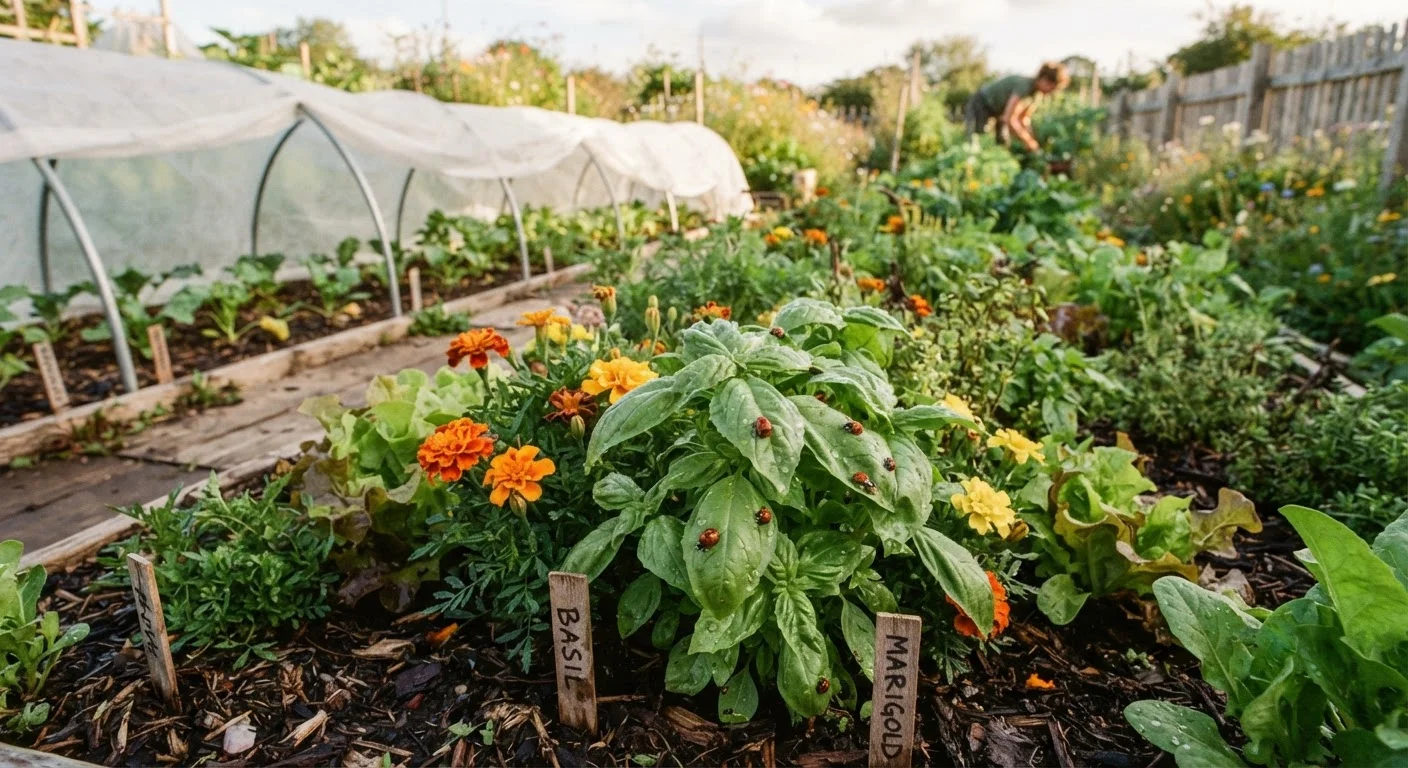
Photo: QuickSearches.net | It Doesn't Get Quicker Than This! editorial
Key Takeaways
- Physical barriers like row covers and copper tape stop many pests before they reach your plants.
- Companion planting can deter specific insects, though results vary by garden and climate.
- Beneficial insects such as ladybugs and parasitic wasps provide free, ongoing pest suppression.
- Healthy soil and proper plant spacing reduce stress that makes plants vulnerable to pests.
- Chemical pesticides can disrupt beneficial insect populations and should be a last resort.
Why Non-Chemical Methods Deserve First Consideration
Reaching for a spray bottle the moment you spot a chewed leaf is a natural instinct - but it's often counterproductive. Many pesticides, including some labeled as organic or natural, don't distinguish between the aphids you want gone and the parasitic wasps quietly doing the same job for free. Disrupting that natural balance can create a cycle where pest populations rebound faster than the predators that once kept them in check.
The good news for budget-conscious gardeners: the most effective first-line strategies - physical barriers, habitat for beneficial insects, and attentive observation - cost very little and pay off across multiple seasons. If you're just starting out, our guide to starting a vegetable garden on a tight budget covers the foundation of a healthy, lower-maintenance plot from the ground up.
“The goal of integrated pest management is not to eliminate all pest populations - it's to keep them below the threshold where they cause economic or aesthetic damage. A garden with a few aphids is a garden with food for beneficial insects.”
— Integrated Pest Management Program, Cooperative Extension framework widely used by university agricultural programs
Core Practices That Actually Move the Needle
Integrated pest management - the approach used by university extension programs across the country - treats pest control as a spectrum. You exhaust the least disruptive options first and escalate only when damage crosses a meaningful threshold. Here are the practices with the strongest real-world track record for home gardeners.
Install physical barriers before pests arrive, not after you spot damage.
Use companion planting strategically, with realistic expectations.
Attract and support beneficial insects by providing habitat and avoiding broad-spectrum sprays.
Inspect plants regularly and remove pests by hand during low-infestation periods.
Improve soil health and plant spacing to reduce pest vulnerability.
If a spray is necessary, choose the most targeted, least-persistent option available.
Soil health underpins all of it. Our guide to composting at home walks through how to build the kind of rich, biologically active soil that produces genuinely resilient plants.
Getting Started Today: Small Steps with Meaningful Impact
You don't need to overhaul your entire garden to make progress. Even a handful of targeted changes can meaningfully reduce pest pressure by the end of the growing season. The key is consistency - regular observation and small, timely interventions beat reactive spraying every time.
Match Your Strategy to the Specific Pest
If you're thinking longer term, consider that plant diversity is one of the most powerful tools in a low-intervention gardener's toolkit. Our piece on native plants and the low-maintenance lawn explores how choosing regionally adapted species can reduce both pest pressure and overall garden maintenance.
When to Call in a Professional
35%
Crop loss attributed to insects globally
According to the Food and Agriculture Organization of the United Nations, insect pests account for roughly 35% of global crop losses annually, underscoring why pest management matters even at the home garden scale.
1,500+
Native bee species in the United States
The USDA estimates there are more than 1,500 native bee species in the U.S., many of which also prey on or parasitize common garden pests when their habitat needs are met.
The content on this site is provided for informational purposes only and should not be considered a substitute for professional advice. While we strive to provide accurate and up-to-date information, we make no guarantees regarding its completeness or accuracy. Always consult a qualified professional for advice specific to your circumstances before making any decisions