
Open Shelving vs. Closed Cabinets: Which Storage Style Suits Your Home?

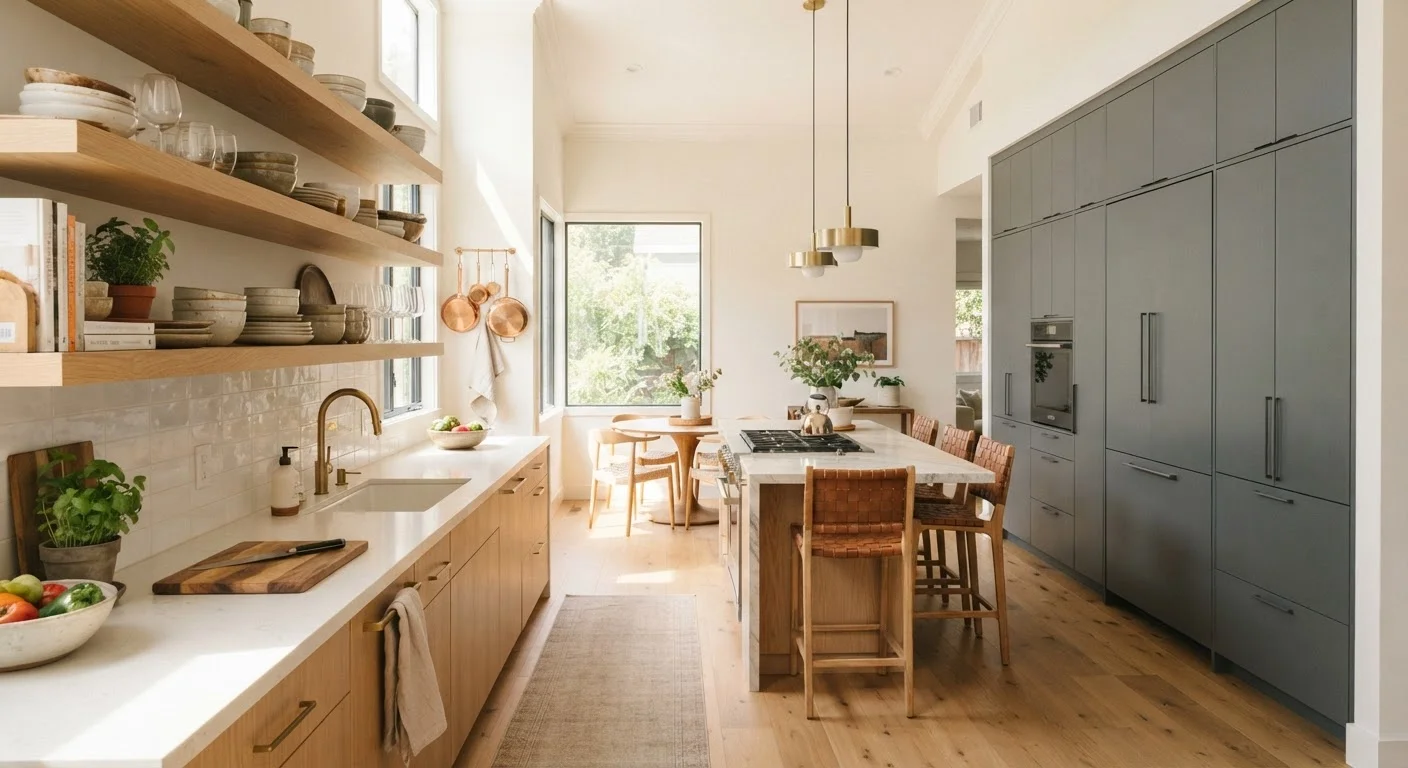
Photo: QuickSearches.net | It Doesn't Get Quicker Than This! editorial
Key Takeaways
- Open shelving creates a sense of space and accessibility but requires consistent tidying to look its best.
- Closed cabinets conceal clutter effortlessly and protect items from dust, making them lower-maintenance overall.
- Your cleaning habits, household size, and room function matter more than aesthetic trends when choosing storage.
- A hybrid approach - open shelving for display, closed cabinets for everyday items - often works best in kitchens.
- Cost varies widely; basic open shelving typically has a lower upfront cost than full cabinetry.
Understanding the Core Trade-Off
The open-vs.-closed storage debate comes down to a simple tension: visibility versus concealment. Open shelving puts everything on display - that's either a feature or a flaw depending on how you live. Closed cabinets tuck things away behind doors, giving your space a calm, finished look regardless of what's stashed inside.
Neither approach is objectively better. What matters is how well each one fits your actual habits, not just the home you picture having. Before committing either way, it's worth being honest about two things: how often you tidy, and how much stuff you actually own.
| Criterion | Open Shelving | Closed Cabinets |
|---|---|---|
| Upfront cost | Generally lower | Generally higher |
| Dust & grease buildup | Accumulates quickly | Protected behind doors |
| Visual spaciousness | Opens up the room | Can feel heavier in small spaces |
| Clutter tolerance | Low - everything is visible | High - hides disorder easily |
| Item accessibility | Immediate, no doors to open | Requires opening doors or drawers |
| Installation complexity | Simple wall mounting | More complex; often professional |
| Storage volume | Limited to shelf depth | Greater with interior organizers |
| Maintenance level | Frequent wiping required | Interior cleaned less often |
The Case for Open Shelving
Open shelves genuinely shine in the right context. In a kitchen used by someone who cooks daily, having oils, spices, and frequently used bowls within arm's reach - no opening and closing cabinet doors - adds up to real convenience. Visually, open shelves can make a small kitchen feel larger by breaking up solid wall surfaces and drawing the eye deeper into the room.
They're also easier and cheaper to install than full upper cabinetry. A few sturdy wall-mounted brackets and solid wood boards can transform a bare wall into functional storage for a fraction of the cost. If you're working with a tight budget, see our guide to getting organized affordably for strategies that stretch every dollar.
The honest downside: open shelves gather dust and grease quickly, especially near a stove. Items need to look intentional - mismatched stacks of random containers will stand out in a way they wouldn't behind closed doors. If your household includes multiple people with varying tidiness standards, check out organizing strategies for mixed-habit households before committing to an open display system.
The Case for Closed Cabinets
Closed cabinets remain the dominant choice in American kitchens and bathrooms for a reason: they're forgiving. You can stash mismatched containers, half-empty boxes, and jumbled utensils behind a door and your space still looks orderly. That buffer between private chaos and public presentation is genuinely valuable for most households.
Cabinets also protect contents from dust, moisture, and light - meaningful benefits for pantry items, delicate dishware, and anything stored long-term. In rooms that see heavy use, like a family kitchen or shared bathroom, that protection reduces how often you need to wipe down stored items.
~70%
U.S. kitchens with upper cabinets
Estimates from kitchen design industry surveys consistently show closed upper cabinetry remains the dominant storage choice in American homes.
2-3×
Cost difference: cabinets vs. open shelves
Home improvement industry guides generally indicate that installed upper cabinetry can cost two to three times more than comparable open shelving per linear foot.
The trade-off is cost and visual weight. A full run of upper cabinets adds significant expense compared to open shelving. In smaller rooms, solid cabinet rows can make a space feel boxed in. Interior organization also matters more than people expect - without drawer dividers or shelf risers, closed cabinets become black holes where things disappear. Our guide to containers and organizers can help you maximize what's inside those doors.
How to Choose - and When to Combine Both
The most practical approach for most households isn't a strict either/or choice. A hybrid layout - open shelves for a curated selection of frequently used or attractive items, closed cabinets for everyday clutter - captures the visual benefits of open storage without the maintenance burden of displaying everything.
When deciding, ask yourself: How often do I actually wipe down surfaces? Do the people I live with put things back in a specific spot reliably? Is this room primarily functional or does it double as a social space? Rooms guests see often (kitchens, living rooms) have a higher visual standard than pantries or utility closets, where closed storage almost always wins.
If your bigger challenge is cramped storage overall rather than style preference, the structural issues may need attention first - our article on maximizing storage in tight spaces covers that ground well. And if you've been telling yourself you just need more storage without seeing results, it's worth reading common home organization myths - sometimes the system, not the storage type, is the real issue.
The content on this site is provided for informational purposes only and should not be considered a substitute for professional advice. While we strive to provide accurate and up-to-date information, we make no guarantees regarding its completeness or accuracy. Always consult a qualified professional for advice specific to your circumstances before making any decisions