
Bins, Baskets, and Boxes: Choosing the Right Container for Every Organizational Need

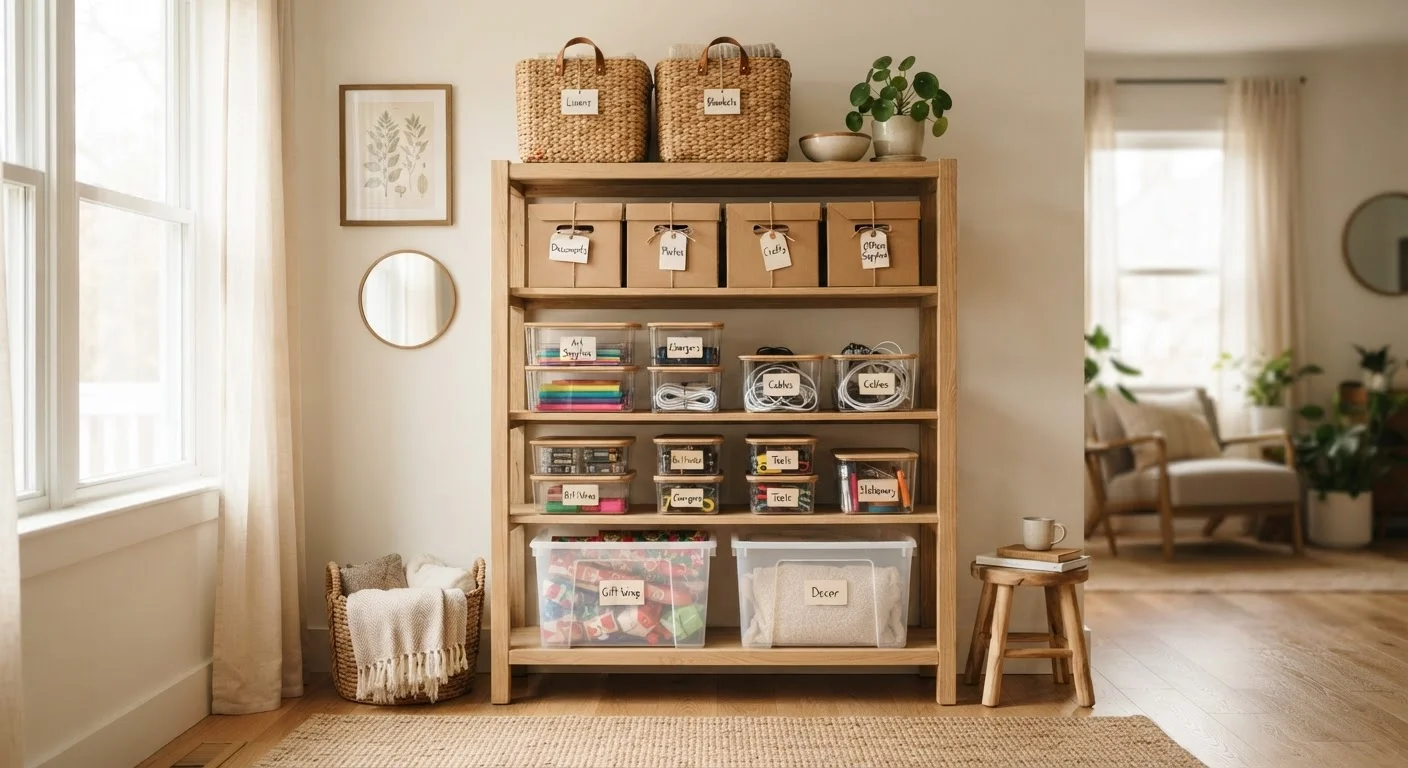
Photo: QuickSearches.net | It Doesn't Get Quicker Than This! editorial
Key Takeaways
- Clear bins work best for items you need to identify quickly without opening a lid.
- Baskets suit living areas where appearance matters as much as function.
- Rigid boxes with lids are ideal for long-term storage of fragile or archival items.
- Matching container type to room humidity, frequency of use, and item weight prevents costly mistakes.
- You don't need to buy everything at once - start with one problem area and build from there.
Why Container Choice Actually Matters
Most people grab whatever container is on sale and hope for the best. The result is a jumble of mismatched storage that looks chaotic and, more importantly, stops working within weeks. The type of container you choose shapes how easy it is to put things away - and how likely household members are to actually do it.
A container that's hard to open, too deep, or visually opaque in the wrong spot creates friction. Friction leads to items landing on countertops instead of where they belong. Getting the match right between container and context is one of the most overlooked parts of home organization - and one of the cheapest fixes available. For a broader look at avoiding common missteps, see common organizing myths that backfire.
Clear Plastic Bins: The Utility Workhorse
Clear plastic bins earn their place in high-function zones - pantries, refrigerators, bathroom cabinets, garages, and laundry rooms. Their defining advantage is visibility: you see what's inside without lifting a lid or reading a label. That speeds up both retrieval and restocking.
They're also easy to wipe clean, stack efficiently, and come in a wide range of sizes. The trade-offs are real, though. Plastic can crack under heavy loads, degrades in prolonged UV exposure (relevant for garages with skylights), and looks sterile in rooms where warmth matters. Stackable bins without lids work well for frequently accessed items; versions with snap lids are better for protecting contents from dust or moisture.
Size Down Before You Buy
Where they struggle: Avoid clear bins in direct sunlight for anything heat-sensitive - food, medications, or anything with adhesive labels. Also skip them in living spaces where they'll look clinical against warm décor.
Woven and Fabric Baskets: Form Meets Function
Baskets - whether woven from natural materials like seagrass and rattan, or made from fabric such as canvas or felt - thrive in living rooms, bedrooms, entryways, and on open shelving. They soften a space visually while still corralling loose items: throw blankets, children's toys, remote controls, or shoes by the front door.
The key limitation is structure. Soft-sided baskets don't stack reliably and can sag under heavy contents. They're also harder to clean and can harbor moisture in bathrooms or laundry rooms, making mold a risk. Natural fiber baskets are best reserved for dry areas. For spaces where both looks and storage matter, baskets pair naturally with the strategies outlined in open shelving versus closed cabinet approaches.
Rigid Boxes with Lids: The Long-Term Storage Solution
Lidded boxes - whether cardboard, plastic, or fabric-covered - are the right tool when items need protection over time. Think tax documents, holiday decorations, sentimental items, photo prints, or off-season clothing. The lid matters: it keeps out dust, pests, and light, all of which degrade stored items.
Archival-quality boxes (acid-free cardboard) are worth seeking for paper documents and photographs. For heavier items like tools or books, opt for rigid plastic with reinforced bases rather than cardboard, which buckles under weight. Label every box on the side that faces outward - lids get stacked, and top labels become useless. In cramped closets, uniform box sizing makes stacking safer and more space-efficient. See strategies for maximizing tight closet space for more on making vertical storage work.
| Clear Plastic Bins | Woven/Fabric Baskets | Rigid Lidded Boxes | |
|---|---|---|---|
| Best rooms | Pantry, garage, bathroom | Living room, bedroom, entryway | Closet, attic, basement |
| Visibility of contents | High - see-through | Low - opaque | Low - requires labeling |
| Stackability | Good with flat lids | Poor - unstable when stacked | Excellent with uniform sizing |
| Moisture resistance | Good - easy to wipe clean | Poor - can harbor mold | Varies by material |
| Aesthetic fit | Utilitarian, clinical | Warm, decorative | Neutral, functional |
| Best for item weight | Light to medium | Light only | Medium to heavy (plastic) |
| Long-term storage | Fair | Poor | Excellent |
Matching Container to Room and Habit
The most effective storage systems account for who is using a space, not just what is being stored. In households with young children, lids become a barrier - open-top bins or baskets with easy access reduce the chance that items get dropped on the floor instead of put away. In shared homes, clear labeling on any container type reduces the friction that comes from different organizational habits. Managing organization in shared spaces offers practical approaches for households with clashing tidiness levels.
You don't need to overhaul every room at once. Starting with one high-traffic problem area and choosing containers deliberately - based on the criteria above - builds momentum without breaking the budget. For more ideas on building a system affordably, getting organized on a tight budget covers practical ways to create lasting order without overspending.
The content on this site is provided for informational purposes only and should not be considered a substitute for professional advice. While we strive to provide accurate and up-to-date information, we make no guarantees regarding its completeness or accuracy. Always consult a qualified professional for advice specific to your circumstances before making any decisions