
Digital vs. Physical Organization Systems: What Works Better for Home Management

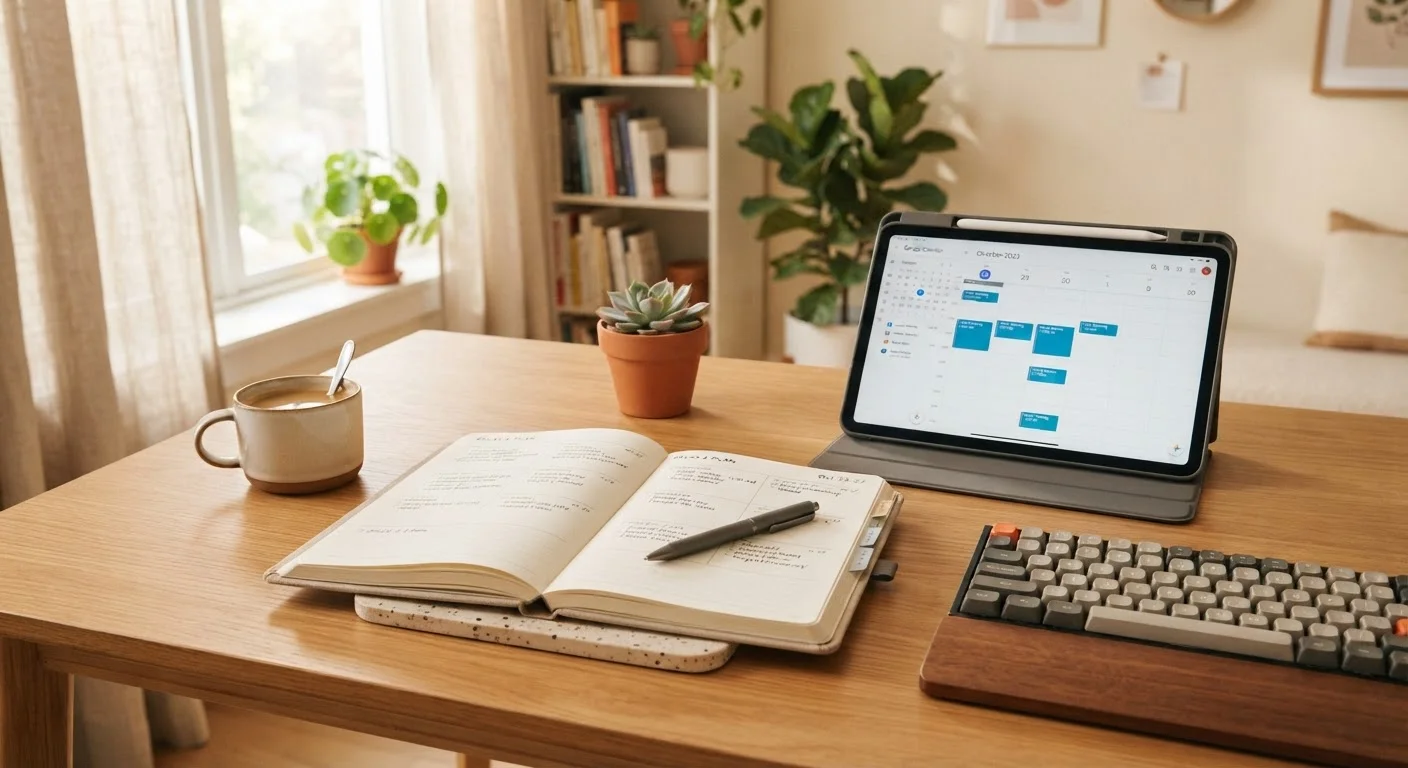
Photo: QuickSearches.net | It Doesn't Get Quicker Than This! editorial
Key Takeaways
- Neither digital nor physical systems are universally superior - the best choice depends on your household habits.
- Digital tools excel at sharing, searching, and sending reminders; paper systems reduce screen fatigue and require no setup.
- Many effective households combine both approaches rather than committing to one exclusively.
- The cost difference between the two is often smaller than people assume.
- Consistency matters more than the format - a system you abandon solves nothing.
How Digital and Physical Systems Actually Differ
When people talk about organizing their homes, they usually mean one of two things: a stack of planners, folders, and labels - or a collection of apps, cloud calendars, and digital reminders. Both aim for the same outcome (a less chaotic household), but they operate very differently in practice.
Digital systems include smartphone apps, shared online calendars, note-taking tools, and cloud-based document storage. They're searchable, shareable, and accessible from multiple devices. Physical systems include paper planners, wall calendars, binders, index cards, and labeled filing systems. They require no charge, no login, and no learning curve beyond picking up a pen.
The meaningful differences show up in everyday use. Digital tools send reminders you don't have to remember to check; physical tools don't notify you of anything but are always visible if placed strategically. Apps can be shared instantly with a partner across town; a paper calendar cannot. On the other hand, a wall calendar in the kitchen is passively visible to everyone in the house - no one needs to open an app to see it.
| Criterion | Digital Systems | Physical Systems |
|---|---|---|
| Setup effort | Moderate - requires app selection and configuration | Low - pen and paper ready immediately |
| Shareability | High - real-time sharing across devices | Limited - requires physical proximity |
| Searchability | Instant keyword search | Manual browsing required |
| Reminders and alerts | Automated push notifications | None - relies on visibility |
| Screen fatigue risk | Higher - adds to daily screen time | None - fully offline |
| Upfront cost | Often free; some tools charge for premium tiers | Low - basic supplies cost a few dollars |
| Reliability | Depends on battery, internet, and app availability | Always accessible, no dependencies |
| Best for households | Multi-person, multi-device coordination | Single users or low-tech households |
Where Each System Has a Genuine Edge
Digital tools have a clear advantage when coordination is the priority. If two adults are managing school pickups, bill due dates, and home repair appointments, a shared app or calendar eliminates the need for constant check-ins. Search functions mean you can find a document - a lease, a warranty, a vaccination record - in seconds rather than digging through a filing cabinet. For households dealing with a lot of paperwork, going partially digital can dramatically reduce clutter. Our guide on taming mail and household documents walks through how to build a sensible filing system that bridges both worlds.
Physical systems win on simplicity and focus. Writing something down by hand has been associated with better retention in educational research, and many people find that a paper planner helps them think through priorities without the distraction of notifications. There's also no risk of a dead battery or a forgotten password making your grocery list inaccessible at the store. For households where screen time is already high, keeping home management analog can feel like a genuine relief - something worth weighing alongside the convenience arguments for going digital.
A Note on Privacy and Data
Cost is often less of a differentiator than assumed. Many capable digital tools are free, and a basic paper planner costs a few dollars. The expenses that add up - premium app subscriptions, elaborate binder systems with custom inserts - are optional in both formats. Our overview of budget-friendly organization approaches covers how to build effective systems without overspending in either direction.
Choosing What Actually Works for Your Household
The most organized people tend not to be purists. A common real-world approach: a shared digital calendar for appointments and deadlines, a paper notepad for daily to-do lists, and a physical binder for important documents that need to be findable even when the internet is down. This hybrid approach respects the genuine strengths of each format rather than forcing everything into one.
When deciding where to start, consider a few honest questions. Does your household include people with different tech comfort levels? If so, a shared digital system only works if everyone actually uses it - which isn't guaranteed. Are you trying to reduce screen time at home? Physical tools help. Do you frequently misplace things? Digital systems with search and cloud backup can reduce that friction significantly.
If your household includes multiple people with different organizational preferences, strategies for organizing shared spaces can help you build systems that work across different habits rather than against them. And if budgeting is part of your home management challenge, it's worth noting that the same digital-vs-physical tension applies there too - see our comparison of paper budgets versus spreadsheets and apps for a parallel breakdown.
Ultimately, the format is less important than the habit. A paper planner that sits unopened and an app you never check are equally useless. Start with the system that has the lowest friction for your daily life, and build consistency before you optimize for anything else.
~65%
Americans reporting paper clutter as a top home stress source
Survey data from organizational behavior researchers consistently identifies paper accumulation as among the most commonly cited household stressors.
4+ hours
Average daily adult screen time in U.S. homes
According to data from the American Time Use Survey and related research, many American adults already spend considerable time on screens before adding home management tools.
The content on this site is provided for informational purposes only and should not be considered a substitute for professional advice. While we strive to provide accurate and up-to-date information, we make no guarantees regarding its completeness or accuracy. Always consult a qualified professional for advice specific to your circumstances before making any decisions