
Taking On a Fixer-Upper: Honest Advantages and Real Drawbacks

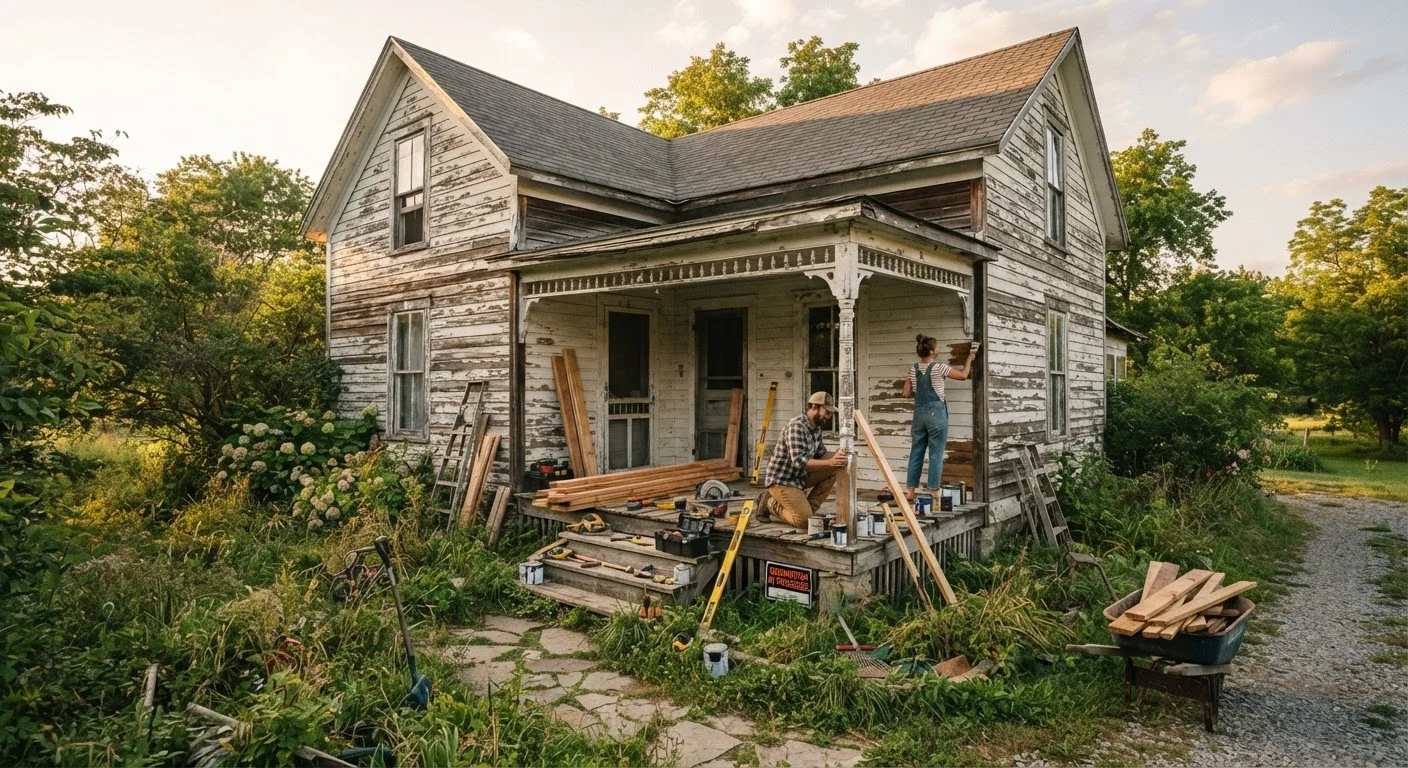
Photo: QuickSearches.net | It Doesn't Get Quicker Than This! editorial
Key Takeaways
- Fixer-uppers typically sell below market value, offering a lower entry price for buyers willing to do work.
- Hidden structural or systems problems can push total costs well above initial estimates.
- Sweat equity - doing some work yourself - can meaningfully reduce renovation expenses.
- Living through a major renovation is genuinely disruptive and can strain finances and relationships.
- A thorough pre-purchase inspection is essential and non-negotiable before buying any distressed property.
Lower purchase price than comparable move-in-ready homes
Distressed properties are typically discounted to reflect the work required, giving buyers a lower entry point. In competitive markets, this can be the difference between affording a neighborhood and being priced out entirely.
Opportunity to build equity through renovation
Improvements that cost less than they add in appraised value - such as kitchen updates, bathroom remodels, or new roofing - can increase a home's worth significantly. This equity gain can compound over time as the broader market appreciates.
Full control over finishes and upgrades
Renovating from scratch means choosing materials, layouts, and features that suit your household's specific needs. You aren't locked into previous owners' decisions or paying a premium for upgrades you didn't select.
Less competition from other buyers
Move-in-ready homes in desirable areas often attract multiple offers. Fixer-uppers tend to attract fewer competing buyers, giving you more negotiating leverage and a better chance of a clean offer acceptance.
Potential to reduce costs through sweat equity
Buyers willing to do some of the work themselves - painting, demolition, flooring, landscaping - can meaningfully reduce labor costs. Even modest DIY contributions can save thousands of dollars over the full project.
Hidden problems routinely exceed initial estimates
Older homes frequently conceal issues behind walls, under floors, or in crawl spaces - mold, outdated wiring, plumbing failures, or structural damage. These discoveries are common and can add tens of thousands of dollars to the renovation cost.
Living through renovations is genuinely exhausting
Dust, noise, limited access to kitchens or bathrooms, and ongoing uncertainty create real daily strain. Prolonged construction timelines - which are common - can significantly affect quality of life for the entire household.
Renovation financing is more complicated than a standard mortgage
Financing a fixer-upper often requires specialized loan products, which can have stricter qualifications, higher rates, or more complex disbursement processes than a conventional mortgage.
Permit and code compliance adds cost and time
Many renovation tasks - especially electrical, plumbing, and structural work - legally require permits and licensed contractors. Unpermitted work can create problems when you sell and may not be covered by homeowner's insurance.
Return on investment is not guaranteed
Not every renovation dollar translates into equivalent resale value. Improvements in a flat or declining market, or over-improvements relative to the neighborhood, may not be fully recovered at sale.
What Makes a Property a 'Fixer-Upper'?
A fixer-upper is a property sold in below-average condition - one that requires meaningful repairs, updates, or renovations before it's fully functional or comfortable to live in. That range can be wide: some fixer-uppers need only cosmetic work like new paint, flooring, or fixtures, while others involve significant structural, electrical, plumbing, or mechanical problems.
The appeal is straightforward. These homes typically carry a lower purchase price than move-in-ready properties in the same neighborhood, which can allow buyers to get into a market they might otherwise be priced out of. But the gap between purchase price and livable result is where the real math - and the real risk - lives.
Before diving into the pros and cons, it's worth understanding that not all distressed properties are equal. A cosmetically tired home is a very different proposition from one with foundation issues or outdated electrical wiring. A licensed home inspector can help you tell the difference - and their report should be a condition of any offer you make. For a broader look at what financial surprises can follow any home purchase, see hidden ownership costs first-timers miss.
The Real Advantages of Buying a Fixer-Upper
When the project is planned well and priced correctly, a fixer-upper can deliver genuine benefits that a turnkey home simply can't.
Lower purchase price than comparable move-in-ready homes
Distressed properties are typically discounted to reflect the work required, giving buyers a lower entry point. In competitive markets, this can be the difference between affording a neighborhood and being priced out entirely.
Opportunity to build equity through renovation
Improvements that cost less than they add in appraised value - such as kitchen updates, bathroom remodels, or new roofing - can increase a home's worth significantly. This equity gain can compound over time as the broader market appreciates.
Full control over finishes and upgrades
Renovating from scratch means choosing materials, layouts, and features that suit your household's specific needs. You aren't locked into previous owners' decisions or paying a premium for upgrades you didn't select.
Less competition from other buyers
Move-in-ready homes in desirable areas often attract multiple offers. Fixer-uppers tend to attract fewer competing buyers, giving you more negotiating leverage and a better chance of a clean offer acceptance.
Potential to reduce costs through sweat equity
Buyers willing to do some of the work themselves - painting, demolition, flooring, landscaping - can meaningfully reduce labor costs. Even modest DIY contributions can save thousands of dollars over the full project.
10-20%
Typical renovation cost contingency recommended
Industry guidance from home construction professionals consistently recommends budgeting 10-20% above your estimated renovation costs to cover unexpected discoveries.
~$50K
Median U.S. home renovation spend
According to Harvard's Joint Center for Housing Studies, the median annual spend among homeowners who completed renovations in recent years has ranged between $15,000 and $50,000 depending on scope and region.
Perhaps the most underrated advantage is customization. When you're renovating from scratch, you choose the layout adjustments, finishes, appliances, and details. You're not inheriting someone else's taste or working around decisions that don't suit your household. If you're newer to home improvement, starting with beginner-friendly projects can build your skills progressively as you work through the renovation.
The Real Drawbacks You Shouldn't Underestimate
The risks of a fixer-upper aren't hypothetical. They're common, documented, and regularly catch buyers off guard - even experienced ones.
Hidden problems routinely exceed initial estimates
Older homes frequently conceal issues behind walls, under floors, or in crawl spaces - mold, outdated wiring, plumbing failures, or structural damage. These discoveries are common and can add tens of thousands of dollars to the renovation cost.
Living through renovations is genuinely exhausting
Dust, noise, limited access to kitchens or bathrooms, and ongoing uncertainty create real daily strain. Prolonged construction timelines - which are common - can significantly affect quality of life for the entire household.
Renovation financing is more complicated than a standard mortgage
Financing a fixer-upper often requires specialized loan products, which can have stricter qualifications, higher rates, or more complex disbursement processes than a conventional mortgage.
Permit and code compliance adds cost and time
Many renovation tasks - especially electrical, plumbing, and structural work - legally require permits and licensed contractors. Unpermitted work can create problems when you sell and may not be covered by homeowner's insurance.
Return on investment is not guaranteed
Not every renovation dollar translates into equivalent resale value. Improvements in a flat or declining market, or over-improvements relative to the neighborhood, may not be fully recovered at sale.
Renovation loans and construction financing add complexity to an already stressful process. Not all lenders offer them, qualifying can be harder, and disbursement structures often require work to be completed before funds are released. Understanding how construction lending works before you commit is worthwhile. Separately, some renovation tasks require permits and licensed contractors - skipping either can create legal and insurance complications down the road. See when to hire a contractor vs. doing it yourself to understand where those lines typically fall.
Permits Aren't Optional - They Protect You
How to Approach the Decision Honestly
The buyers who fare best with fixer-uppers share a few common traits: they've budgeted conservatively, they've had the property thoroughly inspected, and they've been honest with themselves about how much disruption they can absorb.
A practical starting point is getting contractor estimates - plural - before closing, not after. Many buyers fall in love with a property's potential and skip this step, only to discover the gap between purchase price and livable result is far larger than they imagined. Budget for at least 10-20% in contingency over and above your renovation estimates to cover surprises, because surprises are nearly guaranteed in older homes.
Location matters, too. A beautifully renovated home in a weak market may not return what you put into it. Research the neighborhood carefully, including comparable sales and long-term market trends. Evaluating the neighborhood before you commit is a step that's easy to skip when you're excited about a property - and one that's hard to undo after closing.
Finally, consider your timeline. If you need to move in immediately, a heavy renovation may not be realistic. If you have flexibility, a phased approach - tackling the most urgent systems first, then living in the home while completing the rest - is often the most manageable path forward.
The content on this site is provided for informational purposes only and should not be considered a substitute for professional advice. While we strive to provide accurate and up-to-date information, we make no guarantees regarding its completeness or accuracy. Always consult a qualified professional for advice specific to your circumstances before making any decisions