
Home Ownership Costs That Catch First-Timers Off Guard

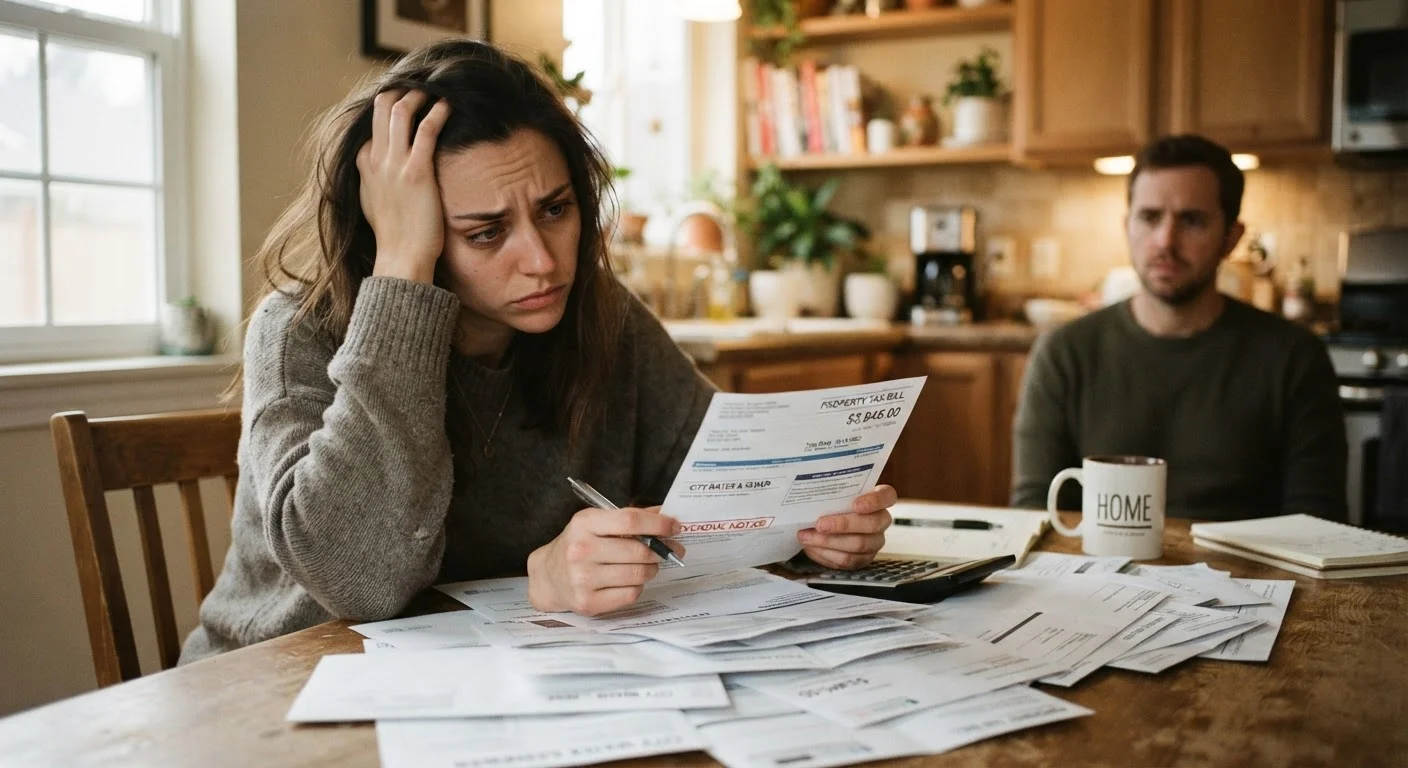
Photo: QuickSearches.net | It Doesn't Get Quicker Than This! editorial
Key Takeaways
- Homeownership costs beyond the mortgage can add thousands of dollars per year in unexpected expenses.
- Sewer lines, private roads, and HOA special assessments are often the biggest financial surprises.
- Property tax reassessments after purchase can significantly increase your annual tax bill.
- Building an emergency fund specifically sized for homeownership is essential before closing.
- Routine maintenance neglected in year one often becomes a costly repair by year three.
The Gap Between What You Budgeted and What You Owe
Most first-time buyers spend months scrutinizing their mortgage payment, down payment, and closing costs. What they rarely plan for is everything that starts billing them the month after they get the keys. Homeownership carries a layer of financial obligations that don't show up in any pre-purchase disclosure - not because sellers are hiding them, but because many of these costs are irregular, situational, or simply unfamiliar to anyone who has only ever rented.
The difference between renting and owning isn't just equity - it's full financial responsibility for a physical structure and the land beneath it. For renters used to calling a landlord, the shift can be jarring. If you're curious how the surprise costs of renting compare, see what renants typically overlook. As a homeowner, the buck stops with you - and understanding exactly where it stops is the most important financial preparation you can do.
Sewer Line Responsibility from the Street to Your Home
In most U.S. municipalities, the homeowner - not the city - is responsible for the sewer lateral: the underground pipe connecting your home to the public sewer main at the street. If that line cracks, roots invade it, or it collapses, the repair bill lands entirely on you. Depending on depth, material, and ground conditions, lateral repairs can run from $3,000 to well over $15,000. Many buyers don't discover this responsibility until they receive their first surprise plumbing estimate.
Before or shortly after closing, consider having a licensed plumber run a camera inspection of the lateral - particularly in homes built before 1980, where clay or cast-iron pipes are common. Some municipalities offer optional sewer line insurance programs; check with your local public works department.
The pipe from your home to the street is your responsibility - and replacing it can cost $15,000.
Property Tax Reassessment After Purchase
Many states assess property taxes based on a value that hasn't been updated in years. The moment a home sells, it can trigger a full reassessment at the new purchase price - which may be significantly higher than what the previous owner was taxed on. In states like California, assessed values are capped until sale, meaning a long-held home can carry a tax bill that dramatically understates market value.
If you bought at the top of the market or in a rapidly appreciating area, your first full-year tax bill may be a genuine shock. Always ask the listing agent for the current assessed value and research how your state handles reassessment at sale before you finalize your budget. How property taxes are calculated and when they're due is worth reading before closing day.
A sale can trigger a full reassessment, potentially doubling the previous owner's annual tax bill.
HOA Special Assessments
Monthly HOA dues give buyers a false sense of security. What the regular fee covers is routine maintenance and shared services - but when the reserve fund falls short of a major repair (a new roof on a condo building, repaving a private road, replacing an elevator), the association can levy a special assessment against all unit owners. These can arrive with relatively short notice and run into the thousands of dollars per unit.
Before buying into any HOA-governed community, request the most recent reserve fund study and the last two years of meeting minutes. Underfunded reserves and deferred maintenance in the minutes are red flags. Understanding what your HOA fees actually cover can help you ask the right questions during due diligence.
An underfunded HOA reserve can result in a surprise assessment of thousands of dollars per owner.
Private Road Maintenance Costs
Homes on private roads - common in rural areas and some planned communities - require owners to collectively fund road maintenance and repair. There's no municipal crew coming to fill potholes or plow snow. If a road maintenance agreement exists among neighbors, review it carefully before closing. If no formal agreement exists, that's a significant risk: one neighbor's refusal to contribute can leave others absorbing the cost.
Repaving a private road can cost $2 to $5 per square foot or more depending on material and region, and a shared 500-foot gravel road can cost tens of thousands to properly grade and surface. Ask your real estate attorney to review any road maintenance agreements as part of title work.
Private road maintenance is the homeowners' collective responsibility - with no guarantee neighbors will contribute.
Utility Infrastructure You Now Own
Renters rarely think about the well pump, septic tank, propane system, or oil tank on a property - because those were the landlord's problem. As a homeowner, they're yours. Septic systems require pumping every three to five years (typically $300-$600) and eventual replacement of the drain field (potentially $5,000-$25,000+). Well pumps fail and need replacement. Propane tanks may need annual servicing. Older underground oil tanks can represent environmental liability if they leak.
Have a septic inspection and well water test completed as part of your home inspection - not as an afterthought. If the home uses oil heat, ask about the age and condition of the tank and whether it's above or below ground.
Septic systems, wells, and fuel tanks come with the deed - and their maintenance costs come with them.
Deferred Maintenance the Inspector Didn't Flag
Home inspectors identify visible defects at a point in time - they don't predict what will fail in 18 months. A roof with five years of life remaining, an aging water heater, or a furnace near the end of its expected lifespan may all pass inspection while being expensive replacements in the near term. First-time buyers sometimes interpret a clean inspection report as a long runway of trouble-free ownership. It rarely is.
Request the age of major systems (roof, HVAC, water heater, appliances) in writing before closing. Use that information to start budgeting for replacement - not just waiting for failure. The full annual cost of homeownership beyond your mortgage lays out realistic figures across all these categories.
A clean inspection report isn't a guarantee - aging systems can fail within a year of closing.
Landscaping and Exterior Upkeep
Curb appeal costs money to maintain. Lawn care, tree trimming, gutter cleaning, driveway sealing, and exterior painting are recurring expenses that renters never budgeted for. A single mature tree removal, if a tree becomes diseased or hazardous, can cost $1,000-$3,000 or more depending on size and location. Neglecting gutters leads to water intrusion in basements and crawlspaces - a far more expensive problem than the $150 cleaning that would have prevented it.
Budget exterior maintenance separately from interior repairs. Even modest properties in temperate climates typically require $1,000-$3,000 annually in exterior upkeep. In climates with heavy snow, ice dam prevention and driveway maintenance add further costs.
Exterior upkeep - gutters, trees, driveways - easily runs $1,000-$3,000 per year on modest properties.
Planning Ahead Reduces the Damage
None of these costs have to be catastrophic if you see them coming. The key is building a homeownership-specific financial cushion before you need it. Learn how to size your emergency fund as a homeowner - the renter's rule of three to six months of expenses often isn't sufficient once you're responsible for a roof, a furnace, and a sewer line. Pair that with a proactive maintenance calendar, and you shift from reacting to emergencies to managing a predictable schedule of upkeep. Routine tasks that new owners overlook are the single biggest driver of surprise repair bills - a $20 filter replacement today prevents a $3,000 HVAC replacement next winter. Homeownership rewards preparation and punishes neglect more than almost any other financial commitment you'll make.
Build Your Budget Before Your First Bill Arrives
The content on this site is provided for informational purposes only and should not be considered a substitute for professional advice. While we strive to provide accurate and up-to-date information, we make no guarantees regarding its completeness or accuracy. Always consult a qualified professional for advice specific to your circumstances before making any decisions