
The Envelope System and Its Digital Equivalents for Budget-Conscious Households

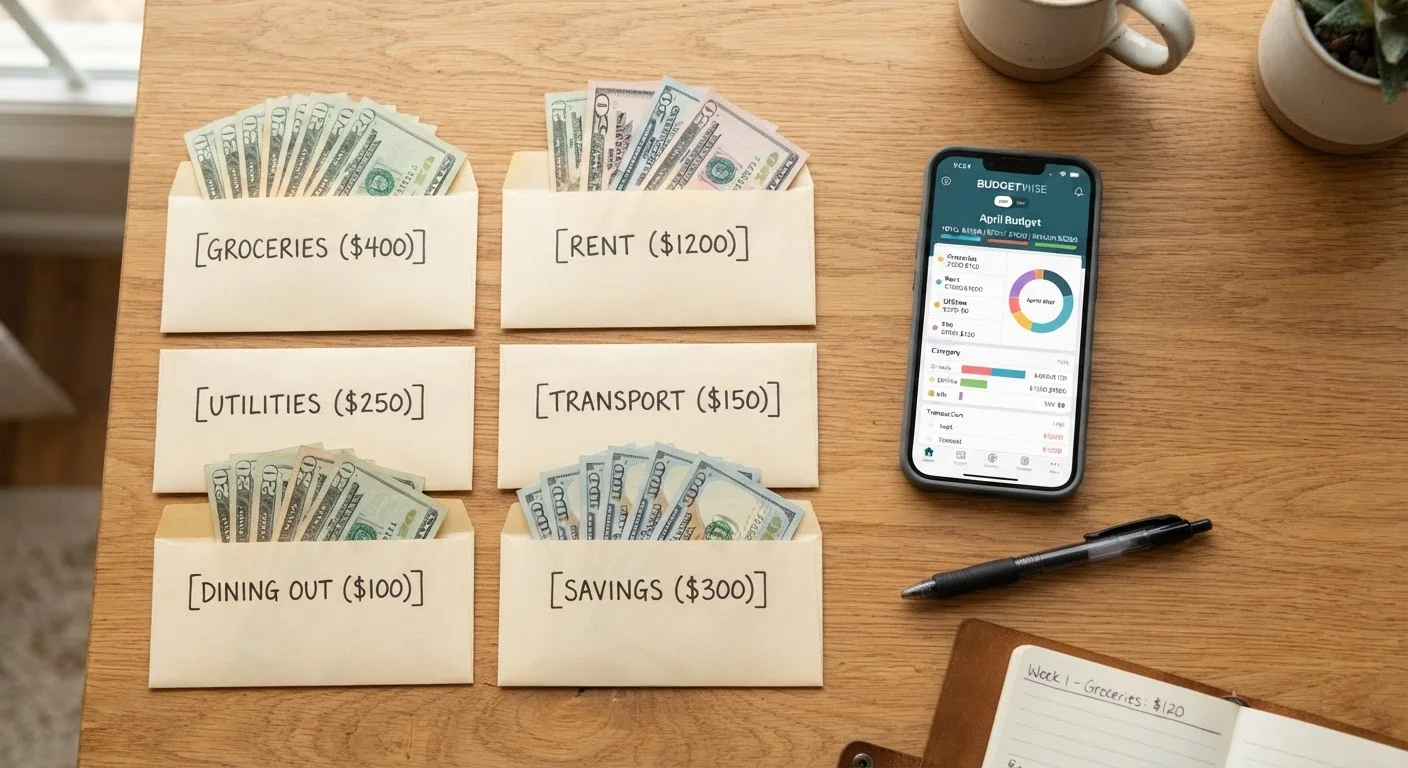
Photo: QuickSearches.net | It Doesn't Get Quicker Than This! editorial
Key Takeaways
- The envelope system works by allocating a fixed cash amount to each spending category before the month begins.
- When the cash in an envelope is gone, spending in that category stops - a hard limit that builds discipline.
- Digital envelope tools replicate this structure without requiring physical cash or trips to the ATM.
- Each approach has real trade-offs around friction, security, and suitability for different spenders.
- Neither method requires a high income - both are designed for households working with limited margins.
How the Classic Envelope System Works
The envelope system is a zero-based budgeting method: you divide your take-home pay across labeled envelopes - groceries, gas, dining out, entertainment, household supplies - and spend only what's inside each one. When an envelope empties, that category is closed until next month. No borrowing from next week's paycheck, no rationalizing one more charge.
The method's power comes from its physicality. Handing over cash feels different from tapping a card. Research in consumer behavior consistently shows that people tend to spend less when paying with cash, because the loss is immediate and concrete. For households living paycheck to paycheck, this friction is a feature, not a bug.
Setting it up requires three steps: list your monthly spending categories, assign a dollar amount to each based on your income and priorities, and withdraw that total in cash at the start of each pay period. The complete guide to personal budgeting covers how to set realistic category amounts if you're starting from scratch.
Start With Just Three or Four Envelopes
Limitations of the Physical Method
Cash envelopes have real drawbacks that make them difficult to sustain for many households. Most bills - rent, utilities, insurance, subscriptions - are paid digitally or automatically. You can't stuff a utility bill into an envelope and hand it to your power company. That means the envelope system typically only governs discretionary spending, not fixed expenses, which limits its scope.
Security is another issue. Keeping hundreds of dollars at home or in a wallet creates theft and loss risk that a bank account doesn't. And for dual-income households or couples, managing shared envelopes requires coordination that can become cumbersome.
ATM fees and trip frequency are minor but real costs. If you're paid biweekly and prefer weekly shopping, you may end up splitting withdrawals - or breaking your system because making two ATM runs feels impractical.
Don't Carry More Cash Than You Need
How Digital Envelope Tools Replicate the System
Digital envelope budgeting platforms apply the same category-based logic to your bank account. You set a spending limit for each category at the start of the month, then track every transaction against those virtual "envelopes." When a category hits its limit, the software flags it - some tools actually prevent further spending from that bucket.
The key difference is that you're working with debit or credit card transactions rather than physical cash. The friction is psychological rather than physical: you have to check the app and consciously choose to stop - or to move money between envelopes. This is both a flexibility and a vulnerability. The system works only if you actually look at it.
Most digital envelope tools connect to bank accounts and import transactions automatically, which reduces manual entry. Some allow multiple users to access the same budget, which solves the coordination problem for couples. For a broader look at how digital and paper budgeting tools compare overall, see paper budget vs. spreadsheet vs. app.
| Physical Cash Envelopes | Digital Envelope Tools | |
|---|---|---|
| Spending friction | High - physical cash limits are automatic | Lower - requires conscious self-monitoring |
| Coverage of expenses | Discretionary spending only | Full budget including bills and savings |
| Security risk | Cash loss or theft is unrecoverable | Protected by bank/app security measures |
| Setup effort | Withdraw cash, label envelopes | Link accounts, configure categories in app |
| Usability for couples | Requires physical envelope sharing | Shared access via app, easier coordination |
| Cost | Potential ATM fees | Free to low monthly fee, varies by tool |
| Best for | Cash-first spenders needing hard limits | Card-first spenders wanting full visibility |
Choosing the Right Approach for Your Household
Your spending patterns should drive this decision. If most of your variable spending happens at physical stores and you want maximum accountability, cash envelopes are hard to beat. The spending friction is automatic - you don't need willpower to stop when the envelope is empty.
If you primarily use cards, pay bills online, and want a method that covers your full financial picture, a digital tool will serve you better. The discipline comes from reviewing your envelope balances regularly - daily or at each purchase if you're building a new habit.
Some households use a hybrid: cash envelopes for the highest-risk categories (dining out, entertainment, impulse purchases) combined with a digital tool or simple spreadsheet for fixed expenses and savings tracking. This approach captures the psychological benefit of cash where it matters most without requiring a full cash-based lifestyle.
Whichever method you choose, the core principle is the same: decide how much you're spending in each category before you spend it. That pre-commitment is what separates envelope budgeting from simply reviewing your bank statement after the damage is done. For those looking to reduce the mental effort even further, automating your finances can complement either approach by handling savings and bill pay in the background.
This article is for general informational and educational purposes only and does not constitute personalized financial advice. Consult a qualified financial professional for guidance specific to your situation.
The content on this site is provided for informational purposes only and should not be considered a substitute for professional advice. While we strive to provide accurate and up-to-date information, we make no guarantees regarding its completeness or accuracy. Always consult a qualified professional for advice specific to your circumstances before making any decisions