
Fixed vs. Variable Expenses: Understanding the Difference Changes How You Budget

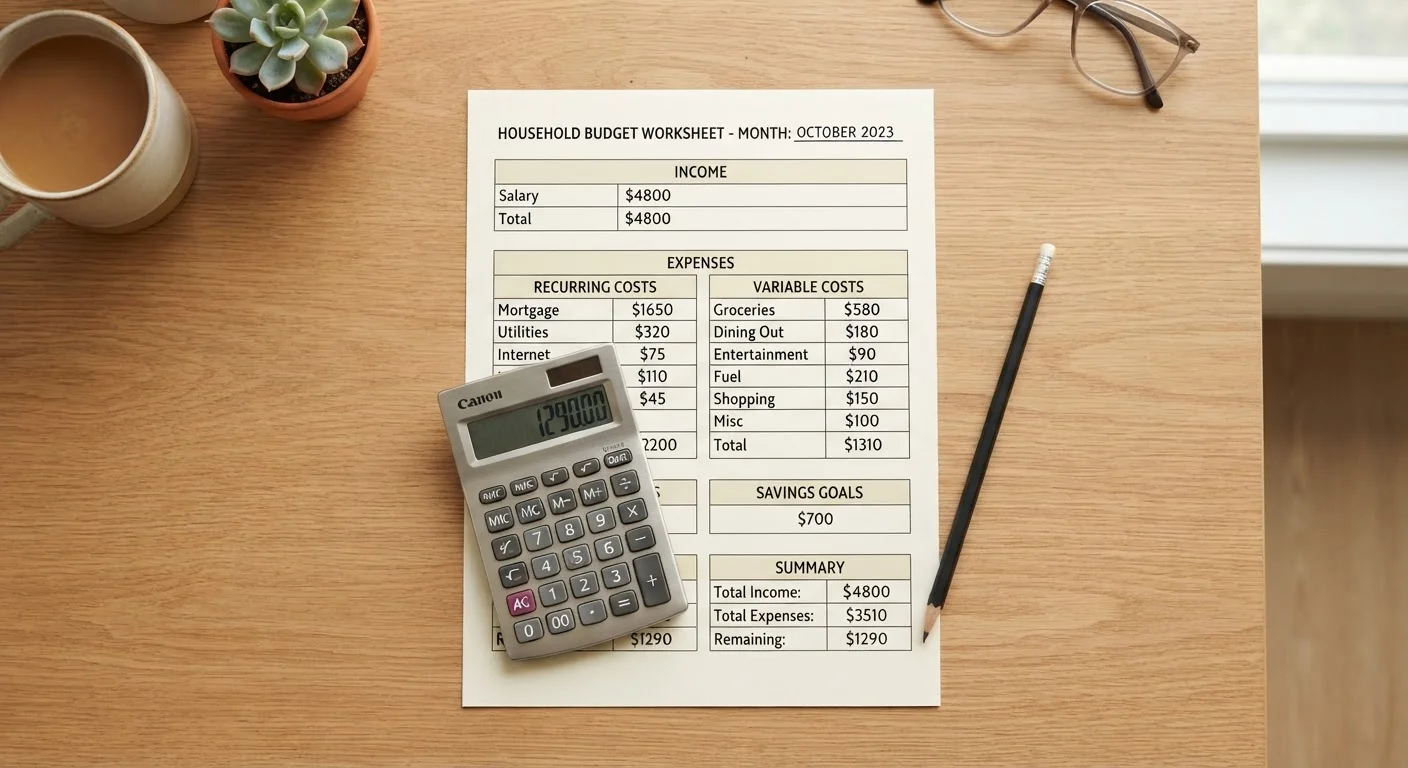
Photo: QuickSearches.net | It Doesn't Get Quicker Than This! editorial
Key Takeaways
- Fixed expenses stay the same every month; variable expenses fluctuate based on usage or choices.
- Knowing your fixed total gives you a hard floor - the minimum you must earn to stay solvent.
- Variable expenses are where most people find money to cut when budgets are tight.
- Semi-variable expenses, like a utility bill, share traits of both and deserve their own attention.
- Separating expenses by type makes it easier to build a budget that survives real-life disruptions.
What Fixed Expenses Actually Are
A fixed expense is any cost that stays the same amount every billing period, regardless of how much you use a service or how your month goes. Rent or mortgage payments are the textbook example - you owe the same figure on the first of every month whether you were home every day or traveling for three weeks. The same logic applies to a car loan payment, a health insurance premium billed directly to you, or a fixed-rate internet plan.
The defining quality of a fixed expense isn't that it lasts forever - it's that you can predict the exact dollar amount in advance. That predictability is what makes fixed expenses the foundation of any honest budget. Once you list them all and add them up, you know the minimum your income must cover before you can spend a dollar on anything else.
For a deeper look at how these terms fit into a broader budgeting framework, see the Monthly Budget Glossary for plain-English definitions of common budgeting concepts.
What Variable Expenses Actually Are
Variable expenses change from month to month - sometimes because of what you choose to buy, sometimes because of how much of something you use. Your grocery bill, gas spending, restaurant tabs, clothing purchases, and entertainment costs all fall into this category. So does your electricity bill in most cases, since usage drives the amount.
The key characteristic of a variable expense is that you have meaningful control over it. You can spend more or spend less depending on your priorities and your paycheck. That control is precisely why variable expenses are where most budget adjustments happen. When money gets tight, you don't renegotiate your rent - you pull back on dining out or delay a discretionary purchase.
Variable expenses can also include irregular but predictable costs: annual subscriptions, car registration, or back-to-school shopping. Budgeters sometimes call these periodic expenses, and a useful approach is to divide the annual total by 12 and set that amount aside monthly - a method sometimes called a sinking fund. If you manage income that varies month to month, the Irregular Income Budgeting guide covers strategies built specifically for that reality.
Side-by-Side: How They Compare
The table below captures the practical differences between fixed and variable expenses across the dimensions that matter most when you're putting a monthly budget together.
| Criterion | Fixed Expenses | Variable Expenses |
|---|---|---|
| Amount each month | Same every billing period | Changes based on usage or choices |
| Predictability | High - exact amount is known | Low to moderate - estimate needed |
| Examples | Rent, car loan, insurance premium | Groceries, gas, dining out, utilities |
| Ease of cutting short-term | Difficult - requires renegotiation | Easy - adjustable immediately |
| Role in budgeting | Establishes your minimum spending floor | Provides flexibility and room to adjust |
| Risk if underestimated | Missed payment, late fees, credit impact | Overspending, savings shortfall |
One category worth noting: semi-variable expenses. These are bills that have a fixed base charge plus a variable usage component - a cell phone plan with overage fees or a tiered utility rate are common examples. Treat the base as fixed and budget conservatively for the variable portion.
Fixed expenses also show up in bigger financial decisions. If you're weighing a home purchase, understanding how a fixed versus adjustable mortgage payment behaves over time is the same underlying concept - see Fixed-Rate vs. Adjustable-Rate Mortgages for how that plays out.
Why the Distinction Changes How You Budget
Most budgeting frustration comes from treating all expenses as the same kind of problem. When you separate fixed from variable, two things become clear immediately.
First, you can calculate a true spending floor. Add up every fixed expense - rent, loan payments, insurance premiums, fixed subscriptions - and you know the hard minimum your take-home pay must cover. Everything above that number is available for variable spending and savings. This single calculation prevents the most common budgeting error: underestimating how much of your income is already committed before you make a single discretionary purchase.
Second, you know exactly where to look when you need to cut. Fixed expenses aren't easily reduced in the short term; changing them usually requires renegotiating a contract, moving, refinancing, or canceling a service with a penalty. Variable expenses, by contrast, respond immediately to your decisions. Spending $200 less on groceries this month doesn't require anyone's permission.
~67%
Americans living paycheck to paycheck
Multiple consumer surveys conducted in recent years suggest roughly two-thirds of U.S. adults have little financial cushion after covering monthly obligations.
15-30%
Typical share of budget that is variable and cuttable
Financial educators generally estimate that discretionary variable spending represents a meaningful portion of household budgets, though the exact share varies by income level and household size.
This framework also helps when your income changes. If you lose a client, pick up fewer shifts, or face an unexpected expense, knowing your fixed floor tells you whether you can absorb the shortfall or need to act quickly on variable cuts. For a complete overview of how this fits into broader budgeting practice, the Personal Budgeting Complete Guide walks through every layer from first steps to long-term habits.
This article is for general informational purposes only and does not constitute personalized financial advice. Consider consulting a qualified financial professional for guidance specific to your situation.
The content on this site is provided for informational purposes only and should not be considered a substitute for professional advice. While we strive to provide accurate and up-to-date information, we make no guarantees regarding its completeness or accuracy. Always consult a qualified professional for advice specific to your circumstances before making any decisions