
Fixed-Rate vs. Adjustable-Rate Mortgages: Which Structure Fits Your Situation

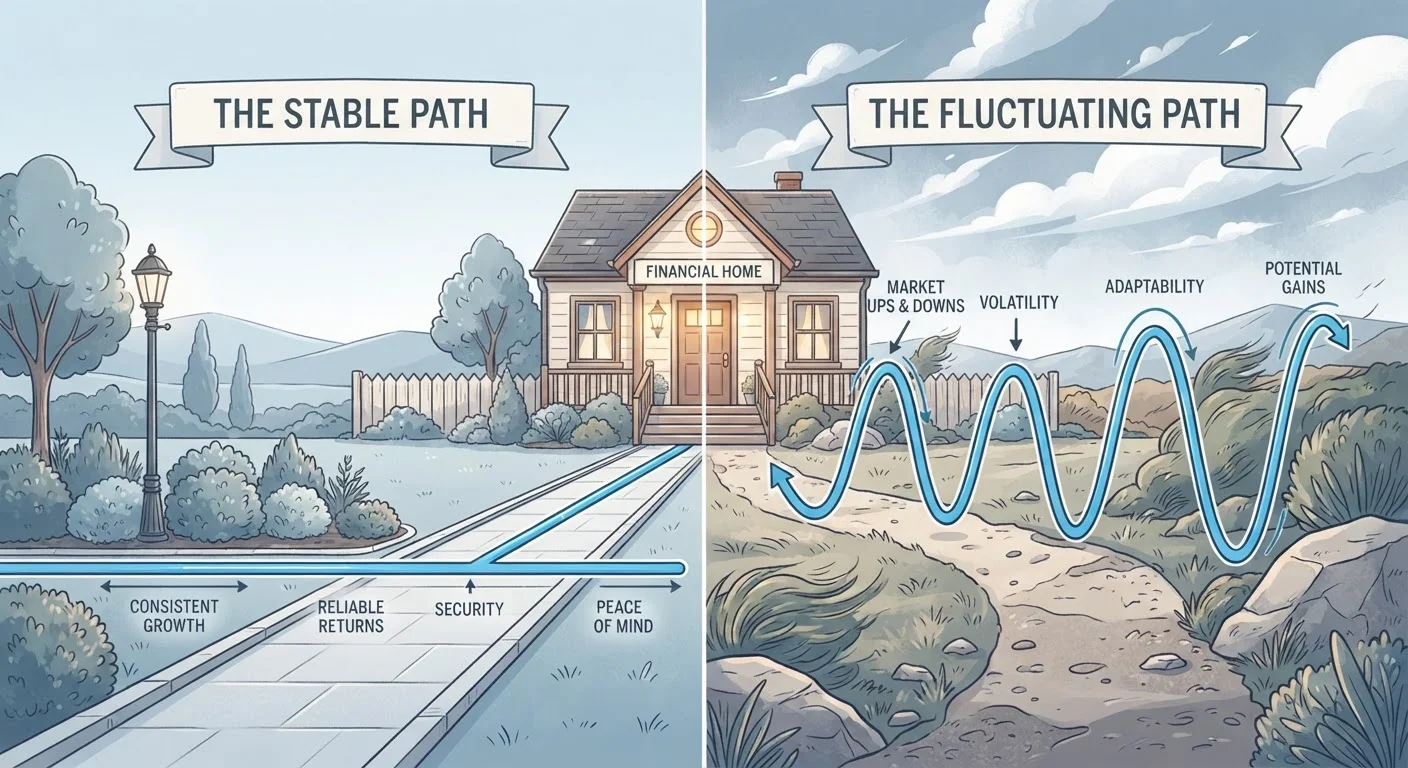
Photo: QuickSearches.net | It Doesn't Get Quicker Than This! editorial
Key Takeaways
- Fixed-rate mortgages lock in your interest rate for the entire loan term, protecting you from market fluctuations.
- ARMs typically start with a lower rate that adjusts periodically after an initial fixed period ends.
- Your timeline in the home, risk tolerance, and current rate environment all shape which structure fits better.
- ARMs carry rate caps that limit how much your rate can rise, but payment increases can still be significant.
- Neither mortgage type is universally superior - the right choice depends on your personal financial situation.
How Each Mortgage Structure Works
A fixed-rate mortgage sets your interest rate at closing and keeps it unchanged for the life of the loan - typically 15 or 30 years. Your principal and interest payment stays identical from month one to month 360. Taxes and insurance within an escrow account may shift slightly year to year, but the core loan payment is locked.
An adjustable-rate mortgage (ARM) works differently. It opens with a fixed-rate period - commonly 5, 7, or 10 years - followed by regular adjustments. A 5/1 ARM, for example, holds its initial rate for five years, then adjusts once per year based on a benchmark index (such as the Secured Overnight Financing Rate, or SOFR) plus a set margin. Lenders apply rate caps to limit how much the rate can move at each adjustment and over the life of the loan.
Understanding this structure is foundational before exploring the broader rent-vs-buy trade-offs that frame any home purchase decision.
| Criterion | Fixed-Rate Mortgage | Adjustable-Rate Mortgage (ARM) |
|---|---|---|
| Interest rate | Locked for entire loan term | Fixed initially, then periodic adjustments |
| Initial monthly payment | Higher than comparable ARM | Lower during fixed period |
| Payment predictability | Fully predictable | Varies after initial period |
| Rate risk | None - rate is locked | Rate can rise after fixed period |
| Rate caps | Not applicable | Per-adjustment and lifetime caps apply |
| Best ownership timeline | Long-term (10+ years) | Short-to-medium term (under 7 years) |
| Complexity | Simple - set it and forget it | Requires understanding indexes and caps |
| Benefit when rates fall | None without refinancing | Rate adjusts downward automatically |
Cost Differences and Rate Environment Context
ARMs typically open with lower interest rates than comparable fixed-rate loans. That gap can translate into meaningfully lower monthly payments during the initial period, which matters for buyers stretching to qualify or managing competing financial goals like saving while paying down existing debt.
However, once the fixed period ends, adjustments can push the rate - and the payment - higher. Rate caps provide a ceiling, but even capped increases can add hundreds of dollars per month. Over a 30-year horizon, a fixed-rate loan may ultimately cost less in total interest if rates rise significantly.
30 years
Most common fixed-rate mortgage term in the U.S.
The 30-year fixed-rate mortgage remains the dominant loan choice for American homebuyers, according to Freddie Mac's weekly survey data.
5/1, 7/1
Most common ARM structures offered by lenders
These hybrid ARMs - with fixed periods of five or seven years before annual adjustments - account for the majority of adjustable-rate loan originations.
2%/5%
Typical ARM adjustment cap structure (per-period / lifetime)
Many ARMs limit rate increases to 2 percentage points per adjustment period and 5 percentage points over the life of the loan, though terms vary by lender and product.
The rate environment at the time you borrow matters. When rates are historically low, locking in a fixed rate is generally more compelling. When rates are elevated and expected to fall, an ARM gives you exposure to future decreases without the cost of refinancing.
Risk Tolerance, Timeline, and When Each Loan Fits
Your intended time in the home is the single most practical filter. If you're buying a starter home and realistically expect to move within five to seven years, an ARM's initial fixed period may cover your entire ownership window - you benefit from the lower rate and exit before adjustments begin.
If you're buying a forever home or plan to stay through children's schooling and retirement, a fixed-rate mortgage eliminates the risk of rising payments at an inconvenient time in your financial life. Think of it like the difference between fixed and variable expenses in a household budget - predictable costs are simply easier to plan around. Our guide on fixed vs. variable expenses explains why that distinction matters so much for long-term financial planning.
Risk tolerance is equally important. Some borrowers are genuinely comfortable monitoring rate indexes and absorbing payment variability. Others find that uncertainty stressful, which can affect financial decisions well beyond the mortgage itself.
First-time buyers especially should weigh simplicity. ARMs involve understanding indexes, margins, adjustment caps, and lifetime caps. Fixed-rate loans require none of that ongoing attention. For more on the full path of homeownership after closing, see our owning a home hub.
Government-Backed Loans Add Another Layer
This article provides general educational information about mortgage structures and is not personalized financial or lending advice. Speak with a licensed mortgage professional or HUD-approved housing counselor for guidance specific to your financial situation.
The content on this site is provided for informational purposes only and should not be considered a substitute for professional advice. While we strive to provide accurate and up-to-date information, we make no guarantees regarding its completeness or accuracy. Always consult a qualified professional for advice specific to your circumstances before making any decisions