
Certified Pre-Owned vs. Regular Used: What the Label Actually Gets You

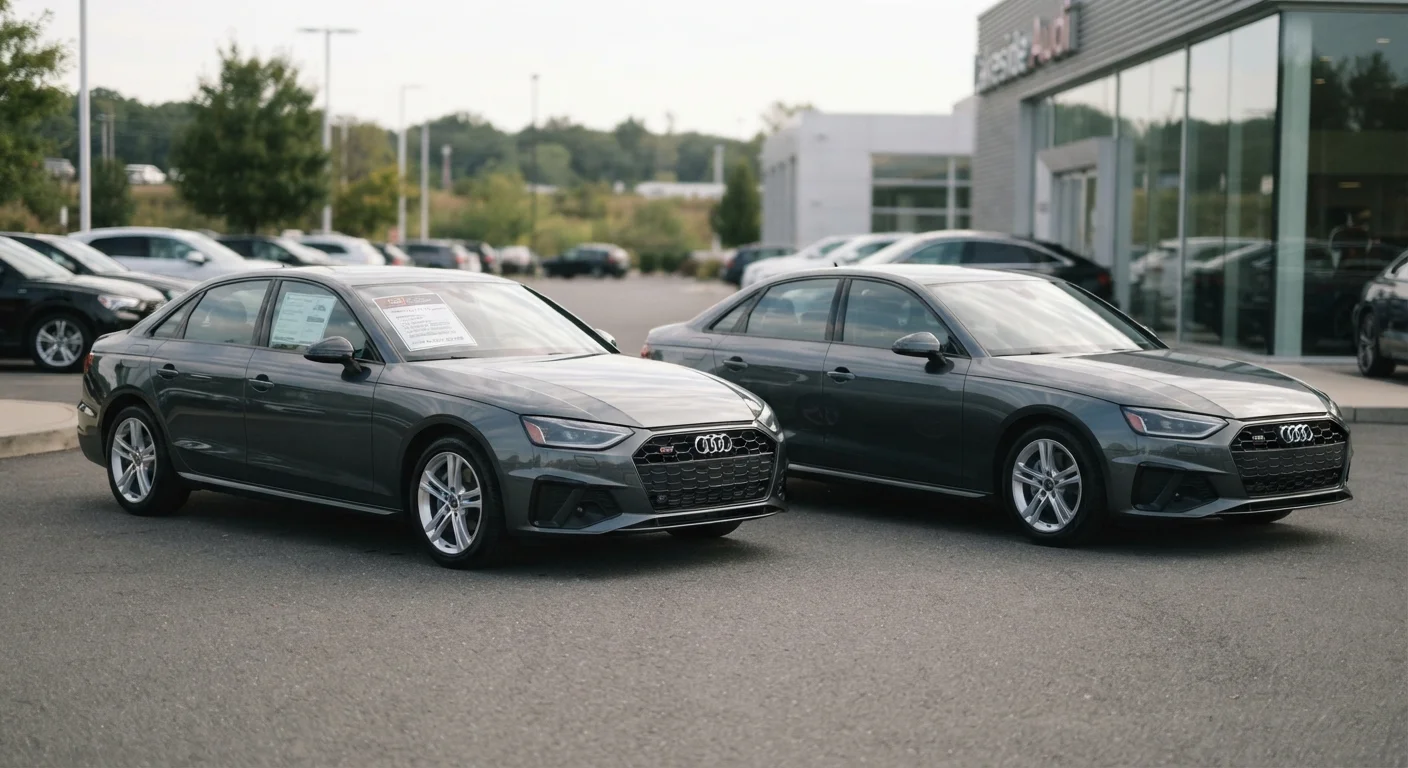
Photo: QuickSearches.net | It Doesn't Get Quicker Than This! editorial
Key Takeaways
- CPO vehicles cost more upfront but typically include inspection checklists, extended warranties, and roadside assistance.
- Not all CPO programs are equal - manufacturer-backed programs generally offer stronger protections than dealer-certified ones.
- A regular used car can be the smarter financial choice if you plan an independent pre-purchase inspection.
- The CPO premium tends to range from $1,000 to $3,500 above a comparable non-certified used vehicle.
- Financing rates through manufacturer programs can partially offset the CPO price premium for qualified buyers.
What the CPO Label Actually Means
The term "certified pre-owned" sounds reassuring - and it can be - but the label itself doesn't guarantee a uniform standard. There are two fundamentally different types of CPO programs: manufacturer-backed and dealer-certified.
Manufacturer-backed CPO programs are administered by the automaker - think Ford Blue Advantage, Toyota Certified Used Vehicles, or Honda Certified Pre-Owned. These programs require vehicles to meet specific age and mileage thresholds (commonly under five to seven years old and under 80,000 miles), pass a multi-point inspection (often 150 to 300 inspection points), and come with a factory-backed limited warranty extension. The warranty typically adds powertrain coverage beyond the original factory term, and many programs include perks like roadside assistance and a free vehicle history report.
Dealer-certified programs, by contrast, are set by individual dealerships. Standards vary enormously - some are rigorous; others are little more than a marketing label applied after a basic lot inspection. When evaluating a dealer-certified vehicle, always ask for the full inspection checklist and the exact warranty terms in writing.
For a deeper look at how warranty terms work across vehicle types, see what's actually in your car warranty.
What a Regular Used Car Gets You (and Doesn't)
A non-certified used vehicle carries no built-in inspection guarantee and typically no remaining factory warranty - unless the original warranty is still active based on age and mileage. What it does offer is a lower sticker price and a wider selection, since you aren't limited to franchise dealerships or specific model years.
The critical variable with a regular used car is information. A vehicle history report (from services such as Carfax or AutoCheck) can reveal accident records, title issues, odometer rollbacks, and service history. But history reports don't catch everything - hidden mechanical problems, deferred maintenance, or flood damage may not appear in any database.
This is where a pre-purchase inspection (PPI) by an independent, licensed mechanic becomes essential. Costing roughly $100 to $200, a PPI can surface issues that no history report would reveal. For a buyer purchasing a $12,000 used vehicle, that inspection is one of the highest-return investments in the transaction.
Always Request the Actual Inspection Report
Whether you're weighing used options broadly, our comparison of new vs. used trade-offs lays out the full cost and reliability picture.
The Real Cost of the CPO Premium
CPO vehicles generally command a price premium over comparable non-certified used cars. Industry data from sources such as Edmunds and iSeeCars have consistently shown this premium in the range of $1,000 to $3,500, though it varies by brand, vehicle type, and market conditions.
Whether that premium is worth it depends on several factors:
- Remaining warranty value: If a CPO vehicle has several years of powertrain coverage remaining, and you'd otherwise need to purchase an extended warranty, the math may favor CPO.
- Financing incentives: Manufacturer CPO programs sometimes offer lower APR financing than standard used-car loans - which can narrow the effective cost gap.
- Your risk tolerance: A buyer with limited emergency savings who cannot absorb a $3,000 transmission repair may reasonably value the warranty protection more than the upfront savings.
If you're evaluating whether a separate extended warranty makes more sense than a CPO program, extended warranties on used cars walks through that trade-off in detail.
| Certified Pre-Owned | Regular Used | |
|---|---|---|
| Inspection standard | Multi-point inspection (manufacturer or dealer) | None required; buyer arranges independently |
| Warranty coverage | Extended warranty included (varies by program) | Only remaining factory warranty, if any |
| Price | $1,000-$3,500 premium above comparable used | Lower sticker price, wider selection |
| Financing options | Manufacturer program rates sometimes available | Standard used-car loan rates |
| Roadside assistance | Often included in manufacturer CPO programs | Not included; buyer must arrange separately |
| Vehicle history report | Typically provided by seller | Buyer responsible for obtaining |
| Eligibility restrictions | Age and mileage limits apply | No program restrictions |
How to Evaluate Either Option Before You Buy
Regardless of which path you pursue, due diligence follows the same basic framework. For a CPO vehicle, request the full inspection checklist completed for that specific car - not a generic program brochure. Confirm the exact warranty start date, remaining term, deductible amounts, and which components are actually covered. Powertrain-only coverage is materially different from a comprehensive limited warranty.
For a regular used vehicle, pull a vehicle history report, arrange a PPI with a mechanic you trust (not one recommended by the seller), and research common issues for that specific make, model, and model year through owner forums and reliability data from organizations like Consumer Reports.
In both cases, verify the title is clean, there are no open recalls (the NHTSA website allows free recall lookups by VIN), and that the asking price reflects current market data from sources like Kelley Blue Book or Edmunds.
For more context on the full financial picture of used versus new ownership, new car vs. used car numbers breaks down depreciation, financing, and total cost of ownership.
The content on this site is provided for informational purposes only and should not be considered a substitute for professional advice. While we strive to provide accurate and up-to-date information, we make no guarantees regarding its completeness or accuracy. Always consult a qualified professional for advice specific to your circumstances before making any decisions