
The Real Cost of a Cheap Flight Ticket

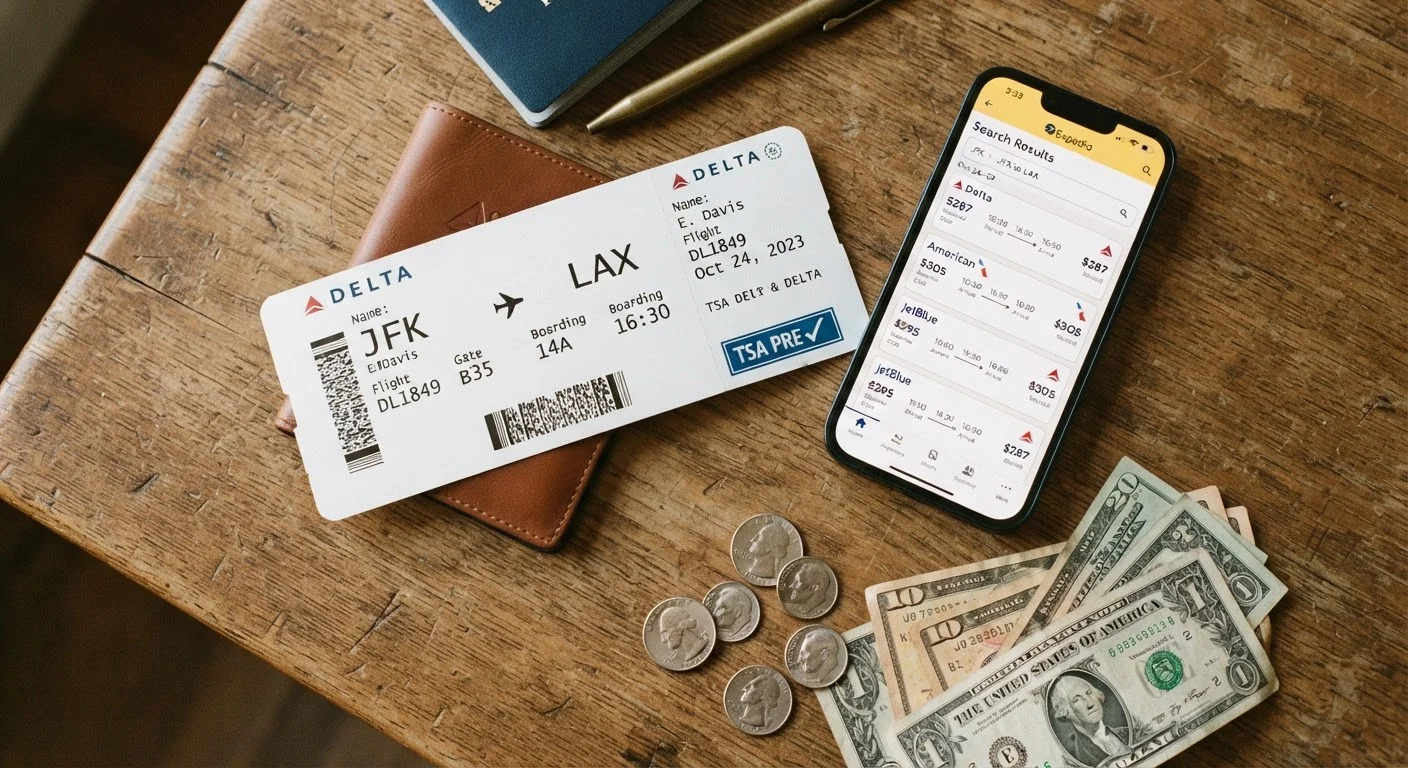
Photo: QuickSearches.net | It Doesn't Get Quicker Than This! editorial
Key Takeaways
- Budget airline base fares often exclude checked bags, carry-on bags, and seat selection fees.
- Adding common extras can double or triple the advertised ticket price before you fly.
- Comparing total trip cost - not just the fare - is the only reliable way to find real savings.
- Legacy carriers sometimes offer better all-in value once fees on budget airlines are totaled.
- Airport location and ground transport costs matter as much as the airfare itself.
Why the Sticker Price Is Just the Starting Point
Airline pricing works differently from most consumer purchases. The number you see in a search result represents only the base fare - a floor, not a ceiling. By the time you've selected your seats, packed a carry-on, and confirmed payment, the final figure can look entirely different. This isn't accidental. Unbundled pricing - where airlines strip the ticket down to its bare minimum and charge separately for everything else - is a deliberate strategy that makes fares harder to compare at a glance.
Understanding how these costs stack is the only way to make a genuinely informed booking decision. The same logic applies to other major purchases: just as the sticker price on a vehicle doesn't capture the full cost of ownership, a base airfare doesn't reflect what your trip will actually cost. See how that plays out in the real cost of owning a car for a useful parallel.
Myth
The price shown in the flight search results is what you'll actually pay.
Fact
The advertised fare is typically just the base price - taxes, fees, and carrier surcharges are added at checkout, and they can be substantial.
U.S. Department of Transportation rules require that advertised fares include government taxes and fees, but they do not require airlines to bundle in their own optional charges upfront. Baggage fees, seat selection charges, and booking fees often appear only during checkout. A $79 fare can realistically become $130 or more before you enter your payment details. Always click through to the final payment screen before comparing fares across airlines.
Myth
Budget airlines always save you money over full-service carriers.
Fact
Once you add fees for a carry-on bag, a checked bag, and a seat assignment, the total cost on a budget carrier often matches or exceeds a legacy airline's all-in price.
Several major ultra-low-cost carriers charge separately for carry-on bags that exceed a small personal item size - a fee that can run $50-$75 each way on some routes. When you add a checked bag on top of that, two travelers on a round trip can easily pay $200 or more in bag fees alone. On many routes, a mid-tier ticket on a full-service airline that includes a carry-on comes out cheaper in total. The fix is straightforward: build a full itemized comparison, not a fare-only comparison. See our breakdown of common airfare myths for more on this trap.
Myth
You can always just skip the seat selection fee and get a free seat at check-in.
Fact
While airlines do assign unsold seats at check-in, travelers who skip seat selection risk being split from travel companions, assigned middle seats, or placed in less desirable sections of the plane.
For solo travelers comfortable with a random assignment, skipping seat selection is a reasonable way to trim costs. For families or groups, it creates real problems. Some airlines have been known to separate adults from children when seats are unassigned - a stressful situation that often results in paying the fee anyway at the gate. If sitting together matters to your trip, factor the seat selection cost into your comparison from the start rather than treating it as optional.
Myth
Flying into a major hub airport near your destination is the most convenient option.
Fact
Budget airlines often use secondary airports that are farther from city centers, and the added ground transportation cost can cancel out any savings on the fare.
A flight into a smaller regional airport might price $40 lower than one into the main hub - but if a taxi or rideshare from that airport costs $60 more than from the alternative, you've already lost money. Add parking, tolls, or a shuttle, and the gap widens further. Before booking, look up the realistic cost and travel time from each airport option to your actual destination. That extra 45-minute drive may not be worth a $30 fare difference. For a fuller picture of hidden trip costs, see costs that catch travelers off guard.
Myth
Change and cancellation fees are a thing of the past since airlines eliminated them during the pandemic.
Fact
Many airlines restored change and cancellation fees after the pandemic, and the rules vary significantly by ticket class, carrier, and fare type.
Several major U.S. carriers did eliminate change fees on most domestic main cabin and above tickets - but basic economy fares, which are often the cheapest listed option, typically remain non-refundable and non-changeable. Budget carriers may charge a fee to change or cancel any ticket. Before booking the cheapest available fare, read the fare rules carefully. If your travel dates have any uncertainty, the cost of flexibility - either a refundable fare or travel insurance - may be worth factoring in from the start.
How to Actually Compare Flight Costs
The most useful tool any traveler has is a simple itemized list. Before booking any fare, tally up these potential add-ons for each option you're considering:
- Checked baggage: One bag each way, per passenger
- Carry-on bag: Check whether it's included or an add-on fee
- Seat selection: Especially if you're traveling with others
- Airport ground transport: To and from your actual destination
- Change/cancellation flexibility: If your dates aren't locked in
When you run that comparison across two or three itineraries, the winner often isn't the one with the lowest base fare. Budget-conscious travelers who plan a realistic travel budget ahead of time consistently avoid the sticker-shock moment at checkout.
$33B+
Ancillary fees collected by U.S. airlines
U.S. airlines collected over $33 billion in ancillary revenue in recent years, much of it from baggage and seat fees, according to industry analyst IdeaWorks.
2x-3x
How much base fares can multiply with add-ons
Consumer finance researchers and travel analysts have found that fees for bags, seats, and other extras can double or triple a budget airline's base fare for a typical traveler.
It also helps to know which booking assumptions are worth questioning before you start searching. Common booking assumptions like "always book direct" or "Tuesday is cheapest" deserve more scrutiny than most travelers give them.
The content on this site is provided for informational purposes only and should not be considered a substitute for professional advice. While we strive to provide accurate and up-to-date information, we make no guarantees regarding its completeness or accuracy. Always consult a qualified professional for advice specific to your circumstances before making any decisions