
The KonMari Method Explained: What It Actually Means to Declutter by Category

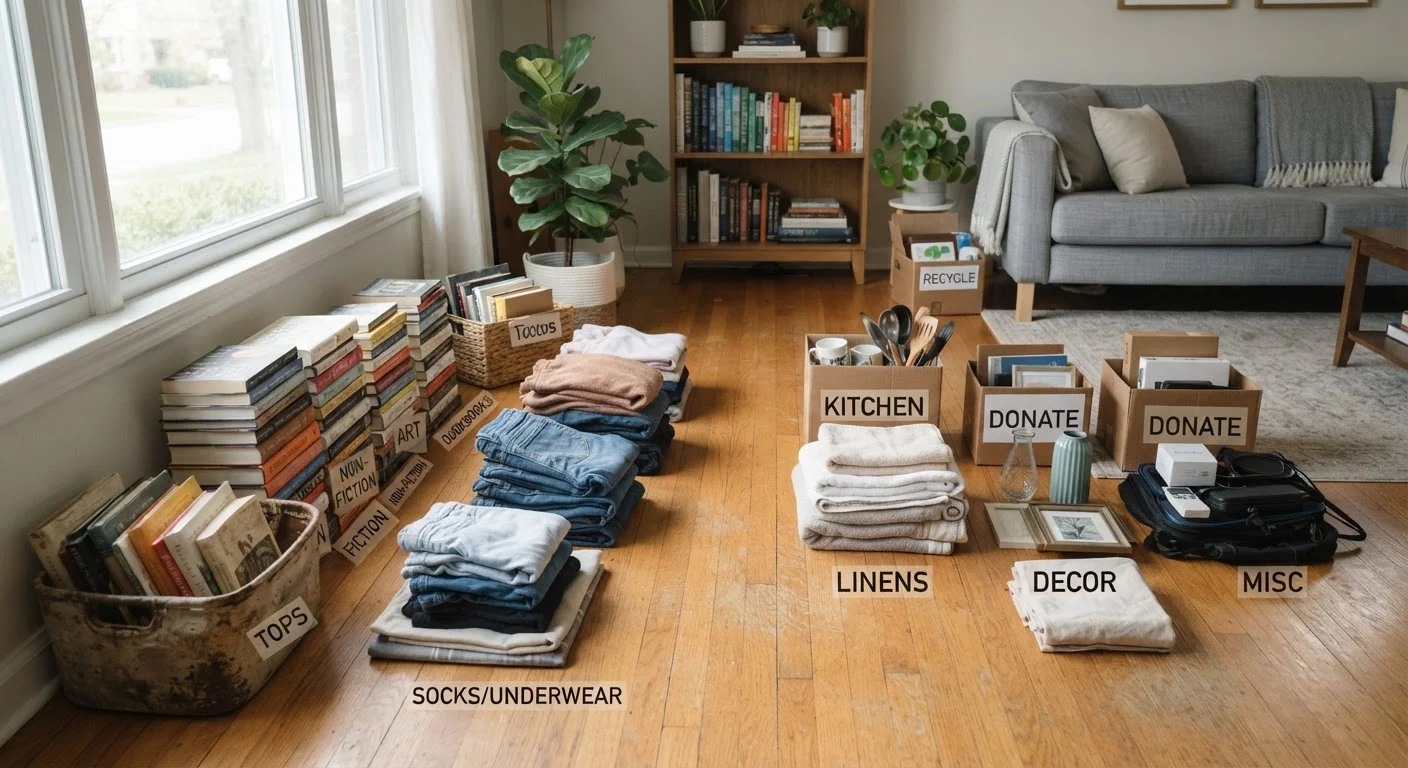
Photo: QuickSearches.net | It Doesn't Get Quicker Than This! editorial
Key Takeaways
- KonMari organizes by category across your whole home, not room by room.
- Every category is gathered into one pile before any item is evaluated or kept.
- The method follows a deliberate sequence, saving sentimental items for last.
- The guiding question is whether each item adds genuine value - often described as 'sparking joy.'
- Category-based decluttering reveals the true volume of your possessions more accurately than room-based methods.
- The approach aims to create lasting change, not just temporary tidiness.
Why Category Beats Room as a Decluttering Unit
The room-by-room method feels logical - you walk into a space, clear what doesn't belong, and move on. The problem is that your possessions don't live in just one room. A pair of scissors might be in the kitchen, the home office, a junk drawer, and a craft box. When you tidy room by room, you never confront the full picture of what you actually own.
Category-based decluttering solves this by pulling every instance of a category - every sweater, every book, every spare cable - into one location before a single decision is made. The visual impact of seeing 47 coffee mugs in one pile is something a room-by-room sweep simply cannot replicate. That honest reckoning is central to why the KonMari approach tends to produce more lasting results.
For a comparison of how these two strategies play out in practice, see our room-by-room decluttering checklist.
Gather First, Decide Second
The Five-Category Sequence and Why the Order Matters
KonMari doesn't just say "sort by category" - it specifies a sequence designed to build your decision-making ability gradually:
- Clothing - Tangible, personal, and relatively low-stakes emotionally. A good place to start building judgment.
- Books - Still concrete objects, but people form stronger attachments to them. Slightly harder than clothing.
- Papers - Documents, mail, and paperwork. Often tedious but important to address before sentimental items.
- Komono (miscellaneous) - Everything from kitchen tools to hobby supplies to bathroom products. This is the largest category and has its own recommended sub-sequence.
- Sentimental items - Photos, gifts, inherited objects. These require the most nuanced judgment and are deliberately saved for last.
Skipping ahead - especially jumping to sentimental items early - is one of the most common reasons people stall. The sequence exists to train your instincts before you encounter the hardest decisions.
~$18,000
Average American household clutter cost estimate
The National Association of Professional Organizers has cited figures suggesting that disorganization and clutter impose meaningful financial costs on households through lost items, duplicate purchases, and wasted time.
25%
Of garage space used for storage, not cars
U.S. Department of Energy research has found that roughly one in four American homeowners cannot fit a car in their garage due to accumulated belongings.
What 'Sparking Joy' Actually Means in Practice
The phrase "does it spark joy?" has become cultural shorthand for the entire method, but it's often misapplied. The original concept isn't a test of euphoria - it's a prompt to hold each item and honestly assess whether it has a meaningful place in your life going forward.
A working kitchen timer might not spark joy in a theatrical sense, but you use it daily and value it. That counts. A gift you've felt obligated to keep but never use, and that quietly produces guilt every time you open the drawer - that's a clearer candidate for letting go.
The deeper principle is intentionality: actively choosing what stays rather than passively accumulating. This mindset shift is what separates KonMari from a simple purge. If you find yourself defaulting to organizing myths - like believing more storage containers will solve a clutter problem - our article on common home organization myths explores why that instinct often backfires.
Getting Started: Realistic Expectations
One common misunderstanding is that KonMari is a weekend project. It isn't - and framing it that way sets most people up to feel like they've failed. A thorough category-by-category pass through a typical American home takes weeks to months, depending on how much you own and how many sessions you can realistically commit to.
Start with a single subcategory of clothing - tops, for example - rather than all clothing at once. This gives you a genuine experience of the method without the pressure of tackling everything in a day. Progress through subcategories as your schedule allows.
It's also worth understanding that KonMari is designed as a one-time intensive reset, not a rotating seasonal practice. For ongoing maintenance after an initial declutter, a seasonal decluttering approach can complement the initial work well.
If your home feels so overwhelmed that even starting a single category seems impossible, our guide for starting from zero can help you find a grounded entry point before committing to a full KonMari process.
KonMari Is a Framework, Not a Rulebook
Frequently Asked Questions
The content on this site is provided for informational purposes only and should not be considered a substitute for professional advice. While we strive to provide accurate and up-to-date information, we make no guarantees regarding its completeness or accuracy. Always consult a qualified professional for advice specific to your circumstances before making any decisions