
The Complete Home Organization Playbook: Every Room, Every System, Every Stage

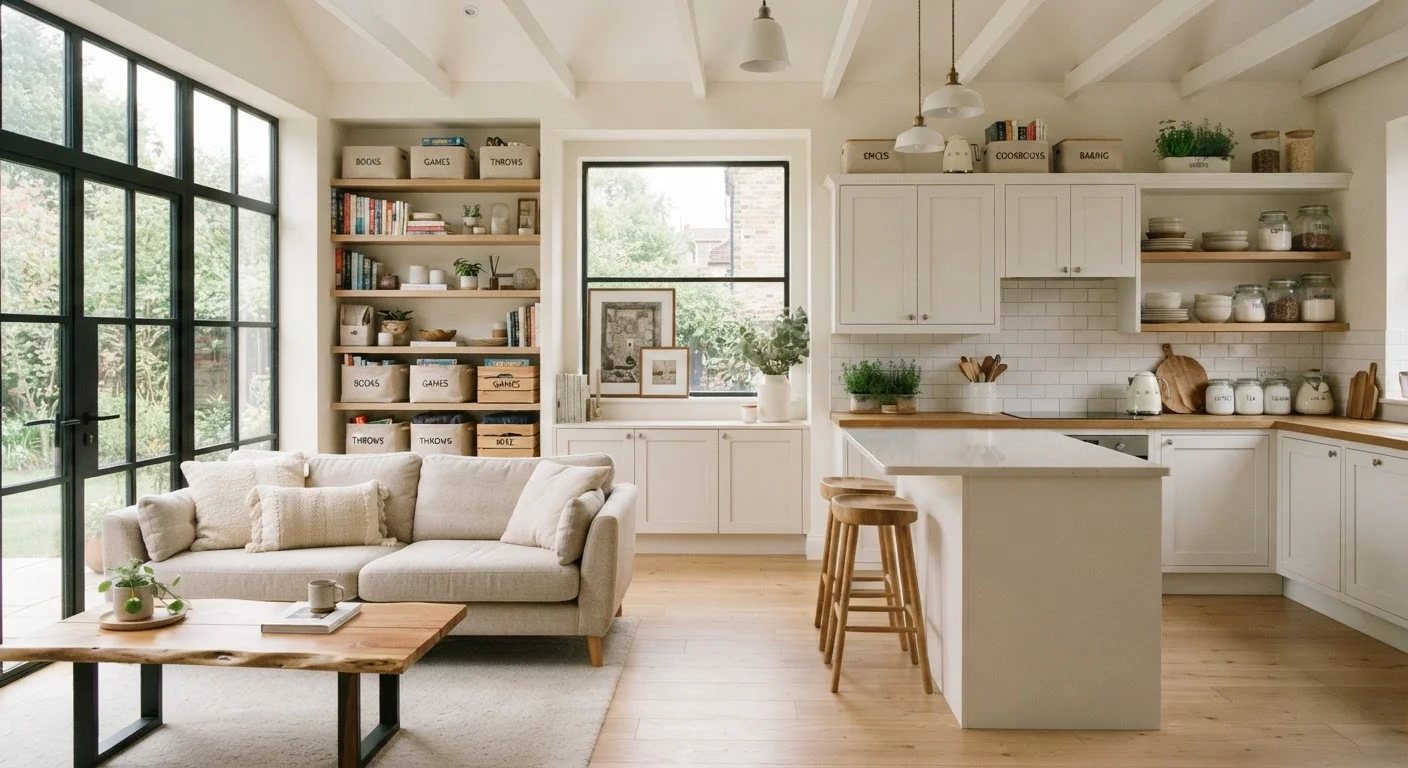
Photo: QuickSearches.net | It Doesn't Get Quicker Than This! editorial
Key Takeaways
- Start with decluttering before buying any storage products - containers can't fix excess.
- Zone-based organization assigns every item a logical home based on how you actually live.
- Consistent small habits prevent the backslide that undoes one-time organization efforts.
- Shared households need agreed-upon systems, not just one person's preferred method.
- Room-by-room planning makes the process manageable and builds lasting momentum.
The Foundational Principles of Home Organization
Before touching a single shelf or buying a single bin, it helps to understand the thinking behind effective home organization. Two core ideas govern every successful system: edit first, then contain, and every item needs a designated home.
Editing means removing what you no longer use, need, or love - before you organize what remains. Most organization projects stall because people skip this step and try to arrange too much stuff into too little space. Once you've reduced volume, storage solutions actually work.
The second principle - giving everything a designated home - is what makes systems self-maintaining. When your family knows where the scissors live, they get returned there. Confusion about where things belong is the root cause of most household clutter. Not laziness, not bad habits. Ambiguity.
A third concept worth knowing is zones: grouping items by activity or use frequency near the point where they're needed. If you're unfamiliar with the vocabulary used in decluttering and organization, the home organization glossary defines common terms like zones, one-in-one-out, and negative space in plain language.
Before purchasing any storage product, measure your space and audit your actual belongings. The most common organizing mistake is buying containers first and fitting your stuff to them second.
When setting up a new system, live with it for two weeks before calling it final. Real usage reveals friction points that you can't anticipate during the initial setup.
Finally, match your system to how you actually behave - not how you wish you behaved. Hooks work better than hangers for people who don't hang things. Open bins work better than lids for people who won't lift them. Honest self-assessment is the difference between a system that lasts and one that collapses by week two.
Kitchen and Pantry: Command Central
The kitchen is the highest-traffic room in most homes, which means disorganization here creates daily friction. Apply zones based on cooking workflow: prep items near the counter, cooking tools near the stove, serving pieces near the table or dishwasher.
For pantry organization, group by category (grains, canned goods, snacks, baking) and place everyday staples at eye level. Deeper shelves benefit from pull-out bins or tiered risers so items at the back don't disappear. Decanting dry goods into clear containers isn't just aesthetic - it makes quantities visible so you shop more accurately and waste less food.
Drawer dividers are one of the highest-return investments in any kitchen. A jumbled utensil drawer wastes time and patience every single day; a divided one takes minutes to set up and pays off indefinitely. The same logic applies to cabinet shelves: stack plates vertically with plate racks, or use shelf risers to double usable space without adding furniture.
Start With Your Most-Used Space
If you're eventually planning a larger kitchen update, a complete kitchen remodel guide covers how layout and storage decisions interact with renovation planning - useful context even if a remodel is years away.
25%
of two-car garages can't fit a single car
U.S. Department of Energy estimates suggest roughly one in four American two-car garages is too cluttered to park in, illustrating how storage zones become catchalls.
40%
of housework could be eliminated
Home organization researchers have suggested that reducing household clutter could cut a significant portion of routine housework, as disorganized homes require more time to clean and manage.
Bedrooms and Closets: Personal Spaces, Practical Systems
Bedroom organization has two distinct challenges: the closet, and everything else. Tackle them separately.
In the closet, begin with a thorough edit. Most people wear roughly 20% of their wardrobe regularly. After editing, organize what remains by category and frequency - everyday items at arm's reach, seasonal or rarely used items higher up or in bins. Hanging organizers, shelf dividers, and slim velvet hangers dramatically increase capacity without structural changes.
Outside the closet, nightstand clutter and floor piles are the most common culprits. A simple rule: if it lives in the bedroom, it should either be used daily or be stored out of sight. Under-bed storage with labeled flat bins works well for seasonal items, extra linens, or bulky off-season gear.
For children's rooms, build systems at their height and skill level. Low hooks, open bins, and picture labels for young children outperform complex systems they can't independently maintain. As children grow, involve them in designing the system - ownership increases compliance.
Living Areas, Bathrooms, and Shared Spaces
Living rooms accumulate clutter because they serve multiple purposes: relaxing, working, playing, entertaining. Tame this by creating dedicated micro-zones - a basket for remote controls and chargers, a designated shelf for books and magazines, a specific drawer for hobby supplies. Furniture with built-in storage (ottomans, console tables with drawers) does double duty in rooms where floor space is limited.
Bathrooms present a space-efficiency challenge. Most bathroom storage is underused vertically. Over-door organizers, stackable drawer inserts, and magnetic strips for small metal items (bobby pins, nail clippers) reclaim wasted space. Under-sink cabinets benefit from small risers or pull-out organizers that prevent the back-of-cabinet dead zone.
Shared spaces - whether between partners, roommates, or mixed-age families - require a layer of negotiation that purely personal spaces don't. Different tidiness standards are common and manageable when you establish shared agreements rather than imposing one person's system. The article on organizing a home when everyone has different standards offers concrete strategies for households where habits don't naturally align.
Garage, Basement, and Storage Zones
Utility spaces - garages, basements, attics, laundry rooms - tend to become default dumping grounds. Reclaiming them follows the same edit-then-contain sequence, but the categories are different: tools, sports equipment, seasonal décor, automotive supplies, and items awaiting donation or repair.
Wall-mounted systems (pegboards, slatwall panels, French cleats) maximize floor space and keep frequently used tools accessible. Freestanding shelving units with labeled bins handle bulk storage efficiently. The key rule: store like with like, and store heavy items low. For any garage storage work involving structural wall anchors or electrical modifications, consult a qualified contractor - home improvement guidance covers when professional help is the right call.
Label everything, even when it seems obvious. Over time, household members change and memories fade. Clear labeling is the single habit that most prevents storage zones from reverting to chaos.
Don't Store Hazardous Materials Carelessly
Maintenance Habits That Keep Order Long-Term
Organization is not a one-time event - it's an ongoing practice. The households that maintain order long-term share a few simple habits rather than periodic purges.
The one-in-one-out rule: When something new enters the home, something leaves. Applied consistently, this prevents accumulation without requiring scheduled decluttering sessions.
Daily resets: A 10-minute end-of-day reset - returning items to their designated homes - prevents small drift from becoming overwhelming disorder. This works best when every item already has a clear home, reinforcing why the foundational step matters.
Seasonal reviews: Twice a year, walk through each room and reassess. Life changes - kids' ages, hobbies, work-from-home arrangements - mean your systems should evolve too. A rigid system that no longer fits your life will fail quietly.
Lower the barrier to putting things away: If returning something to its home feels like effort, the system needs adjustment. Lids that require two hands, bins stored in inconvenient spots, and overcrowded shelves all raise the friction that leads to abandonment. Easy wins over perfect every time.
Organization is ultimately about reducing the mental load of daily life. When your home works with your habits instead of against them, the payoff isn't just visual tidiness - it's time, calm, and headspace returned to the things that actually matter.
The content on this site is provided for informational purposes only and should not be considered a substitute for professional advice. While we strive to provide accurate and up-to-date information, we make no guarantees regarding its completeness or accuracy. Always consult a qualified professional for advice specific to your circumstances before making any decisions