
A Complete Glossary of Home Organization Terms

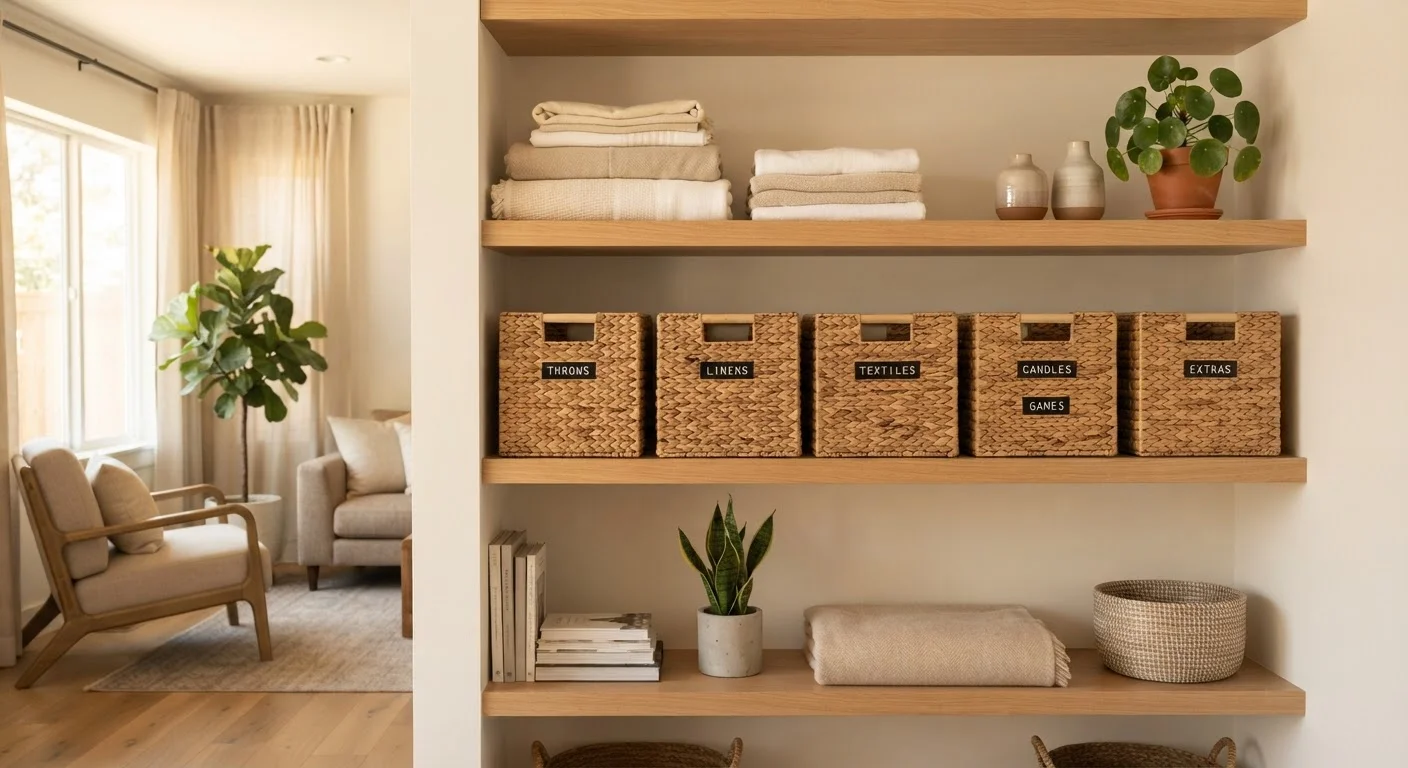
Photo: QuickSearches.net | It Doesn't Get Quicker Than This! editorial
Why Home Organization Has Its Own Language
If you've ever browsed a decluttering guide and hit terms like friction, decision fatigue, or negative space without a clear explanation, you're not alone. Home organization has developed a working vocabulary borrowed from psychology, interior design, and productivity research. Knowing these terms helps you follow advice more accurately, communicate your goals to a family member or roommate, and build systems that actually stick.
This glossary covers the most useful terms you'll encounter - whether you're tackling a junk drawer for the first time or redesigning your entire home's storage layout. For a broader look at getting started, see our beginner's guide to organizing from scratch.
Zone
A designated area in your home assigned to a specific activity or category of items - such as a cooking zone, homework zone, or charging zone. Zoning reduces search time and helps everyone in the household know where things belong.
Home (for an item)
The fixed, consistent location where a specific item always lives when not in use. Giving every item a 'home' is one of the most fundamental principles of sustainable organization.
Declutter
The process of removing items from a space that are no longer needed, used, or wanted. Decluttering is typically done before organizing so you're only arranging items you intend to keep.
One-In-One-Out Rule
A maintenance habit where every new item brought into the home requires the removal of a comparable existing item. This prevents accumulation and keeps storage systems from overflowing over time.
Decision Fatigue
The mental exhaustion that results from making too many choices in a row. In organizing, it explains why large, all-at-once decluttering sessions often stall - breaking work into smaller sessions or categories reduces its impact.
Landing Zone
A designated spot near an entry point - typically by the front door - where everyday items like keys, bags, and mail are placed upon arriving home. A well-designed landing zone prevents these items from migrating to random spots around the house.
Friction
Any obstacle - physical or mental - that makes it harder to put something away or complete a habit. Reducing friction (e.g., using open bins instead of lidded boxes) makes it easier to maintain an organized system consistently.
Negative Space
Intentional empty space left in a drawer, shelf, or cabinet. Negative space makes it visually easier to find items and signals that a storage area is not overloaded.
Donation Threshold
A personal or household rule that defines the condition or frequency of use required for an item to be kept. Items falling below the threshold are donated, sold, or discarded.
Like-with-Like
The practice of grouping similar items together in storage. For example, keeping all batteries in one drawer or all cleaning supplies on one shelf, so you always know where to look and can quickly see when supplies run low.
Vertical Storage
Using wall height - through shelving, hooks, pegboards, or tall cabinets - to expand usable storage capacity without taking up additional floor space. Particularly useful in small rooms or apartments.
Maintenance Pass
A brief, regular review (daily, weekly, or monthly) of an organized space to return displaced items, discard expired goods, and keep the system functioning. Maintenance passes prevent the need for large, disruptive reorganizations.
Key Concepts in Practice
Understanding these terms is most useful when you see how they connect. A zone doesn't work unless items stored there have a clear home. A one-in-one-out rule only holds if you've already completed a declutter pass. And decision fatigue is exactly why organizing experts recommend tackling one category or zone at a time rather than your whole house in a weekend - a point explored in depth in common home organization myths that backfire.
| Most common organizing mistake | Buying storage before decluttering (Widely cited by professional organizers) |
| Recommended session length | 15-45 minutes per area (General guideline to reduce decision fatigue) |
| One-in-one-out rule applies to | Clothes, books, toys, kitchen tools |
| Landing zone ideal location | Within 10 feet of the main entry |
| Negative space target | Leave roughly 20% of shelf space empty (Common professional organizer guideline) |
When you live with others, this vocabulary becomes even more important. Agreeing on what counts as a donation threshold or where the landing zone ends prevents a lot of daily friction. If that's your situation, organizing a home when everyone has different standards offers practical strategies for shared households.
Finally, some organizational methods - like category-based decluttering - come with their own terminology. If you've heard of the KonMari method and want to understand what decluttering by category actually means in practice, our explanation of the KonMari method breaks it down clearly. And if you're also doing home renovations alongside organizing, our renovation terms glossary covers the contractor language you'll need in a separate but complementary reference.
The content on this site is provided for informational purposes only and should not be considered a substitute for professional advice. While we strive to provide accurate and up-to-date information, we make no guarantees regarding its completeness or accuracy. Always consult a qualified professional for advice specific to your circumstances before making any decisions