
Reading a Nutrition Facts Label Without the Guesswork

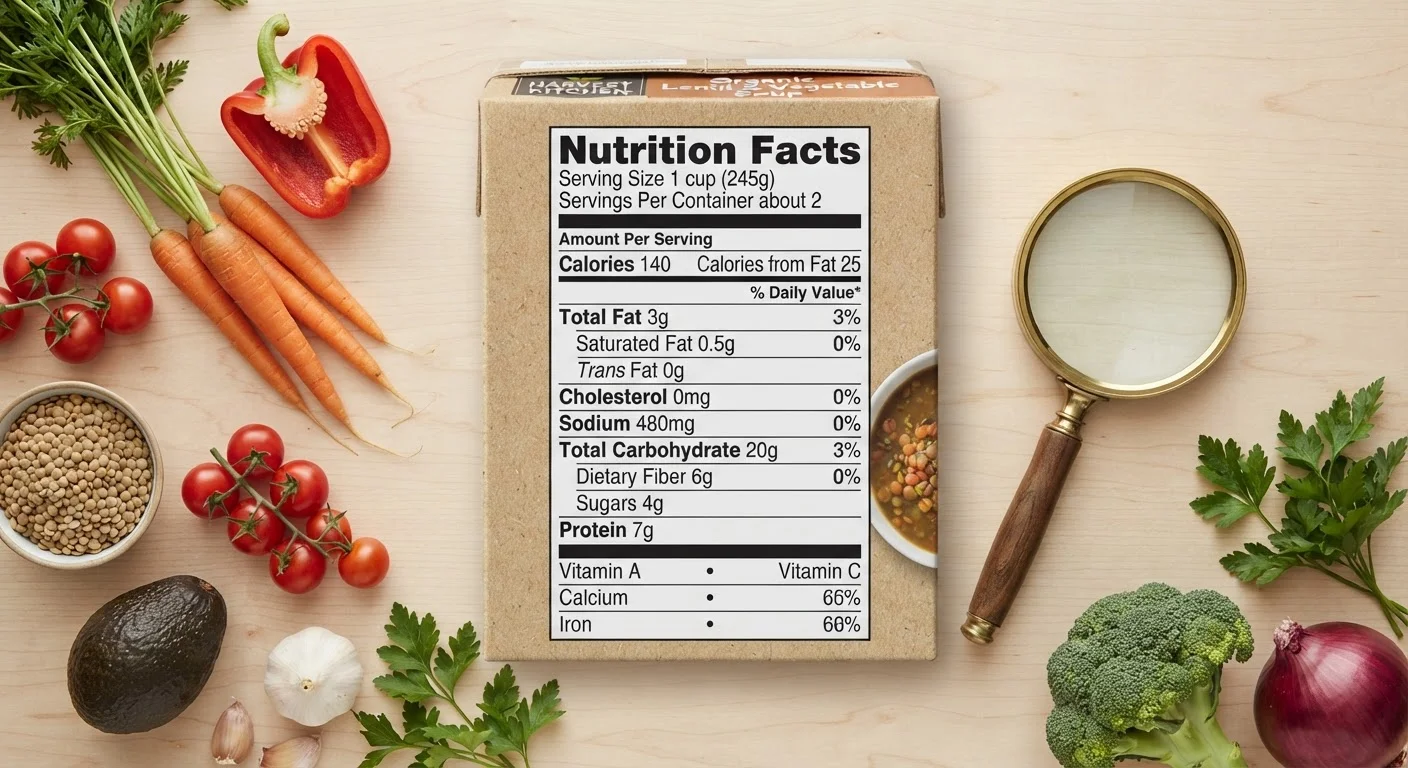
Photo: QuickSearches.net | It Doesn't Get Quicker Than This! editorial
Key Takeaways
- Serving size is the foundation of every number on the label - always check it first.
- % Daily Value tells you how much a nutrient contributes to a standard 2,000-calorie daily diet.
- Nutrients like sodium, saturated fat, and added sugars are worth limiting in most diets.
- Fiber, vitamins, and minerals are nutrients most Americans benefit from getting more of.
- Ingredient lists reveal what's actually in a product, ordered by weight from most to least.
Why the Label Exists - and Why It Matters
The Nutrition Facts label is required on most packaged foods sold in the United States. Regulated by the Food and Drug Administration (FDA), it was redesigned in 2016 to reflect updated nutrition science and to make critical information easier to spot at a glance. If you're new to thinking about what you eat, our beginner's guide to nutrition concepts is a helpful starting point before diving into label reading.
The label isn't meant to shame or restrict - it's a standardized tool that lets you compare products and understand what you're actually consuming. Once you know what each section means, the guesswork disappears.
What you will need
A Section-by-Section Walkthrough
Follow the steps below in the order they appear on the label, working from top to bottom. This mirrors how the FDA designed the label to be read.
Start with Serving Size
Every number on the label - calories, fat, sodium, everything - applies to one serving, not the entire package. The serving size is listed in both a common household measure (e.g., "1 cup") and grams. If a bag of chips lists 1 oz as a serving but you eat 3 oz, you must multiply every nutrient figure by three.
Look at Calories
Calories measure the energy a food provides per serving. The 2016 label redesign made the calorie count larger and bolder so it's easier to find. Calories alone don't determine whether a food is healthful - a handful of nuts and a handful of candy may have similar calorie counts, but very different nutrient profiles.
Understand % Daily Value (%DV)
The % Daily Value column tells you what percentage of a nutrient's recommended daily amount one serving provides, based on a 2,000-calorie diet. Use this quick reference: 5% DV or less is considered low; 20% DV or more is considered high. This makes it easy to compare products without doing any math.
Review Fats, Sodium, and Carbohydrates
These middle sections list the macronutrients. Under Total Fat, you'll see breakdowns for saturated and trans fat - both of which most health guidelines recommend limiting. Sodium appears separately; many packaged foods are surprisingly high in sodium even when they don't taste salty. Under Total Carbohydrate, you'll find dietary fiber and total sugars, with added sugars now listed on a separate line below total sugars.
Check Protein and the Micronutrient Section
Protein is listed in grams but does not currently include a %DV on most labels. Below protein, you'll find four key micronutrients the FDA requires: vitamin D, calcium, iron, and potassium. These were chosen specifically because Americans tend to fall short of them. A %DV of 20% or higher for these nutrients is a meaningful contribution to your daily intake.
Nutrients to Limit vs. Nutrients to Prioritize
Not all nutrients on the label deserve the same attention. The FDA groups them into two practical categories:
- Limit these: Saturated fat, sodium, and added sugars. Consuming these in excess is consistently linked to cardiovascular disease, high blood pressure, and other chronic conditions according to major health organizations. For a deeper look at fat types, see our field guide to dietary fats.
- Get enough of these: Dietary fiber, vitamin D, calcium, iron, and potassium. Most Americans fall short of these nutrients, which are associated with long-term health benefits.
Added sugars deserve special mention. The label now distinguishes added sugars from naturally occurring ones - a meaningful difference. Learn how to tell them apart before drawing conclusions about a product's sugar content.
The 5/20 Rule Makes Comparisons Easy
Reading the Ingredient List Alongside the Label
The Nutrition Facts panel gives you numbers; the ingredient list gives you context. Ingredients are listed in descending order by weight - the first ingredient is present in the largest quantity. If a form of sugar (corn syrup, cane juice, dextrose) appears in the first three ingredients of a snack, that's meaningful information.
Some nutrient claims on packaging - "low fat," "light," "natural" - have specific FDA definitions, but they don't tell the whole story. Always cross-reference the Nutrition Facts and ingredient list rather than relying on front-of-package marketing language. Our article on common nutrition myths explores several cases where popular label claims don't hold up the way many people assume.
Once you feel confident with the label, the next step is applying that knowledge to your actual meals. Our guide to building a more balanced plate offers practical ways to do that without overhauling your routine.
This article is for general informational and educational purposes only and is not a substitute for personalized advice from a qualified healthcare or nutrition professional. Dietary needs vary by individual. Consult a registered dietitian or your healthcare provider for guidance tailored to your specific health situation.
The content on this site is provided for informational purposes only and should not be considered a substitute for professional advice. While we strive to provide accurate and up-to-date information, we make no guarantees regarding its completeness or accuracy. Always consult a qualified professional for advice specific to your circumstances before making any decisions