
Zero-Based Budgeting: Assigning Every Dollar Before the Month Begins

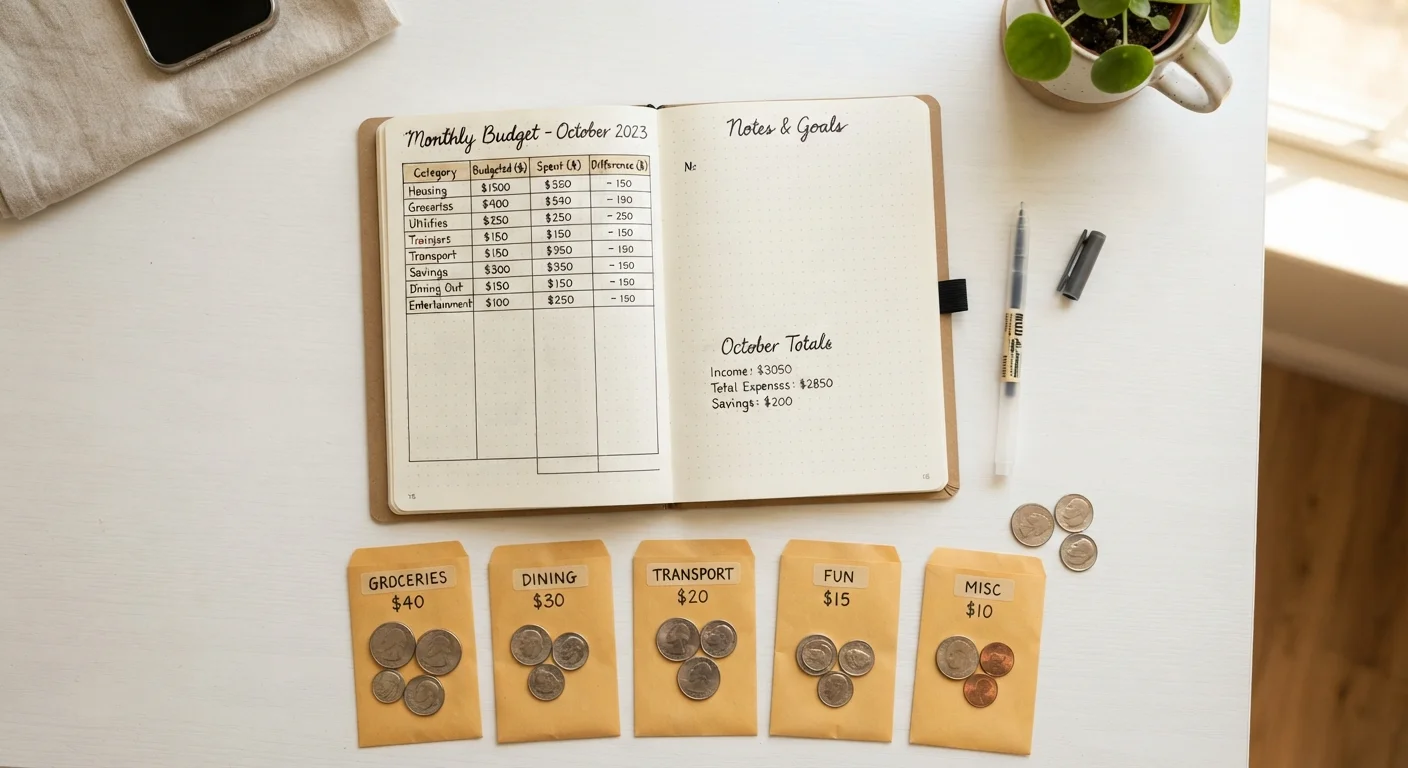
Photo: QuickSearches.net | It Doesn't Get Quicker Than This! editorial
Key Takeaways
- Zero-based budgeting requires every dollar of income to be assigned a purpose before the month starts.
- The method forces you to confront discretionary spending that often goes unnoticed in looser systems.
- It is particularly effective for accelerating debt payoff and building a savings habit.
- Variable income earners can still use zero-based budgeting by budgeting from a conservative baseline.
- The approach demands more time upfront but reduces money stress throughout the month.
What Zero-Based Budgeting Actually Means
Zero-based budgeting (ZBB) is a method where you allocate every dollar of your monthly take-home income to a specific category until nothing is left unassigned. Income minus allocations equals zero - not because you spent everything, but because every dollar has a job: rent, groceries, credit card payment, emergency fund, or anything else that matters to you.
The key distinction is intentionality. Most people have a rough idea of their fixed bills but let discretionary spending happen passively. Zero-based budgeting closes that gap by requiring you to decide in advance how much goes to dining out, subscriptions, clothing, and entertainment - before the month starts and before the money is gone.
Zero-based budget
A budget where every dollar of income is assigned to a category so that income minus all allocations equals zero before the month starts.
Take-home income
The amount of money you actually receive after taxes and deductions - what lands in your bank account, not your gross salary.
Fixed expenses
Bills that are the same amount every month, such as rent, a car loan, or a fixed-rate insurance premium.
Discretionary spending
Non-essential purchases you choose to make, like dining out, entertainment, or clothing - the category most budgets either ignore or underestimate.
Sinking fund
A savings category where you set aside a small amount each month for a predictable future expense, such as car repairs or holiday gifts.
Irregular expenses
Bills that don't arrive every month - annual subscriptions, quarterly insurance premiums, or tax prep fees - that are easy to forget in a monthly budget.
If you're new to budgeting terminology, the Monthly Budget Glossary covers the core terms - net income, fixed expenses, discretionary spending - that you'll rely on when building your first zero-based plan.
How to Build Your First Zero-Based Budget
Follow these four steps at the start of each month:
- Write down your total expected take-home income for the month. Use the actual amount deposited after taxes, not your gross salary.
- List every spending category - fixed expenses like rent, utilities, and insurance first, then variable needs like groceries and gas, then discretionary wants like streaming services and restaurant meals.
- Assign a dollar amount to each category. Work your way down the list until your income is fully distributed. If you run out of income before finishing the list, trim lower-priority categories.
- Include savings and debt payments as categories. Treating a student loan extra payment or a transfer to your emergency fund the same way you treat rent is what makes the method work. These are not afterthoughts - they are line items.
If your budget balances before you've covered everything important, you've identified a real shortfall - which is useful information, even if uncomfortable. A looser tracking approach would have hidden it.
Budget the savings transfer first
Where Zero-Based Budgeting Helps Most
Zero-based budgeting tends to deliver the clearest results in two situations: paying down debt faster and building savings that previously felt impossible.
On debt: when you explicitly budget extra payments as a line item - rather than hoping money is left over at month's end - those payments actually happen consistently. This predictability is hard to replicate with a passive approach.
On savings: the same logic applies. Pairing ZBB with a sinking fund strategy is especially effective. You assign a small monthly amount to irregular future expenses - car registration, holiday gifts, annual insurance premiums - so they never derail the rest of your plan.
The method also suits people who feel their money disappears without explanation. When you have to consciously assign every dollar, you can't easily ignore a $60 monthly subscription you forgot you had or a weekly coffee habit costing more than you realized.
Common Mistakes and How to Avoid Them
Don't skip irregular expense categories
Forgetting irregular expenses. Annual or quarterly bills - car insurance, HOA fees, tax prep costs - are easy to omit from a monthly plan. Divide each by 12 and budget that amount monthly, even if the bill isn't due yet.
Setting unrealistic category amounts. New budgeters often underestimate groceries or gas based on wishful thinking rather than actual spending history. Pull your last two or three months of bank or card statements to set honest baselines.
Abandoning the budget after one bad month. Overspending a category mid-month doesn't mean the method failed - it means you move dollars from a lower-priority category to cover the shortfall and note the adjustment for next month. The common budgeting myths article addresses this directly: imperfect execution is normal and doesn't invalidate the approach.
Skipping the savings line. If saving feels optional, it will be skipped when the month gets tight. Budget it first, even if the amount starts small.
Is Zero-Based Budgeting Right for You?
Zero-based budgeting asks more of you upfront than simpler methods like the 50/30/20 rule. It works best for people who want precise control, are working toward a specific financial goal, or have struggled to make progress with less structured approaches.
It's harder - though still workable - with truly unpredictable income. Freelancers and gig workers often budget using their lowest recent monthly income as the baseline, then assign any overage when the money actually arrives.
If you're weighing this against other approaches, the complete personal budgeting guide lays out multiple methods side by side. The broader Budgeting Basics hub is also a useful starting point for building the full picture.
The bottom line: zero-based budgeting is a tool, not a personality test. Used consistently, it forces the kind of intentional spending decisions that tend to move financial situations forward - often faster than people expect.
This article is for general informational purposes only and does not constitute personalized financial advice. Consider consulting a licensed financial professional for guidance specific to your situation.
Frequently Asked Questions
The content on this site is provided for informational purposes only and should not be considered a substitute for professional advice. While we strive to provide accurate and up-to-date information, we make no guarantees regarding its completeness or accuracy. Always consult a qualified professional for advice specific to your circumstances before making any decisions