
Zero-Based Budgeting: Giving Every Dollar a Job Before the Month Starts

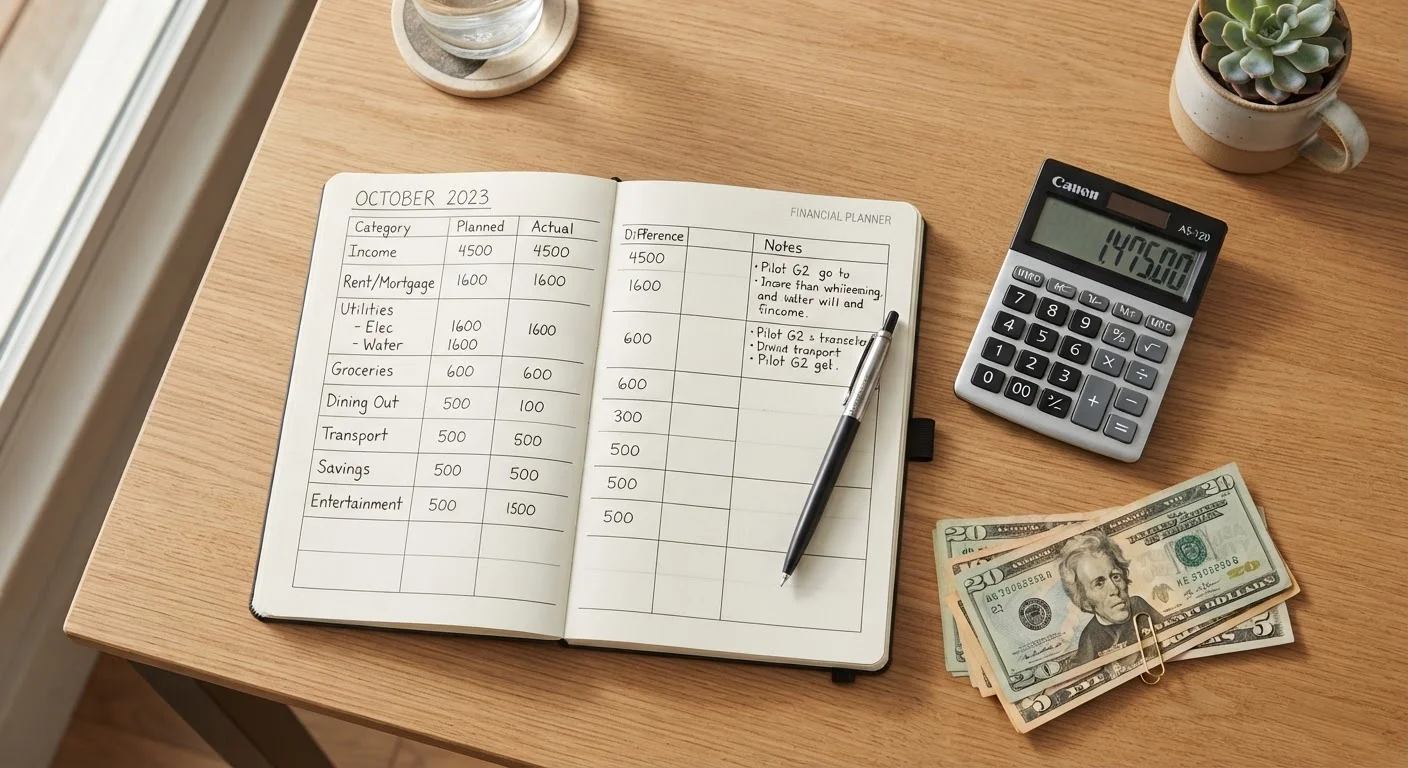
Photo: QuickSearches.net | It Doesn't Get Quicker Than This! editorial
Key Takeaways
- Every dollar of income gets assigned a purpose before the month begins - including savings.
- The budget balances to zero, meaning income minus all allocations equals $0.
- Zero-based budgeting works on any income level, including irregular paychecks.
- It requires more upfront effort than simpler methods but delivers greater spending visibility.
- Monthly adjustments are normal - a zero-based budget is a living plan, not a rigid contract.
How Zero-Based Budgeting Actually Works
The mechanics are straightforward. At the start of each month, you write down your total expected take-home income. Then you list every category you spend money on - rent, utilities, groceries, transportation, subscriptions, debt payments, savings, and even discretionary spending like dining out or entertainment. You assign a dollar amount to each category until the total equals your income and nothing is left over.
That final zero is the point. It doesn't mean your bank account hits zero - it means every dollar has a named destination. A $50 line item labeled "emergency fund" is just as valid as $50 for groceries. Both are intentional choices.
If you're new to building a budget from scratch, the first monthly budget guide walks through how to gather your numbers and set up initial categories - a useful foundation before layering in the zero-based approach.
33%
Americans with no written budget
A survey by the National Foundation for Credit Counseling found roughly one in three U.S. adults does not maintain any formal household budget.
$1,000
Median emergency savings gap
Federal Reserve data indicates a significant share of U.S. adults would struggle to cover an unexpected $400-$1,000 expense without borrowing or selling something.
20%
Average untracked discretionary spending
Consumer spending research consistently finds that a meaningful portion of household spending - often 15-25% - goes to unplanned or loosely tracked discretionary purchases.
Why Intentional Allocation Changes Your Spending Behavior
Most people don't overspend because they're careless - they overspend because money that isn't assigned somewhere specific tends to drift toward whatever feels urgent in the moment. Zero-based budgeting eliminates that drift by forcing a decision upfront.
When you've already committed $200 to groceries and $80 to dining out, opening a food delivery app mid-month triggers a different mental calculation. You're not deciding whether to spend money - you're deciding whether to pull it from a category that already has a purpose. That friction is the system working as intended.
“A budget is telling your money where to go instead of wondering where it went.”
— John C. Maxwell, Author and leadership speaker, widely cited in personal finance literature
This is also why the method works well for people trying to accelerate debt repayment or build savings. Rather than saving 'whatever is left over' at month's end - which often turns out to be very little - you assign savings as a category at the start, the same way you'd assign rent. It becomes non-negotiable by design. For a deeper look at how this connects to paying down debt faster, see the saving and debt overview on the topic.
Who Benefits Most - and Where the Method Gets Challenging
Zero-based budgeting delivers the clearest results for people who feel like money disappears without knowing where it went, those carrying credit card debt they want to eliminate systematically, and anyone building toward a specific financial goal like a down payment or emergency fund.
The method does require more monthly effort than simpler approaches like the 50/30/20 rule. If you have an irregular income - seasonal work, freelance projects, hourly shifts that vary - budgeting from a fixed income baseline takes extra discipline. Start with your most conservative income estimate and allocate only essentials first; treat any overage as a separate allocation decision when the money actually arrives.
It's also worth noting that a zero-based budget isn't a punishment. If you allocate $60 for entertainment and you spend $60 on entertainment, that's a success - not a failure. The common budgeting myths article addresses exactly this kind of misconception that stops people from starting.
Start With Last Month's Bank Statement
Running the First Month and Reviewing the Results
Your first zero-based budget will be imperfect - expect it. Categories you underestimated will run short; others will have leftover dollars. That's fine. The goal in month one is to get the framework in place and to start seeing where your money actually goes versus where you assumed it went.
At the end of the month, compare what you planned against what actually happened. Which categories ran over? Which had slack? Use those answers to build a more accurate version for the following month. Over two or three cycles, most people find the budget stabilizes and requires only minor tweaks.
A structured end-of-month review process makes this much easier. The month-end budget review checklist covers exactly what to measure, what to carry forward, and how to approach adjustments without abandoning the system.
Zero-based budgeting is one piece of a larger personal finance picture. If you want to understand how it fits alongside other methods and tools, the complete personal budgeting guide puts it all in context.
This article is for general informational purposes only and does not constitute personalized financial advice. For guidance specific to your situation, consider speaking with a qualified financial professional.
Frequently Asked Questions
The content on this site is provided for informational purposes only and should not be considered a substitute for professional advice. While we strive to provide accurate and up-to-date information, we make no guarantees regarding its completeness or accuracy. Always consult a qualified professional for advice specific to your circumstances before making any decisions