
Tracking Every Purchase Without Losing Your Mind

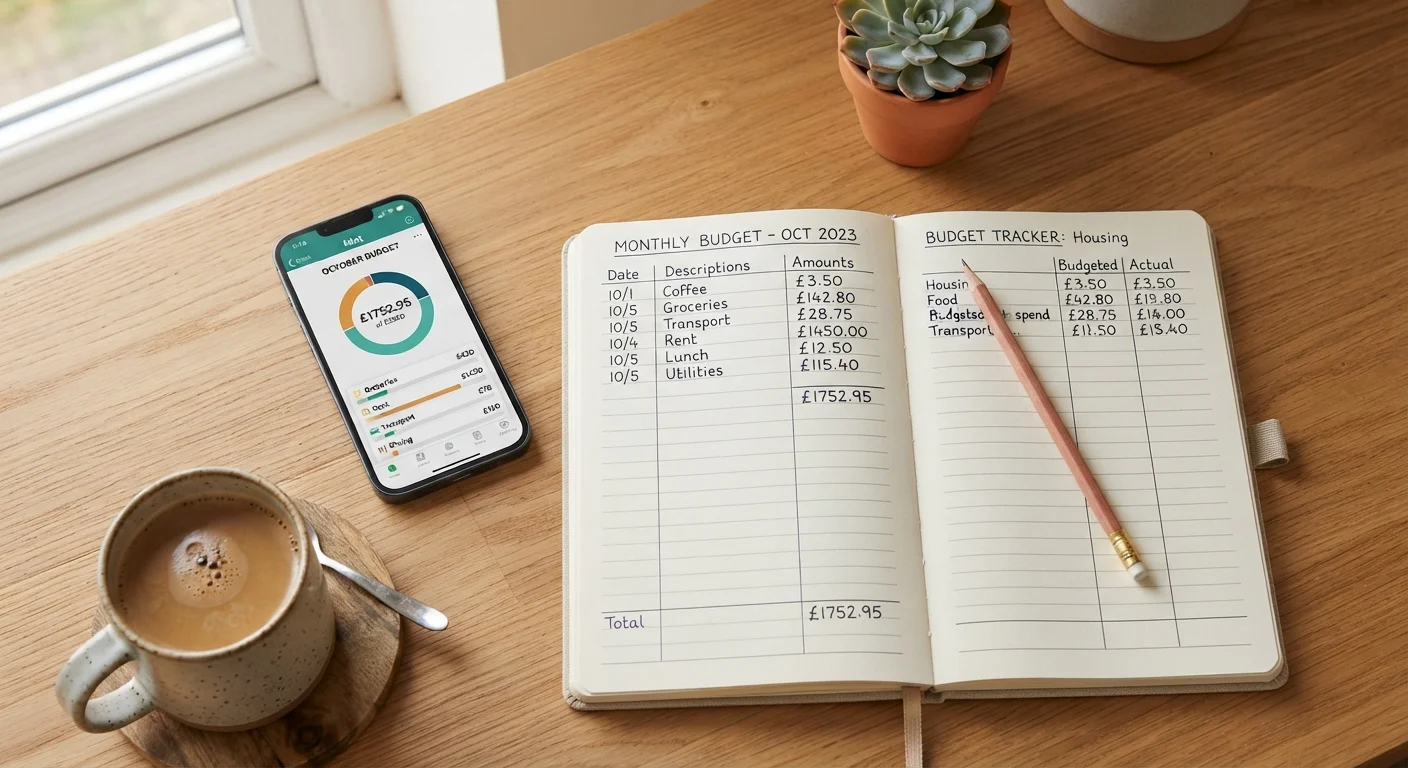
Photo: QuickSearches.net | It Doesn't Get Quicker Than This! editorial
Key Takeaways
- Tracking every purchase-not just big ones-reveals where money actually goes each month.
- You can track spending manually, with a spreadsheet, or through a budgeting app; all three work.
- A daily 5-minute review habit prevents small gaps from becoming major budget blind spots.
- Consistent categories matter more than perfect precision when logging expenses.
- Reviewing weekly totals helps you course-correct before overspending becomes a pattern.
Why Tracking Beats Estimating
Most people believe they have a rough sense of their spending. Research from consumer finance organizations consistently shows that people underestimate discretionary spending-sometimes by hundreds of dollars per month. The gap between what you think you spend and what you actually spend is exactly where budgets break down.
Tracking every purchase closes that gap. It doesn't require obsessive record-keeping or financial expertise. It requires a simple system you'll actually use-and a few minutes each day to maintain it. This guide walks you through setting one up from scratch, whether you prefer paper, a spreadsheet, or an app. For a side-by-side look at those formats, see how each budgeting tool compares.
This article is general financial information intended to help you build better money habits. It is not personalized financial advice. Consult a qualified financial professional for guidance specific to your situation.
What You Need Before You Start
Getting the right tools in place takes about ten minutes and makes the actual tracking far more sustainable.
What you will need
Small pocket notebook or notes app
Captures purchases at the point of sale before you forget them-especially cash transactions.
Spreadsheet (Google Sheets or Excel)
Organizes logged purchases into categories and calculates running totals automatically.
Budgeting app with bank-sync capability
Automatically imports card transactions so manual entry is limited to cash and corrections.
Recent bank and credit card statements
Used during setup to establish realistic spending baselines for each category.
Step-by-Step: Building Your Tracking System
Follow these steps in order the first time. Once the system is running, maintaining it takes less effort than setting it up.
Define your spending categories
Write down eight to ten categories that cover your real life: housing, groceries, dining out, transportation, subscriptions, personal care, medical, entertainment, and a miscellaneous catch-all. Pull up two months of bank statements and make sure every transaction you see fits somewhere. If you have a category that covers fewer than three transactions a month, merge it into miscellaneous.
Set a baseline for each category
Using your statements, add up what you spent in each category over the past two months and divide by two. This average is your baseline-not your budget target yet, just an honest starting point. Write the number next to each category. Seeing real numbers, even uncomfortable ones, is the point of this step.
Choose where you'll log daily
Pick one place and commit to it. If you prefer analog, a small notebook in your bag works well. If you want automation, a budgeting app that syncs to your bank account reduces manual entry significantly. A plain spreadsheet sits in the middle: more flexible than a notebook, more controllable than an app. Compare the trade-offs of each format if you're undecided. The right tool is whichever one you'll actually open tomorrow.
Log every purchase within 24 hours
Record each transaction with three pieces of information: the date, the amount, and the category. You don't need the merchant name unless it helps you remember what the purchase was. If you're using an app with bank sync, review imported transactions each evening and re-categorize any that landed in the wrong bucket-apps frequently miscategorize transactions.
Run a weekly category total
Every Sunday (or whichever day ends your budget week), add up spending in each category for the past seven days. Compare it to one-quarter of your monthly baseline. This weekly checkpoint lets you adjust spending before the month ends rather than discovering overage after the fact. If dining out is already at 80% of the monthly baseline by day 14, you have two weeks to compensate-not zero.
Do a monthly review and adjust
At month's end, total each category and compare it to your baseline. Note which categories ran over and which had leftover room. Use this data to set realistic targets for next month-not aspirational ones. A budget based on what you actually spend is far more useful than one built on what you wish you spent. For a broader framework on building a system that lasts, see the complete personal budgeting guide.
Common Pitfalls and How to Avoid Them
Even a well-designed tracking system breaks down in predictable ways. Knowing the pitfalls in advance saves you from quitting after the first rough week.
Skipping cash purchases. Cash transactions leave no digital trail, making them the most common tracking gap. Treat cash like a spending category: withdraw a set amount for discretionary use and log it as one entry. If you spend it all, you know the budget hit without tracking every coffee.
Over-complicating categories. Twenty-five spending categories feel thorough but create friction that kills the habit. Start with eight to ten broad buckets-housing, groceries, transportation, dining out, subscriptions, personal care, entertainment, and miscellaneous. You can always refine later. Once you start spotting patterns, learn which categories derail most household budgets and adjust accordingly.
Logging in batches instead of daily. Trying to reconstruct a week of purchases from memory defeats the purpose. Even a two-day gap introduces errors that compound over time. A nightly 60-second log entry is easier to sustain than a Sunday afternoon reconstruction session.
The 60-Second Nightly Habit
If you manage money across several accounts, tracking also becomes your early-warning system for overdrafts and misrouted payments. See strategies for managing multiple bank accounts for practical approaches. And if you're planning ahead for a big trip, the same discipline applies-building a travel budget that holds up starts with knowing what you currently spend.
The content on this site is provided for informational purposes only and should not be considered a substitute for professional advice. While we strive to provide accurate and up-to-date information, we make no guarantees regarding its completeness or accuracy. Always consult a qualified professional for advice specific to your circumstances before making any decisions