
Speed Limits, Right-of-Way, and 10 Other Traffic Laws Americans Routinely Misunderstand

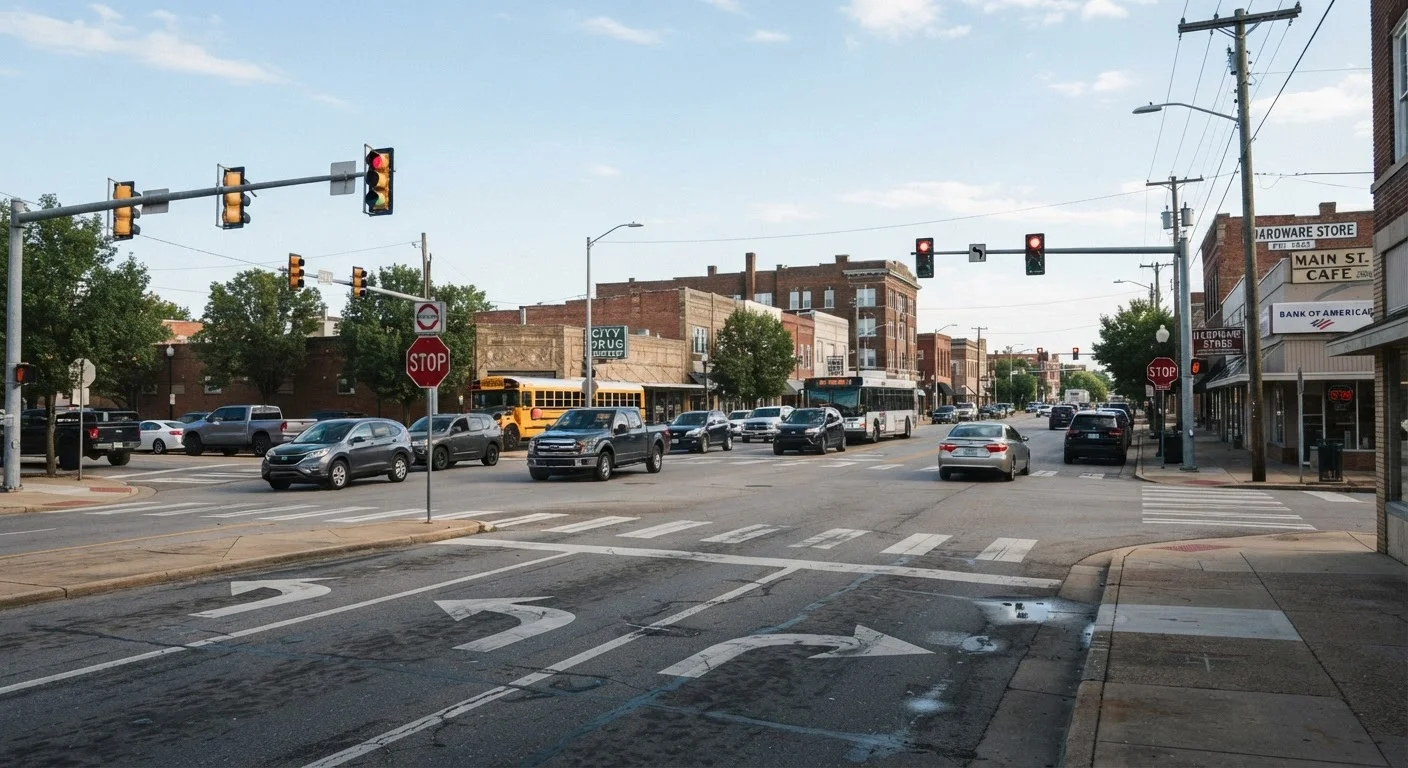
Photo: QuickSearches.net | It Doesn't Get Quicker Than This! editorial
Key Takeaways
- Speed limit laws vary by state, and "reasonable speed" standards apply even below posted limits.
- Four-way stop rules follow a specific order that most drivers learned incorrectly or forgot.
- School zone hours and pedestrian right-of-way rules are widely misunderstood and actively enforced.
- Failing to signal, merge correctly, or yield at roundabouts are common - and ticketable - errors.
- Hands-free phone laws differ significantly by state, and many drivers underestimate their scope.
- Knowing the actual law - not just common assumptions - is the most effective way to avoid fines.
Why So Many Drivers Get Traffic Law Wrong
Most Americans learned the basics of traffic law during driver's education, passed a written test, and then absorbed the rest through habit and observation. The problem: habits drift, other drivers model incorrect behavior, and traffic laws themselves vary meaningfully from state to state. The result is a widespread layer of sincere-but-wrong assumptions about what's actually legal on American roads.
These aren't trivial errors. Misreading right-of-way rules contributes to intersection collisions. Misunderstanding speed limit law can expose drivers to tickets even when they're below the posted number. And many misconceptions around pedestrian laws, cell phone restrictions, and school zones carry real fines - and real safety consequences.
The 12 laws below are among the most commonly misread in the U.S. For a broader look at how signs and road markings reinforce these rules, see our field guide to road signs.
Speed Limits: "Maximum" Doesn't Mean "Always Safe"
Many drivers treat the posted speed limit as a floor rather than a ceiling. In reality, posted limits represent the maximum legal speed under ideal conditions. Every state has a "basic speed law" requiring drivers to travel at a speed that is reasonable and prudent given road conditions, weather, traffic, and visibility. Driving at 55 mph on a fog-covered highway where visibility is 50 feet can still result in a citation - even if the limit is 65 mph.
Posted speed limits are a ceiling, not a floor - conditions can legally require you to go slower.
Four-Way Stops: The Actual Order of Precedence
The rule most drivers think they know: whoever arrives first goes first. The fuller rule: when two vehicles arrive simultaneously, the driver on the left yields to the driver on the right. When three or four vehicles arrive at once, most states apply right-of-way to the rightmost vehicle. Straight-through traffic generally has priority over turning traffic at all-way stops, though this is not universally codified - check your state's specific statute.
When two cars arrive simultaneously at a four-way stop, the driver on the left yields to the right.
Pedestrian Right-of-Way: It's Not Absolute, But It's Broader Than You Think
A common misconception: pedestrians always have the right of way. Another equally common one: they only have it in crosswalks. The legal reality is more nuanced. Most states require drivers to yield to pedestrians in both marked and unmarked crosswalks - which exist at every intersection by default, even without painted lines. However, pedestrians also have legal obligations and do not have blanket right-of-way in mid-block crossings outside designated areas.
Unmarked crosswalks exist at virtually every intersection - drivers must still yield to pedestrians there.
School Zones: Hours and Flashing Lights Matter
Many drivers believe school zone speed limits apply all day. In most states, reduced school zone speeds apply only during specific hours - typically when children are arriving or departing. Some jurisdictions use flashing yellow lights to signal when the lower limit is active. If the light isn't flashing, the standard limit may apply. However, some states enforce reduced speeds during all school hours. Verify your specific state's rules rather than assuming the flashing-light standard applies universally.
School zone speed rules often apply only during specific hours - not automatically around the clock.
Hands-Free Laws: "Hands-Free" Isn't Always Legal Either
Many drivers believe that as long as they're using a Bluetooth speakerphone or earpiece, they're compliant. But laws vary significantly. Some states ban all handheld use; others restrict all phone use for certain driver categories, including new drivers or those in school zones. A handful of states apply distracted driving statutes that can cover hands-free use if it's deemed inattentive. Teen drivers face stricter restrictions in nearly every state - see what parents and new drivers need to know about graduated licensing.
Hands-free phone use may still be illegal in your state depending on driver age, location, and local law.
Yielding to Emergency Vehicles: "Move Over" Laws Apply at Speed, Too
Almost every driver knows to pull over for a passing ambulance or fire truck. Fewer know that all 50 states now have "Move Over" laws requiring drivers to change lanes - or reduce speed significantly - when passing stationary emergency, law enforcement, or utility vehicles on the roadside. Failing to move over is a fineable offense in every state and a leading cause of roadside worker fatalities.
All 50 states require drivers to move over or slow down for stopped emergency vehicles on the roadside.
Roundabouts: Vehicles Inside Always Have Priority
Roundabouts remain a source of persistent confusion. The governing rule is straightforward: vehicles already circulating inside the roundabout have the right of way. Entering traffic must yield. The mistake most drivers make is treating a roundabout like a four-way stop and hesitating mid-entry, or attempting to enter at full speed assuming equal priority. Yield at the entry point - do not yield once you're already circulating.
Traffic already inside a roundabout has the right of way - yield before entering, not while circulating.
Turn Signals: Required Farther in Advance Than Most Drivers Signal
Most states require drivers to signal at least 100 feet before turning in residential and urban areas, and 200 feet or more on highways. Many drivers flip on the turn signal simultaneously with braking or mid-turn, which provides no meaningful warning to other drivers and technically violates the law. Signaling is also required before changing lanes, not just turning at intersections.
Turn signals must be activated well before the turn - most states specify 100 feet minimum in advance.
Passing on the Right: Legal in Some Situations, Not Others
Passing on the right is not universally illegal, as many drivers believe. Most states permit it when the vehicle being passed is making or about to make a left turn, or when road width permits two lanes of traffic moving in the same direction. What's not permitted: passing on the right by driving onto the paved shoulder of a road not designed for two lanes. The shoulder is not a travel lane.
Passing on the right is sometimes legal - but using the paved shoulder as a passing lane generally is not.
Merging: The Zipper Rule and Who Actually Yields
When a lane ends due to construction or road narrowing, many drivers believe merging early is the legally correct - and courteous - approach. Transportation agencies, including those in several U.S. states, actually encourage "late merging" (also called the zipper merge), where drivers use both lanes to the merge point and alternate entry. This reduces overall backup length. Regardless of merge timing, the driver in the continuing lane does not always have right of way - both drivers share responsibility for avoiding a collision.
Late merging at lane closures is often encouraged by transportation agencies, not the rude move it's assumed to be.
Red Light on Right Turn: Not a Universal Permission
Right turn on red is permitted in most of the U.S. after a complete stop - but it is not a blanket right. Many intersections post "No Turn on Red" signs, which are legally binding. Beyond signed prohibitions, a right-turn-on-red still requires yielding to all oncoming traffic and pedestrians with a walk signal. Treating a red light like a yield sign without fully stopping first is a traffic violation in every state.
Right turn on red requires a full stop first and a full yield to all cross-traffic - it is not a yield sign.
Headlight Laws: When You're Actually Required to Use Them
Most states require headlights whenever windshield wipers are in use - not just at dusk or in darkness. The reasoning is visibility: if conditions require wipers, other drivers need to see you as much as you need to see them. Additionally, many drivers misuse daytime running lights (DRLs), assuming they satisfy headlight requirements. DRLs typically do not activate taillights and may not meet the full headlight standard required by law during low-visibility conditions.
Many states require headlights whenever wipers are running - daytime running lights may not satisfy this law.
Knowing the Law Is Part of Being a Safe Driver
Traffic law isn't static, and it isn't uniform. What's legal in one state may be a moving violation in another. Keeping your understanding current - especially when driving in unfamiliar states or conditions - is part of responsible vehicle operation. If you regularly drive on rural highways or navigate dense urban grids, you may also find it useful to review how driving demands differ between rural and urban environments.
When in doubt, consult your state's official driver's manual - most DMV websites publish the current version for free. Don't rely on what you've always assumed, or what the car ahead of you is doing. The law is the standard, not the traffic around you.
Check Your State's Official Driver's Manual
The content on this site is provided for informational purposes only and should not be considered a substitute for professional advice. While we strive to provide accurate and up-to-date information, we make no guarantees regarding its completeness or accuracy. Always consult a qualified professional for advice specific to your circumstances before making any decisions