
Comprehensive vs. Collision Coverage: Knowing When Each Applies

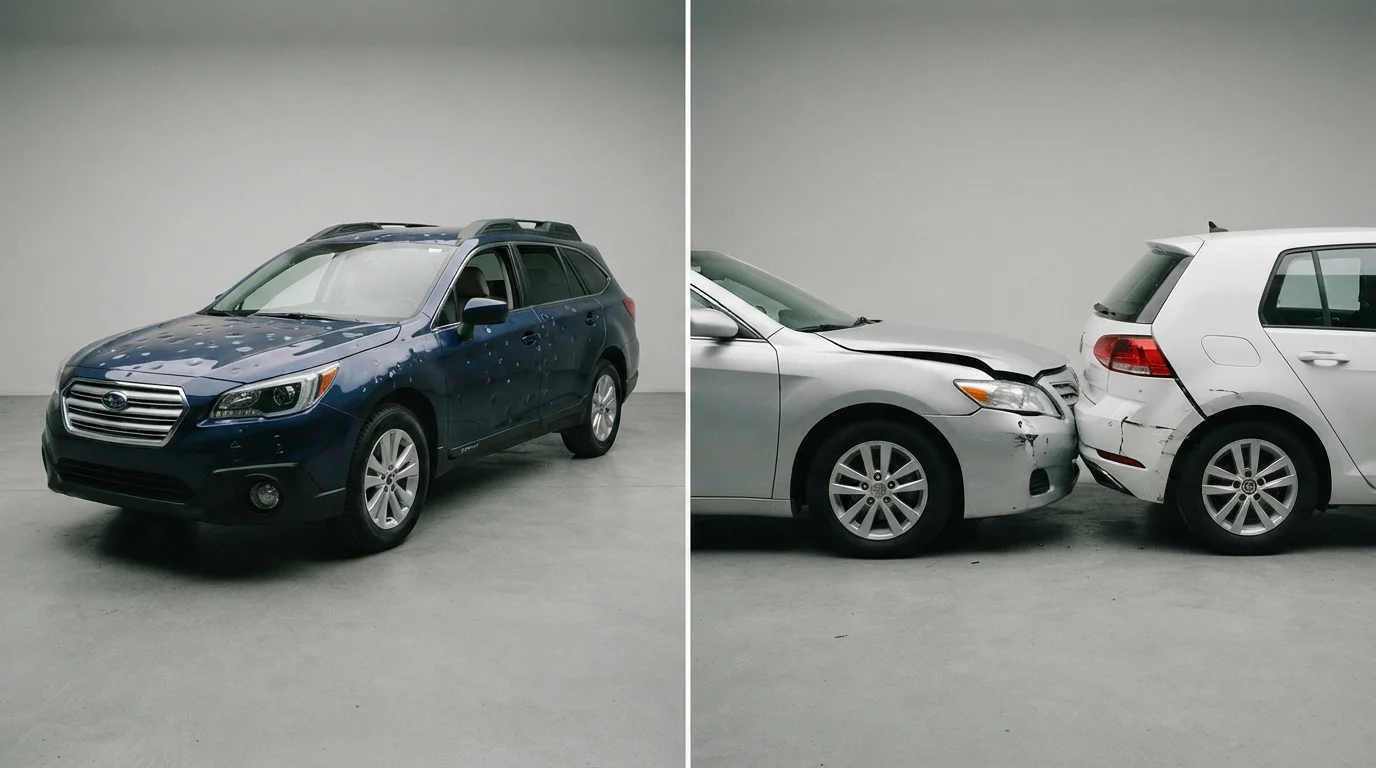
Photo: QuickSearches.net | It Doesn't Get Quicker Than This! editorial
Key Takeaways
- Collision coverage pays for damage when your car hits another vehicle or object, regardless of fault.
- Comprehensive coverage handles non-collision losses: theft, weather, animals, and falling objects.
- Both coverages carry a deductible that you pay before the insurer covers the rest.
- Lenders and lessors typically require both coverages on financed or leased vehicles.
- Whether to keep both on an older, paid-off car depends largely on the vehicle's current market value.
What Each Coverage Actually Does
Collision and comprehensive are both "physical damage" coverages, meaning they pay to repair or replace your own vehicle rather than covering injuries or damage you cause to others. Beyond that similarity, they work very differently.
Collision coverage applies when your vehicle makes physical contact with another vehicle or an object - a guardrail, a telephone pole, or another car in a parking lot. It doesn't matter whether you were at fault. If the damage resulted from impact, collision is the coverage that responds.
Comprehensive coverage covers a wide range of non-collision losses. Common examples include theft, vandalism, hail or flood damage, fire, falling objects (like a tree branch), and collisions with animals such as deer. Think of it as protection against things that happen to your car rather than things your car runs into.
Both coverages are subject to a deductible - the amount you pay out of pocket before your insurer covers the remainder. Deductibles typically range from $250 to $1,500, and choosing a higher deductible generally lowers your premium.
| Comprehensive | Collision | |
|---|---|---|
| What triggers a claim | Non-collision events: theft, weather, animals, fire, vandalism | Contact with another vehicle or object |
| Fault requirement | Not applicable - no collision involved | Pays regardless of fault |
| Typical deductible range | $250-$1,500 | $250-$1,500 |
| Required on financed vehicles | Yes, by most lenders | Yes, by most lenders |
| Covers theft | Yes | No |
| Covers weather damage | Yes (hail, flood, wind) | No |
| Covers hitting a guardrail | No | Yes |
| Covers deer strike | Yes | No |
When Lenders and Lessors Make the Decision for You
If you're financing or leasing a vehicle, you likely don't have a choice: most lenders and leasing companies require both comprehensive and collision coverage as a condition of the loan or lease agreement. This protects their financial interest in the vehicle.
Lenders may also require a specific maximum deductible - often $500 or $1,000 - so it's worth checking your loan or lease documents before adjusting your coverage. If you drop required coverage without notifying your lender, they are generally entitled to place their own "force-placed" insurance on the vehicle, which tends to be significantly more expensive and covers only the lender's interest, not yours.
Check Your Loan Agreement Before Adjusting Coverage
For guidance on what financial obligations come with a vehicle purchase, the Buying a Car hub covers loan structures and what to review before signing.
The Paid-Off Vehicle Calculation
Once a vehicle is fully owned and no lender is involved, you decide whether to keep comprehensive, collision, both, or neither. The standard framework is to compare what you'd pay in premiums over time against the maximum payout you'd ever receive.
Insurers pay actual cash value (ACV) - the market value of your vehicle at the time of loss, minus your deductible. If your car's ACV is $4,000 and your deductible is $1,000, the most you'd collect from a total-loss claim is $3,000. If your combined annual premium for both coverages is $800, you'd recover that theoretical maximum payout in roughly four years of premiums - not counting any partial claims.
A commonly cited rule of thumb suggests reconsidering physical damage coverage when the annual premium exceeds 10% of the vehicle's value, though your risk tolerance, savings cushion, and local conditions (high-theft areas, severe weather regions) should all factor in.
Understanding your vehicle's actual market value is a key part of this decision - resources like the car warranty explainer illustrate how ownership costs extend well beyond the purchase price.
Common Misconceptions Worth Clearing Up
"Comprehensive covers everything." The name is misleading. Comprehensive does not cover collision damage, mechanical breakdowns, normal wear, or damage to another person's property. It covers a defined list of non-collision perils.
"Collision covers any accident." Collision coverage applies to contact with another vehicle or object - not to damage caused by weather or theft, which fall under comprehensive.
"My liability coverage will pay for my car." Liability insurance pays for damage you cause to others. It does not cover your own vehicle under any circumstances. Only collision and comprehensive do that.
If you're thinking about how different types of insurance products stack up more broadly, the homeowners insurance vs. home warranty comparison offers a useful parallel: similar-sounding products can protect against very different risks.
This article is for general informational purposes only and does not constitute insurance or financial advice. Coverage terms, availability, and requirements vary by insurer and state. Consult a licensed insurance professional for guidance specific to your situation.
The content on this site is provided for informational purposes only and should not be considered a substitute for professional advice. While we strive to provide accurate and up-to-date information, we make no guarantees regarding its completeness or accuracy. Always consult a qualified professional for advice specific to your circumstances before making any decisions