
Trade-In or Private Sale: Getting the Most From Your Current Vehicle

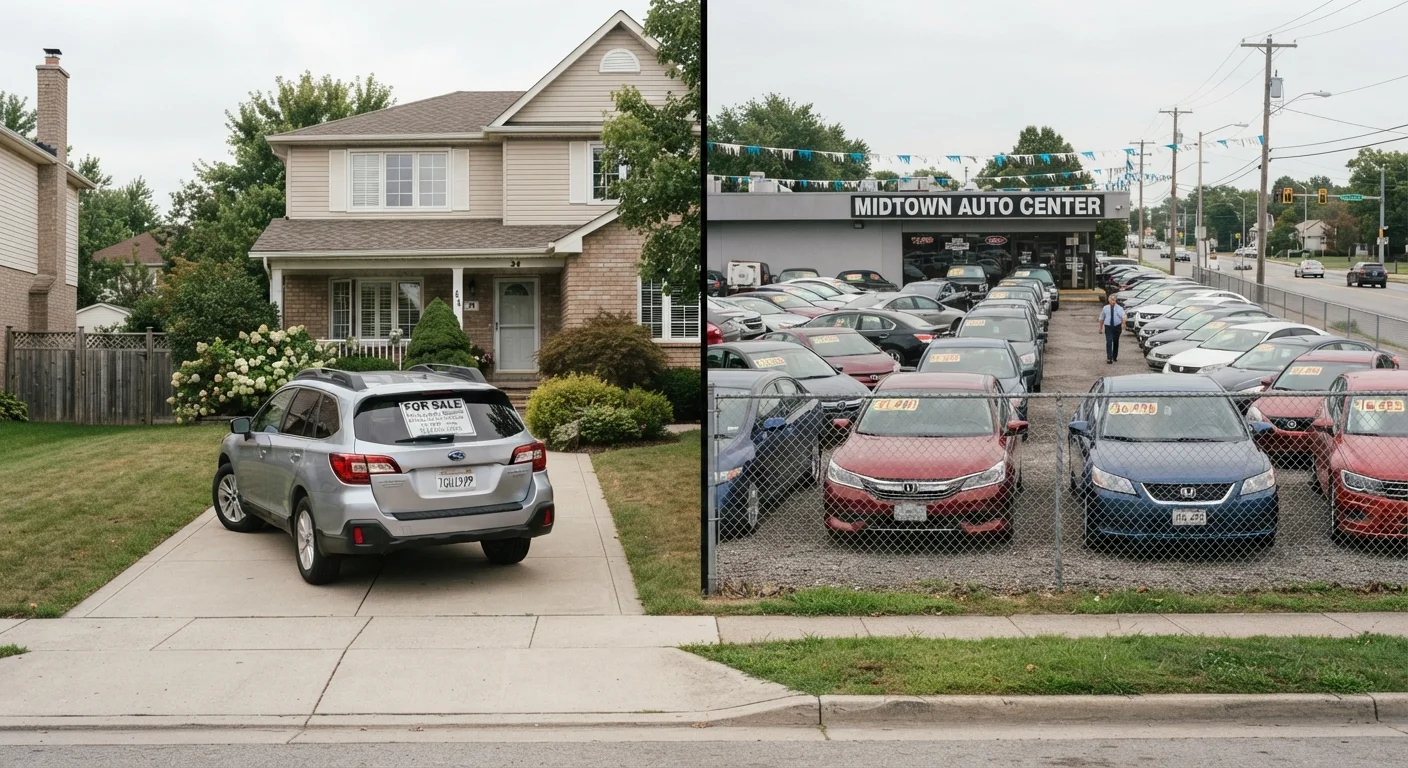
Photo: QuickSearches.net | It Doesn't Get Quicker Than This! editorial
Key Takeaways
- Trading in is faster and simpler but typically yields a lower payout than a private sale.
- Private sales can net hundreds or thousands more, but require time, safety awareness, and paperwork.
- A trade-in may reduce your taxable purchase amount in many states, partially offsetting the lower offer.
- Knowing your vehicle's market value before either transaction puts you in a stronger negotiating position.
- Your timeline, vehicle condition, and risk tolerance should all factor into which route you choose.
Fast, convenient, single-transaction process
You can complete the sale and purchase of your next vehicle in a single dealership visit, eliminating the need to manage separate timelines or hold onto two cars at once.
No need to handle buyer inquiries or test drives
Dealers take the car off your hands without the logistics of listing, scheduling viewings, or vetting strangers - a significant time saving.
Potential sales tax savings in many states
Most states calculate sales tax on the net purchase price after the trade-in credit, which can reduce your total tax bill by hundreds of dollars depending on the value and local rate.
No title-transfer complexity on your end
Dealers handle DMV paperwork, lien releases, and title transfers as a routine part of their business, reducing administrative burden for you.
Typically yields less money than a private sale
Dealerships need to make a profit on resale, so trade-in offers are generally below private-party market value - sometimes significantly so on desirable vehicles.
Requires time, effort, and active marketing
Creating a listing, responding to inquiries, arranging viewings, and negotiating with multiple buyers can take days or weeks of sustained effort.
Higher potential payout often worth the effort
On many vehicles, the private-sale premium over a trade-in offer can reach $1,000-$3,000 or more, making the time investment financially meaningful for budget-focused sellers.
Safety and fraud risks require careful management
Meeting strangers and accepting large payments introduce risks that trade-ins don't, requiring thoughtful precautions around meeting locations and payment methods.
You carry the vehicle until it sells
Until a buyer is found and funds clear, you're still responsible for insurance, registration, and any storage - which can complicate timing with a new vehicle purchase.
Why This Decision Matters More Than People Think
When you're focused on your next vehicle, it's easy to treat your current one as an afterthought. But the difference between a trade-in offer and a private-sale price on the same car can range from a few hundred to several thousand dollars. For budget-conscious buyers, that gap can meaningfully affect what you can afford next.
Understanding how depreciation shapes your car's value is a useful starting point. Once you have a realistic sense of what your vehicle is worth in the current market - using tools like Kelley Blue Book or NADA Guides - you can evaluate both options from a position of knowledge rather than guesswork.
$1,000-$3,000+
Typical private-sale premium over trade-in
Industry estimates consistently show private-party sale prices running well above dealer trade-in offers on comparable vehicles, with the gap widening on newer or more sought-after models.
~8%
Average U.S. combined state and local sales tax
In states that apply the trade-in deduction before calculating sales tax, a $5,000 trade-in credit can save a buyer roughly $400 at an 8% effective tax rate.
The Case for Trading In at a Dealership
Trading in means handing your vehicle directly to a dealership, typically as part of a new or used car purchase. The dealership appraises your car and applies a credit toward your next vehicle. The appeal is straightforward: it collapses two separate transactions into one visit.
Fast, convenient, single-transaction process
You can complete the sale and purchase of your next vehicle in a single dealership visit, eliminating the need to manage separate timelines or hold onto two cars at once.
No need to handle buyer inquiries or test drives
Dealers take the car off your hands without the logistics of listing, scheduling viewings, or vetting strangers - a significant time saving.
Potential sales tax savings in many states
Most states calculate sales tax on the net purchase price after the trade-in credit, which can reduce your total tax bill by hundreds of dollars depending on the value and local rate.
No title-transfer complexity on your end
Dealers handle DMV paperwork, lien releases, and title transfers as a routine part of their business, reducing administrative burden for you.
One nuance worth noting: in many U.S. states, the trade-in value is subtracted from the purchase price of the new vehicle before sales tax is calculated. On a $5,000 trade-in with an 8% sales tax rate, that translates to $400 in tax savings - a real but often overlooked benefit.
If you're also thinking carefully about what dealerships pitch during the purchase process, keeping the transaction focused and simple through a trade-in can reduce the surface area for high-pressure upsells.
The Case for Selling Privately
A private sale means listing your vehicle yourself - through platforms, classified ads, or word of mouth - and handling negotiations, paperwork, and the transfer directly with the buyer. It takes more effort, but the financial upside is real.
Typically yields less money than a private sale
Dealerships need to make a profit on resale, so trade-in offers are generally below private-party market value - sometimes significantly so on desirable vehicles.
Requires time, effort, and active marketing
Creating a listing, responding to inquiries, arranging viewings, and negotiating with multiple buyers can take days or weeks of sustained effort.
Higher potential payout often worth the effort
On many vehicles, the private-sale premium over a trade-in offer can reach $1,000-$3,000 or more, making the time investment financially meaningful for budget-focused sellers.
Safety and fraud risks require careful management
Meeting strangers and accepting large payments introduce risks that trade-ins don't, requiring thoughtful precautions around meeting locations and payment methods.
You carry the vehicle until it sells
Until a buyer is found and funds clear, you're still responsible for insurance, registration, and any storage - which can complicate timing with a new vehicle purchase.
Preparation matters: a detailed cleaning, minor cosmetic fixes, and a recent maintenance record can increase buyer confidence and justify asking closer to private-party retail value. Be transparent about any known issues - misrepresenting a vehicle's condition can expose you to legal liability.
Safety is also a legitimate concern. Meet prospective buyers in public, well-lit locations, and consider having someone accompany you for test drives. Accepting payment via cashier's check or a verified digital transfer (rather than cash for large amounts) reduces risk on both sides.
How to Choose the Right Path for Your Situation
The right approach depends on several practical factors:
- Your timeline: If you need to sell quickly - perhaps your new vehicle is arriving soon - a trade-in removes the uncertainty of waiting for a buyer.
- Vehicle condition: A car with mechanical issues or high mileage may not attract private buyers willing to pay a fair price, making a trade-in (or a direct offer from a car-buying service) more practical.
- Your state's tax rules: If your state offers a trade-in sales tax offset, that benefit can narrow the gap between a trade-in and private-sale price significantly.
- Your comfort with negotiation: Private buyers will negotiate. If you dislike that dynamic, a dealership's written offer may feel like a relief even at a lower number.
Whichever route you choose, it's worth revisiting your broader vehicle ownership goals. Whether you're moving toward a new or used replacement vehicle, the proceeds from your current car will shape the financial foundation of that next decision. More resources on managing costs are available through our Car Ownership hub.
Get Multiple Offers Before You Decide
The content on this site is provided for informational purposes only and should not be considered a substitute for professional advice. While we strive to provide accurate and up-to-date information, we make no guarantees regarding its completeness or accuracy. Always consult a qualified professional for advice specific to your circumstances before making any decisions