
Add-Ons That Dealers Pitch-and What They're Actually Worth

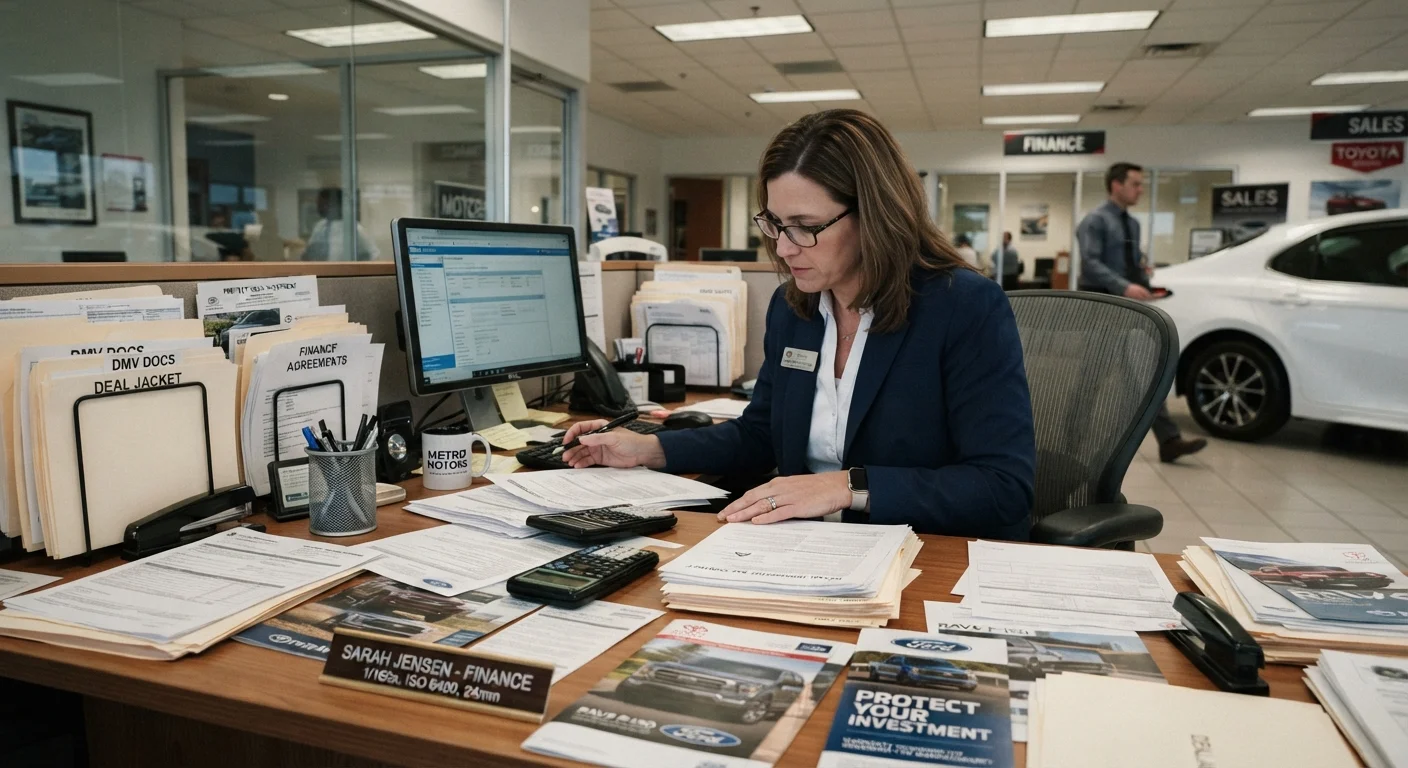
Photo: QuickSearches.net | It Doesn't Get Quicker Than This! editorial
Key Takeaways
- Most dealership add-ons are optional and negotiable - you are never required to accept them.
- GAP insurance and extended warranties can be worth the cost in specific situations, but terms vary widely.
- Many add-ons like paint sealant and VIN etching offer minimal real-world value for their price.
- You can often purchase legitimate protection products cheaper through third parties after the sale.
- Always evaluate each add-on against your actual driving habits, loan terms, and risk tolerance.
The Finance Office: Where the Real Upsell Begins
You've agreed on a vehicle price, handed over your trade-in keys, and felt the hard part was over. Then comes the finance office. In the span of 30 to 60 minutes, a finance manager may present half a dozen products - some genuinely useful, many overpriced, and a few nearly impossible to use in practice. Understanding each one before you sit down is the single most effective way to protect your budget.
This isn't about refusing every add-on reflexively. It's about knowing which products address real risks you face, and which ones are structured primarily to boost the dealership's back-end profit. As our guide to out-the-door pricing explains, add-ons can quietly inflate your final figure by thousands of dollars - often rolled into monthly payments so small the total cost goes unnoticed.
GAP Insurance
What it is: Guaranteed Asset Protection (GAP) insurance covers the difference between what you owe on your auto loan and what your vehicle is worth if it's totaled or stolen. Because cars depreciate faster than most loan balances decrease, this gap can reach several thousand dollars in the first few years of ownership.
When it makes sense: If you financed with a small down payment (less than 20%), have a long loan term (60 months or more), or are financing a vehicle that depreciates quickly, GAP coverage addresses a real financial exposure. It's generally less useful if you put substantial money down or if your loan balance is already close to the vehicle's market value.
The catch: Dealers typically mark up GAP insurance significantly. Your auto insurer or credit union may offer the same protection for considerably less. Shop around before agreeing to the dealership's price.
GAP coverage solves a real problem - but buying it through your insurer often costs far less.
Extended Warranty (Vehicle Service Contract)
What it is: Technically called a vehicle service contract, this product extends coverage for mechanical repairs beyond the manufacturer's warranty period. Coverage levels, deductibles, and exclusions vary enormously between providers and contracts.
When it makes sense: On a used vehicle outside its factory warranty, a well-structured contract from a reputable administrator can limit exposure to large repair bills - particularly on vehicles with a history of costly component failures. On a new car still under a comprehensive manufacturer warranty, the added layer is rarely necessary immediately.
The catch: Many contracts exclude the exact components most likely to fail, require repairs only at specific facilities, or contain fine print that makes claims difficult. Read the exclusion list carefully - not just the coverage summary. See our full analysis on what your car warranty actually covers before deciding.
The exclusion list in a service contract matters more than the headline coverage description.
Paint and Fabric Protection
What it is: Paint sealant (sometimes marketed as ceramic coating or paint protection film) and fabric protection are applied to the vehicle's exterior and interior surfaces, respectively. Dealers typically charge $200-$800 or more for these treatments.
When it makes sense: Rarely at the dealership price. The products themselves - paint sealants, Scotchgard-style fabric treatments - are widely available and can be applied at home or by a detailer for a fraction of the cost. Genuine ceramic coatings that require professional application can offer meaningful protection but are generally not what most dealers are selling at this price point.
The catch: These add-ons are often applied before you even see the vehicle, presented as a fait accompli. Dealers may claim they're non-negotiable - but in many cases, the fee is negotiable or can be removed from the contract.
Paint and fabric treatments sold by dealers are typically available elsewhere at a fraction of the price.
Tire and Wheel Protection
What it is: This product covers the cost of repairing or replacing tires and wheels damaged by road hazards - potholes, nails, curb damage. It's sold as a one-time fee added to the purchase price.
When it makes sense: If you live in an area with particularly poor road conditions, drive a vehicle with expensive low-profile tires (common on larger wheels), or have a history of tire damage, this type of coverage can be worth evaluating. Some tire retailers and third-party insurers offer similar road hazard protection at lower cost.
The catch: Coverage terms differ widely. Some plans cover only the tire; others cover the rim. Some require you to return to a dealer location for service. Confirm exactly what's covered and where repairs can be performed before agreeing.
Road hazard coverage is worth comparing against tire retailer plans before committing at the dealership.
VIN Etching
What it is: The vehicle identification number is etched onto the windows, ostensibly to deter theft by making individual parts harder to resell. Dealers may charge $100-$300 for this service.
When it makes sense: Almost never at the dealer's price. VIN etching kits are available for under $30 at auto parts stores and take roughly 30 minutes to apply yourself. Some insurers offer a small premium discount for etched vehicles, but it rarely offsets a high dealer fee.
The catch: This add-on is frequently pre-applied and presented as mandatory. It is not required by law, and the cost should be negotiable.
VIN etching is a legitimate theft deterrent, but a $200+ dealer fee is difficult to justify.
Credit Insurance (Life or Disability)
What it is: Credit life insurance pays off your auto loan balance if you die before it's paid in full. Credit disability insurance makes payments if you become unable to work. Both are pitched as protecting your family and credit.
When it makes sense: For buyers who have no existing life or disability insurance and limited savings, these products address a legitimate concern. However, they are among the most expensive ways to obtain that protection.
The catch: Coverage is tied to the loan balance (decreasing benefit as you pay down), the premium is typically rolled into the loan itself (meaning you pay interest on insurance), and standalone term life and disability policies purchased independently are generally far more cost-effective. Consult a licensed insurance professional to compare options for your situation.
Credit insurance is one of the costliest ways to protect against loan default - compare it with standalone policies.
How to Make the Call at the Table
Before accepting or rejecting any product, ask the finance manager to itemize each add-on separately on paper with its full cost - not just the monthly impact on your payment. Then ask: Can I buy this elsewhere after the sale? For most products - GAP insurance, extended warranties, even tire-and-wheel protection - the answer is yes, often at a lower price through your insurer, credit union, or a third-party administrator.
Negotiate Add-Ons Separately
For buyers taking on significant loan amounts or purchasing vehicles likely to depreciate quickly, GAP coverage and a carefully vetted service contract can provide genuine financial protection. For buyers paying cash or putting down 20% or more, many of these products solve problems they won't have. Review the fine print on any extended warranty, and see our in-depth look at extended warranties on used cars for a full breakdown of what those contracts typically cover - and exclude.
Preparation is the clearest advantage you can bring. Our pre-purchase checklist walks through the research steps that make every part of the buying process - including the finance office - easier to navigate with confidence.
The content on this site is provided for informational purposes only and should not be considered a substitute for professional advice. While we strive to provide accurate and up-to-date information, we make no guarantees regarding its completeness or accuracy. Always consult a qualified professional for advice specific to your circumstances before making any decisions