
Leasing vs. Buying: A Side-by-Side Look at Long-Term Cost

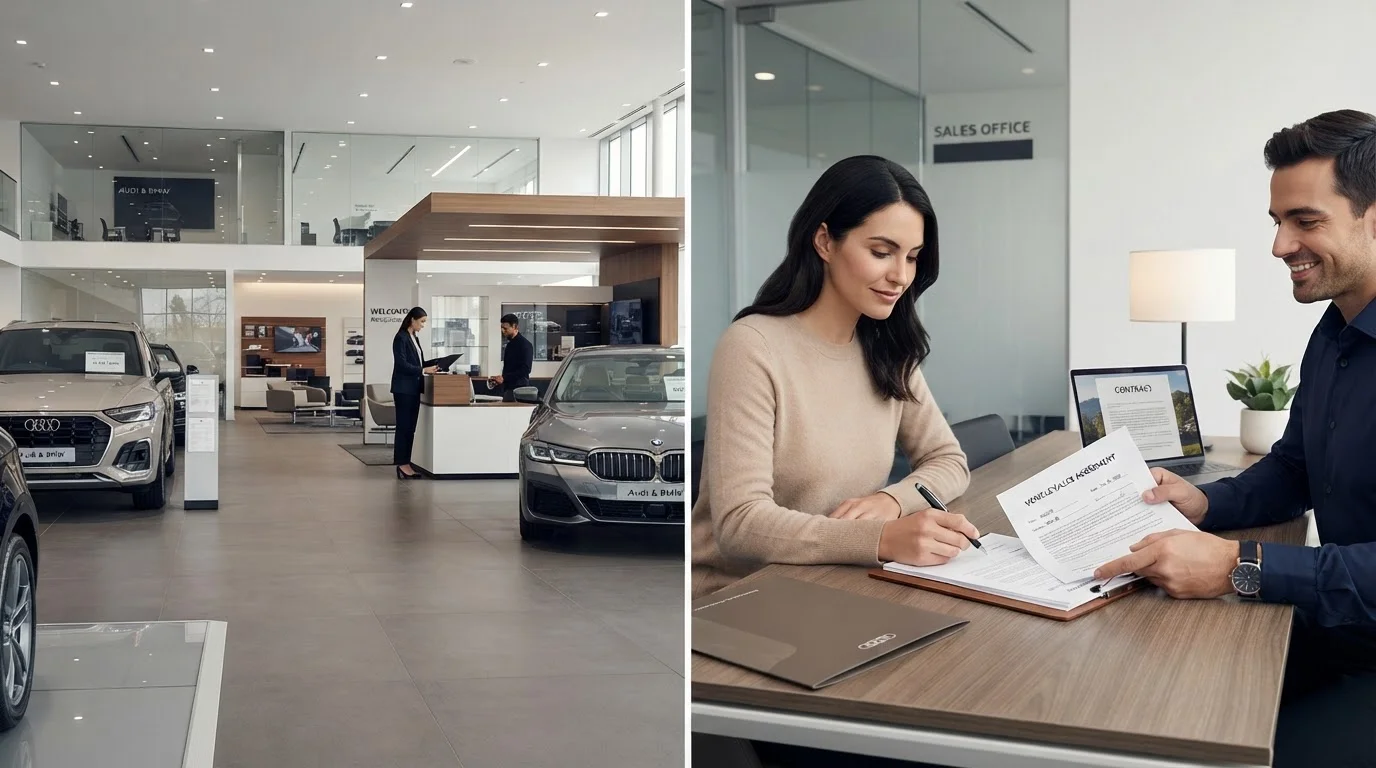
Photo: QuickSearches.net | It Doesn't Get Quicker Than This! editorial
Key Takeaways
- Leasing typically offers lower monthly payments but builds no ownership equity over time.
- Buying costs more upfront and monthly, but you own an asset once the loan is paid off.
- Over a five-year window, buying is generally less expensive in total outlay for most drivers.
- Mileage limits and wear-and-tear fees can significantly increase the true cost of leasing.
- Your driving habits, financial flexibility, and how long you keep vehicles should drive the decision.
How the Monthly Payment Picture Really Compares
The most visible difference between leasing and buying is the monthly payment. A lease payment is calculated on the portion of the vehicle's value you consume during the lease term - not the full purchase price - plus interest (called the money factor) and fees. That's why lease payments are routinely 20-30% lower than loan payments for the same vehicle.
For example, on a $35,000 vehicle, a 36-month lease might carry a monthly payment around $350-$450, while a 60-month auto loan at a mid-range interest rate could run $600-$680 per month. That difference feels significant month to month, but it's only part of the story.
When you finish a loan, the payments stop and you own the vehicle outright. When a lease ends, you hand the car back - and if you want to keep driving, you start a new lease with new payments. That cycle is where the long-term math shifts in buying's favor. For a deeper dive into managing all the costs that come with ownership, see Managing Car Ownership Costs: A Complete Overview.
| Factor | Leasing | Buying | |
|---|---|---|---|
| Monthly payment | Lower (20-30% less) | Higher during loan term | |
| Down payment required | Often minimal or none | Typically 10-20% recommended | |
| Ownership equity | None - car returned at end | Full ownership after payoff | |
| Mileage flexibility | Capped; penalties apply | Unlimited | |
| Vehicle modifications | Not permitted | Fully permitted | |
| 5-year total cost (est.) | $28,000-$32,000 out-of-pocket | $39,000-$43,000 minus resale value | |
| Early exit flexibility | Costly and complex | Sell anytime | |
| Maintenance coverage | Often under warranty entire term | Warranty expires; costs rise |
Total Five-Year Cost: What the Numbers Show
To compare fairly, look at what each path costs over five years - the typical loan term and roughly the span of two standard lease cycles.
Buying scenario: On a $35,000 vehicle with a $3,000 down payment and a 60-month loan at 7% APR, total payments over five years come to roughly $39,600. Add in depreciation - vehicles often lose 40-60% of value in five years - but that loss is baked into the purchase price. At the end, you hold an asset worth an estimated $14,000-$18,000 that you can sell or trade.
Leasing scenario: Two back-to-back 30-month leases (or one 36-month plus one partial) covering the same five-year period may cost $420/month on average. That's roughly $25,200 in lease payments, plus two sets of acquisition fees, disposition fees, and any over-mileage or wear-and-tear charges at lease end. Total out-of-pocket can easily reach $28,000-$32,000 - with nothing to show in equity at the end.
The bottom line: buying typically costs more in monthly cash flow during the loan term, but the accumulated equity partially offsets that investment. Leasing preserves monthly cash but results in zero asset value at term end.
~$28K-$32K
Estimated 5-year lease outlay (no equity)
Two back-to-back lease cycles on a mid-priced vehicle, including fees and typical overages, generally fall in this range.
40-60%
Typical 5-year vehicle depreciation
Most passenger vehicles lose between 40% and 60% of their original value within five years, according to industry depreciation data.
15-25¢
Per-mile penalty for exceeding lease cap
Standard auto lease agreements charge between 15 and 25 cents for every mile driven over the contracted annual limit.
Hidden Costs That Change the Calculus
Both paths carry costs that don't appear in the headline monthly payment.
Lease-specific costs to watch
- Mileage penalties: Most leases cap annual mileage at 10,000-15,000 miles. Overages are typically billed at 15-25 cents per mile at lease return - costs that add up quickly for commuters.
- Excess wear-and-tear fees: Minor dings, tire wear beyond defined thresholds, or interior stains can result in end-of-lease charges averaging several hundred dollars.
- Acquisition and disposition fees: Upfront fees to initiate a lease and return fees at the end often total $1,000-$1,500 per lease cycle.
Loan and ownership costs to watch
- Interest paid over the loan term: On a $32,000 financed balance at 7% over 60 months, you'll pay roughly $5,800 in interest alone.
- Maintenance beyond warranty: Once the manufacturer's warranty expires - typically 3 years/36,000 miles for bumper-to-bumper - repair costs become your responsibility entirely.
- Depreciation risk: If you sell before the loan is paid off, you may owe more than the vehicle is worth - a position known as being underwater.
For context on how these ownership dynamics compare to other major financial decisions, Buying vs. Leasing a Car: What the Numbers Actually Tell You explores additional scenarios worth reviewing.
Calculate Your True Annual Mileage First
Who Each Path Actually Makes Sense For
Neither leasing nor buying is universally better - the right answer depends on your situation.
Buying makes more financial sense if you: drive more than 15,000 miles per year, plan to keep the vehicle for six or more years, want to modify the vehicle, or need maximum flexibility (including selling whenever you choose). Over the long run, owning and eventually eliminating your car payment is one of the more reliable ways to reduce monthly transportation costs.
Leasing may be worth considering if you: drive low, predictable mileage each year, prioritize always being in a vehicle under factory warranty, value lower monthly cash outflow in the near term, and have no strong attachment to owning the vehicle. Business owners who can deduct a portion of lease payments may also find the math shifts in leasing's favor - though that requires guidance from a qualified tax professional.
One often-overlooked factor: what happens if your circumstances change mid-lease. Exiting a lease early is significantly more costly and complicated than selling a vehicle you own outright. Car Ownership resources covers the practical and financial realities of both paths in greater depth.
The content on this site is provided for informational purposes only and should not be considered a substitute for professional advice. While we strive to provide accurate and up-to-date information, we make no guarantees regarding its completeness or accuracy. Always consult a qualified professional for advice specific to your circumstances before making any decisions