
What to Pack in a Travel Health Kit

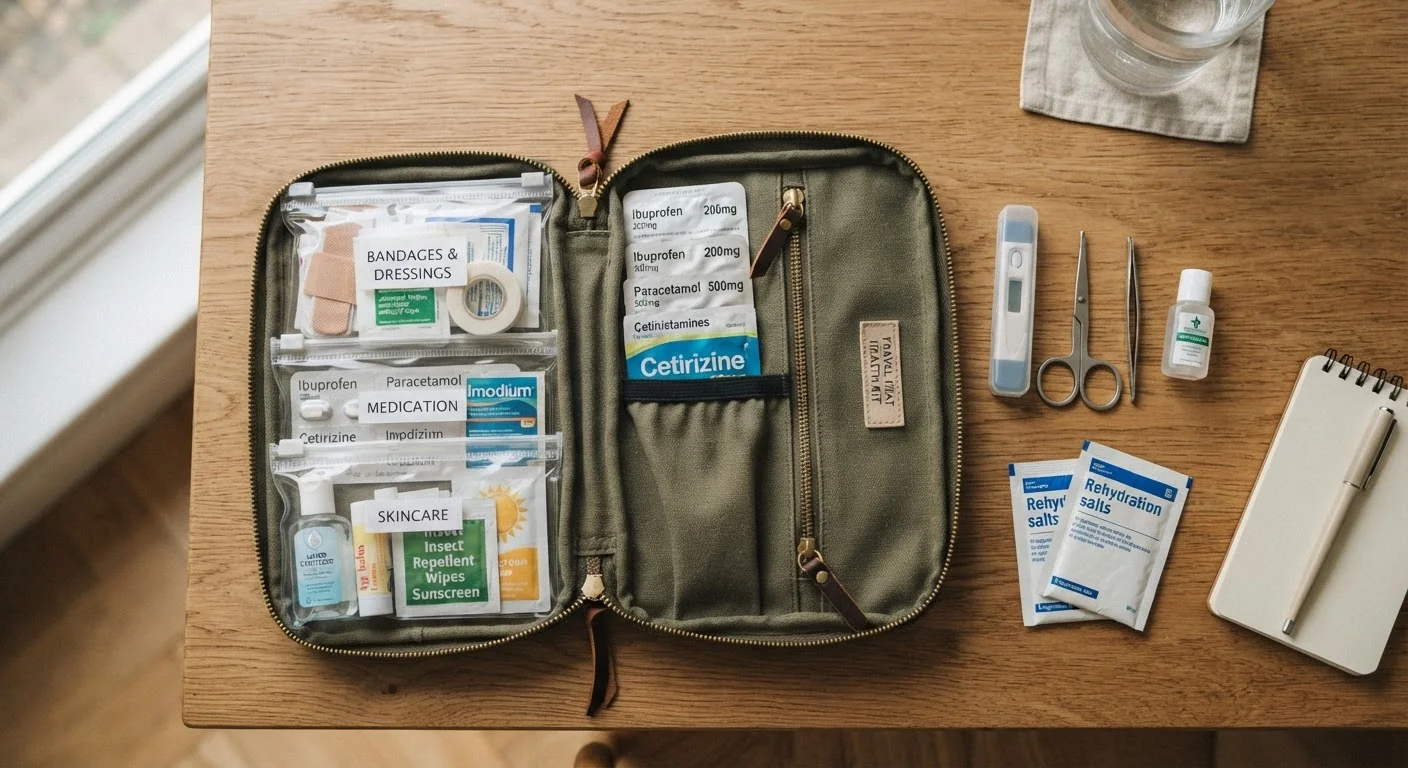
Photo: QuickSearches.net | It Doesn't Get Quicker Than This! editorial
Why a Travel Health Kit Is Worth Building
A minor health problem - a blister, an upset stomach, a cut that needs cleaning - becomes significantly more stressful when you're miles from the nearest pharmacy. A compact travel health kit lets you handle common issues on your own terms without scrambling or overpaying at tourist-area shops.
Building one yourself is usually cheaper than buying a pre-packaged kit, and it lets you tailor the contents to your destination and health history. As part of solid pre-trip preparation, assembling your kit a few days before departure gives you time to restock anything running low at home.
This isn't about carrying a hospital in your bag - it's about the right items for the most likely situations. Think blisters, stomach bugs, sunburn, cuts, and headaches. That's what most travel health issues come down to.
| Recommended kit container | Waterproof zip pouch or hard-shell case |
| Typical kit weight | Under 1 lb when packed efficiently |
| Most common travel ailments | Diarrhea, blisters, sunburn, motion sickness, minor cuts (Centers for Disease Control and Prevention (CDC)) |
| ORS packets recommended per trip | At least 4-6 packets for a 1-week trip |
| Prescription meds: extra supply | Pack 2-3 extra days beyond your trip length |
| Where to verify vaccine requirements | CDC Traveler's Health website or your doctor |
The Core Items Every Kit Should Include
Start with the basics that cover the widest range of common travel ailments:
- Adhesive bandages - multiple sizes for blisters and small cuts
- Gauze pads and medical tape - for covering larger wounds
- Antiseptic wipes or solution - to clean cuts and scrapes before bandaging
- Pain reliever - acetaminophen or ibuprofen for headaches, fever, or muscle soreness
- Antihistamine tablets - useful for allergic reactions, insect bites, or hay fever
- Anti-diarrheal medication - a travel staple if you're eating in unfamiliar places
- Antacids - for indigestion or heartburn from different cuisines
- Oral rehydration salts (ORS) - critical for recovering from dehydration due to heat or illness
- Digital thermometer - compact and easy to pack
- Tweezers - for splinters or ticks
- Blister treatment pads - especially if you plan on walking a lot
These items cover the vast majority of situations most travelers encounter, whether you're on a road trip or visiting a destination abroad.
Oral Rehydration Salts (ORS)
A pre-measured mixture of salts and sugar dissolved in water to replace fluids and electrolytes lost during diarrhea or heat exposure. More effective than plain water alone for treating dehydration.
Antihistamine
A class of medication that reduces the body's reaction to allergens. Useful for treating insect bites, mild allergic reactions, or environmental allergies while traveling.
Prophylactic
A medication or treatment taken before potential exposure to prevent illness, such as antimalarials taken before visiting regions where malaria is present.
Travel Medicine Clinic
A specialized healthcare clinic that advises travelers on destination-specific health risks, required or recommended vaccinations, and preventive medications before international travel.
Destination-Specific and Personal Additions
Your destination and personal health needs should shape what else you include. A beach trip calls for different additions than a hiking trip or international travel.
For outdoor and active travel
- Moleskin or blister-prevention tape
- Insect repellent with DEET or picaridin
- After-bite or hydrocortisone cream for insect stings
- SAM splint and elastic bandage for ankle support
For international travel
- Water purification tablets
- Prescription medications with copies of prescriptions
- Any recommended travel vaccines or prophylactics (consult your doctor or a travel medicine clinic before departing)
Personal health items
If you manage a chronic condition, your kit needs additional planning. The guide to traveling with a chronic condition covers how to handle medications, documentation, and finding care when you're far from home.
Always carry enough prescription medication to last your full trip, plus a few extra days in case of delays. Keep medications in their original labeled containers when crossing borders.
This article is for general informational purposes only and is not medical advice. Consult a qualified healthcare professional before traveling, especially regarding vaccinations, prescription medications, or managing any existing health condition.
The content on this site is provided for informational purposes only and should not be considered a substitute for professional advice. While we strive to provide accurate and up-to-date information, we make no guarantees regarding its completeness or accuracy. Always consult a qualified professional for advice specific to your circumstances before making any decisions