
Packing Light Enough to Skip Checked Baggage Fees

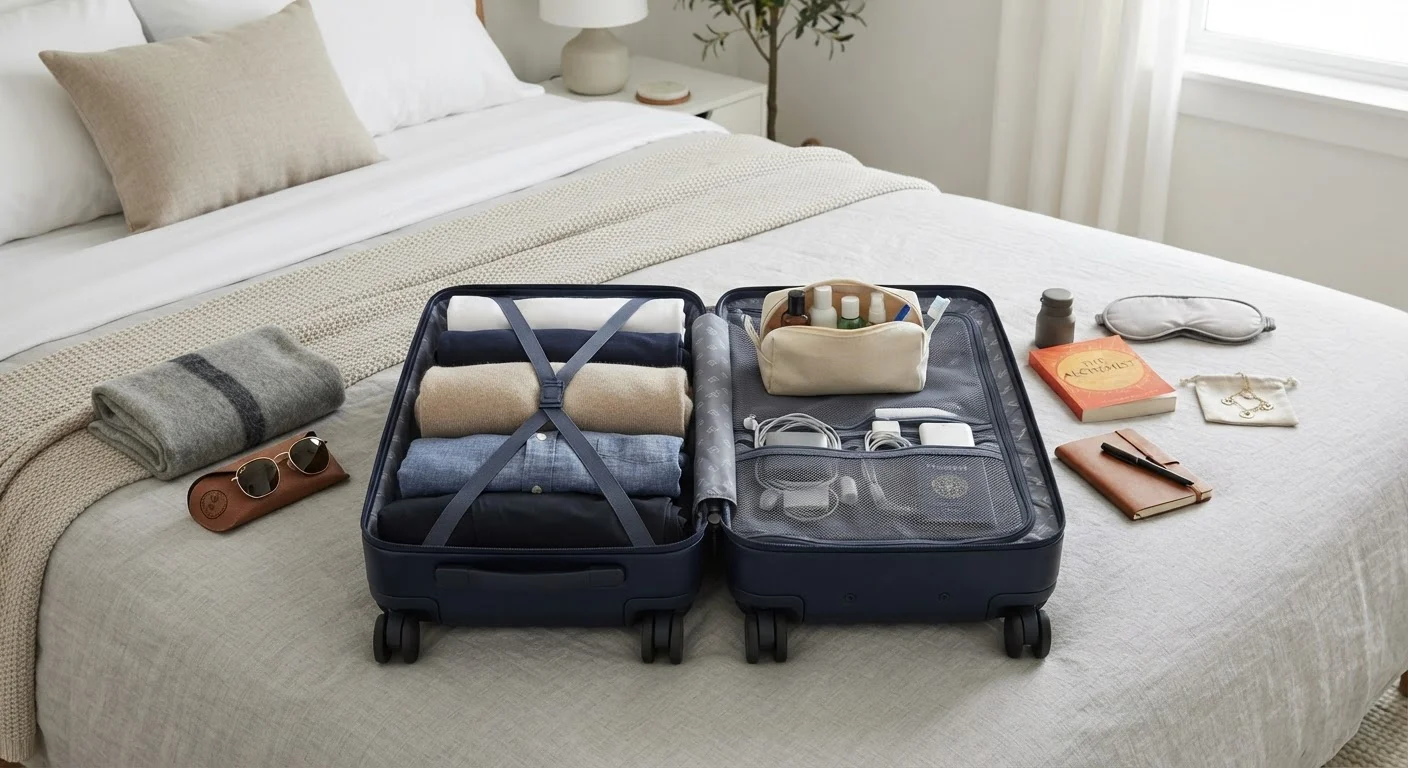
Photo: QuickSearches.net | It Doesn't Get Quicker Than This! editorial
Key Takeaways
- Most domestic carry-on allowances support trips of 7-10 days when you pack strategically.
- Choosing versatile, lightweight clothing is the single highest-impact packing decision you can make.
- The TSA 3-1-1 rule governs liquids; solid toiletry alternatives eliminate that constraint entirely.
- Checked bag fees commonly run $30-$70 per bag each way - skipping them adds real money back to your trip.
- Rolling clothes and using packing cubes can cut down bulk by 20-30 percent compared to flat folding.
- Verify your airline's carry-on size and weight limits before you pack - they vary by carrier.
Why Checked Bag Fees Deserve a Place in Your Budget Math
Checked baggage fees are one of the most predictable hidden costs in air travel, yet they still catch people off guard. A round-trip with one checked bag can add $60-$140 to a ticket's sticker price, depending on the airline. Multiply that across a family of four and you're looking at a meaningful chunk of your trip budget - money that could cover a night's lodging or two days of meals.
The good news is that carry-on packing is a learnable skill, not a talent. It requires some upfront decisions about what you actually need versus what feels comforting to bring. See our guide to underestimated travel costs for a fuller picture of where trip budgets quietly bleed, and our trip budgeting guide to set realistic expectations before you book.
What you will need
What You'll Need Before You Start Packing
Getting the right gear in place before you pack makes the whole process faster and less frustrating. You don't need to buy everything new - work with what you have where possible.
Carry-on suitcase or bag
Your primary packing vessel - must fit within the airline's overhead bin size restrictions.
Personal item bag (backpack or tote)
Most airlines allow one personal item under the seat in addition to the carry-on, effectively doubling your packing space for free.
Packing cubes
Compress and organize clothing by category, reducing bulk and making it easier to find items without unpacking everything.
Luggage scale
Lets you verify your bag's weight before arriving at the airport and hitting unexpected overweight fees.
Quart-sized clear zip bag
Required by TSA for carrying liquids through security in containers of 3.4 oz or less.
Step-by-Step: How to Pack Light Without Leaving Essentials Behind
Follow these steps in order. Each one builds on the last - skipping ahead often means repacking from scratch.
Check your airline's exact carry-on limits before anything else
Airlines vary more than most people realize. Standard domestic carry-on dimensions are roughly 22 x 14 x 9 inches, but some budget carriers impose stricter limits and may charge for bags that exceed them. Weight limits also differ - some international routes cap carry-ons at 15-17 lbs. Look up your specific airline's policy before buying a bag or starting to pack.
Write a trip-specific packing list before touching your closet
List every activity you'll actually do on this trip: flights, walking days, one dinner out, beach time - whatever applies. Then assign an outfit to each activity rather than packing a general wardrobe. This reveals real needs versus habit-packing. Most travelers find they need roughly half what they initially assume.
Choose a color-coordinated, mix-and-match clothing system
Pick a two- or three-color palette for your trip clothes so every top pairs with every bottom. For a 7-day trip, a workable baseline is: 3-4 tops, 2 bottoms, 1 versatile outer layer, underwear and socks for each day, one pair of comfortable walking shoes, and one pair that can dress up or down. Merino wool and synthetic fabrics dry quickly overnight and resist odor, which means you can re-wear items and hand-wash mid-trip.
Pack toiletries using the 3-1-1 rule or solid alternatives
If carrying liquids, every container must be 3.4 oz (100 ml) or less, all fitting into one quart-sized clear zip bag per traveler. Alternatively, solid toiletry formats - shampoo bars, conditioner bars, solid deodorant, solid sunscreen - sidestep liquid restrictions entirely and tend to be lighter. Decant any liquid you do bring into reusable travel-size bottles rather than packing partially full full-size containers.
Roll clothes and use packing cubes to compress volume
Rolling garments (rather than flat-folding) reduces wrinkles in casual clothes and takes up less vertical space. Place heavier items - shoes, toiletry bag - near the wheels end of a suitcase for balance. Use packing cubes to separate clothing by type or day, which also compresses layers together. Reserve your personal item for items you'll want in-flight: chargers, a book, a change of clothes, and any valuables.
Weigh the bag and do a final edit
Weigh your packed bag with a luggage scale before heading to the airport. If it's over your airline's carry-on weight limit, remove items in order of lowest use-per-trip value. Ask yourself: if I didn't have this for a week, would it actually matter? Be honest. Most "just in case" items fail that test. For a complete pre-departure review, consult the pre-trip planning checklist to catch anything you might have missed beyond packing.
Re-wearing Clothes Isn't a Compromise
Common Mistakes That Sneak Extra Weight In
Even experienced packers fall into a few predictable traps. Over-packing shoes is the most common offender - footwear is dense and bulky, and most travelers wear the same pair 80 percent of the time anyway. Limit yourself to two pairs: one for walking, one for evenings or a specific activity.
Bringing full-size toiletries adds weight fast and violates TSA's 3-1-1 liquid rule (each container must be 3.4 oz or less, all fitting in one quart-sized clear bag). Switching to solid shampoo bars, conditioner bars, and solid sunscreen removes the liquid limit entirely and cuts weight. For anything you can't replace in solid form, buy travel-size at your destination's pharmacy rather than packing it.
Packing for every unlikely scenario - the formal dinner that probably won't happen, the cold snap that isn't forecast - is another weight trap. Pack for the trip you're actually taking, not every trip that could theoretically occur. For a broader pre-departure sanity check, the pre-trip preparation checklist walks through everything to confirm before you leave home.
Gate-Check Policies Vary - Don't Assume
The content on this site is provided for informational purposes only and should not be considered a substitute for professional advice. While we strive to provide accurate and up-to-date information, we make no guarantees regarding its completeness or accuracy. Always consult a qualified professional for advice specific to your circumstances before making any decisions